





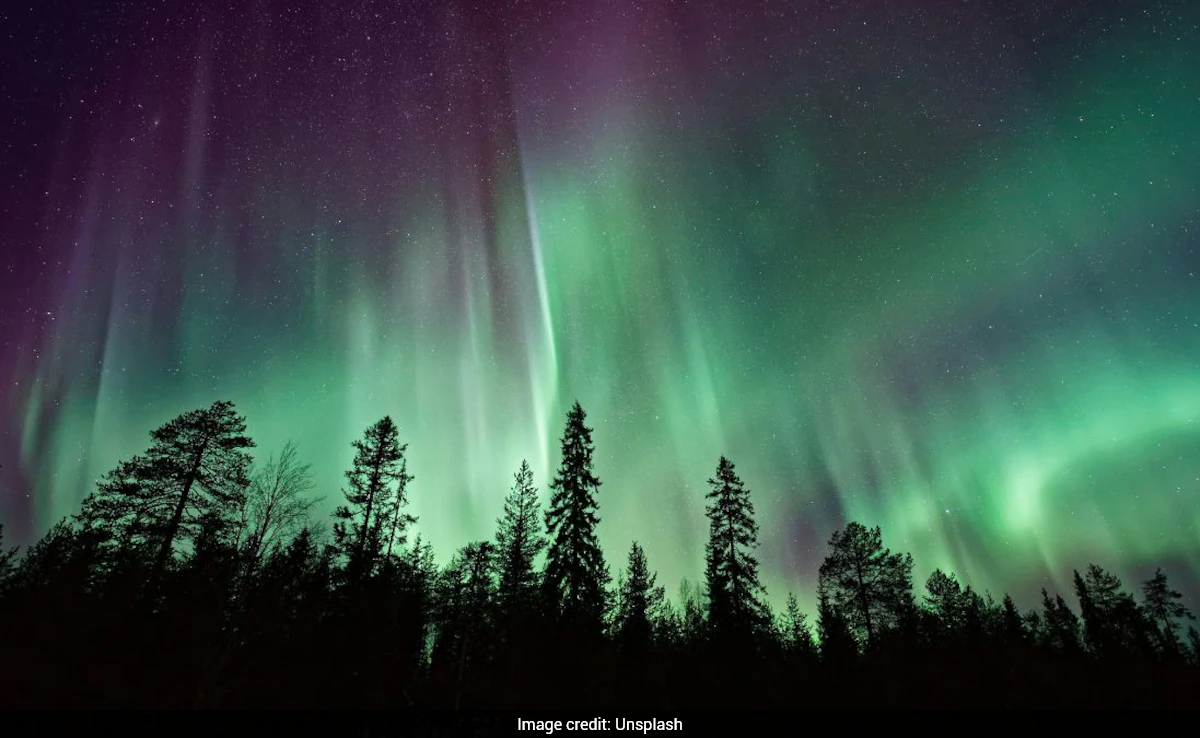
Stargazers across North America may get another chance to catch the northern lights this weekend, as according to reports, a surge in solar activity pushes the aurora farther south than usual. The National Oceanic and Atmospheric Administration's Space Weather Prediction Center noted that the geomagnetic activity is forecast to continue through May 16 and into the weekend, creating prime viewing conditions for much of Canada and parts of the northern US.
Also read | Mars Experienced Catastrophic Flooding 3.5 Billion Years Ago, Reshaping Planet's Surface
When to watch?
According to Forbes, states along the northern US border will have a "low" chance of seeing the northern lights. The best window for viewing is generally between 10:00 pm and 2:00 am local time, though timing can shift depending on your location and how conditions develop. NOAA forecasters expect geomagnetic activity to peak between 11:00 pm and 2:00 am, when moderate storms could push auroras far enough south to be visible across a wider area.
NOAA further notes that auroras are not visible during daylight hours. They don't need to be directly overhead - when bright, they can be seen from as much as 1,000 km away if conditions are right.
For this weekend, the aurora was expected to become visible late Friday night into early Saturday, and again Saturday night into Sunday morning. With a new moon on Saturday, May 16, skies were free from moonlight, allowing fainter auroras to show.
Also read | Video: Indian Astrophotographer Captures Stunning Triangulum Galaxy From Uttarakhand Village
Where to watch?
How far south the lights appear depends on storm strength. A G1 to G2 level storm is mild to moderate, while a G3 is considered strong. NOAA's forecast map shows the following US states have at least a shot at catching the lights: Washington, Idaho, Montana, North Dakota, Minnesota, Michigan, and Wisconsin. Other reports add South Dakota and Maine to the list under G1 conditions.
If activity strengthens to a G2-class storm, aurora may be viewable from states farther south, including Oregon, Wyoming, Nebraska, Iowa, Illinois, Indiana, Ohio, New York, Vermont, and New Hampshire.
Canada is expected to get the clearest and most intense views. A recent NOAA warning said aurora may be seen as low as New York to Wisconsin to Washington state during G2 conditions.
Track Latest News Live on NDTV.com and get news updates from India and around the world

