


Northern Lights Forecast
-
{
- All
- News
-
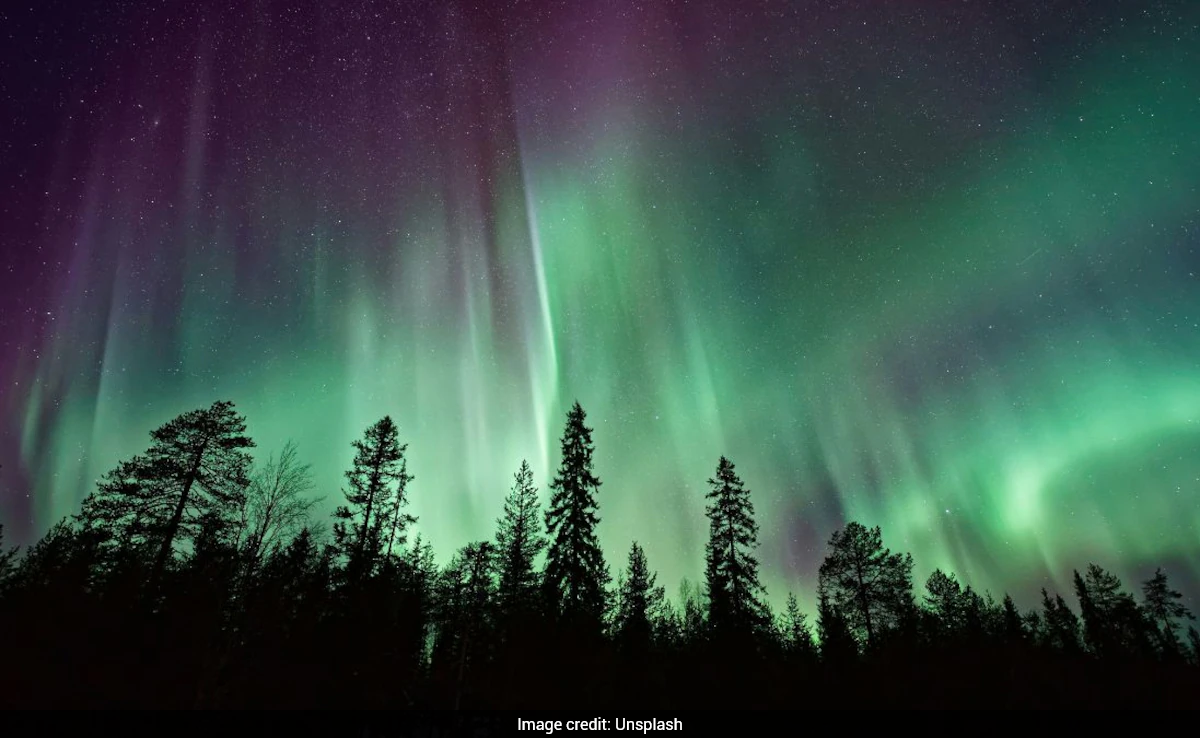
Northern Lights Update: When And Where To Watch Aurora Borealis In North America
- Sunday May 17, 2026
- Offbeat | Edited by Srishti Singh Sisodia
For this weekend, the aurora was expected to become visible late Friday night into early Saturday, and again Saturday night into Sunday morning.
-
www.ndtv.com
-
NASA’s GNEISS Mission Will Map Electric Currents Behind the Aurora
- Sunday February 8, 2026
- Written by Gadgets 360 Staff
NASA’s GNEISS mission will launch from Alaska in early 2026 to probe the electric currents that drive auroras. Two rockets will fly through glowing auroral arcs, releasing sub-payloads whose radio signals act like a CT scan. By mapping electron density and direction, scientists aim to improve space weather forecasting and better protect satellite...
-
www.gadgets360.com
-
Parts Of US Could See Northern Lights Today
- Tuesday January 20, 2026
- World News | Associated Press
The aurora could be visible across Canada and much of the northern tier of US states — and possibly farther south — Monday night following a major disturbance in the Earth's magnetic field, a forecast shows.
-
www.ndtv.com
-
Hidden Magnetic 'Island' Sparks Solar Storm, Brings Northern Lights To US Skies. See Pics
- Wednesday September 17, 2025
- Offbeat | Edited by Srishti Singh Sisodia
Initially, the forecasters predicted minor to moderate (G1-G2) storms, but the hidden island turned it into a strong G3 storm.
-
www.ndtv.com
-
Delhi-NCR Wakes Up To Rain, Weather Department Issues 'Red Alert'
- Thursday August 14, 2025
- India News | Indo-Asian News Service
Light rainfall was recorded in parts of Delhi-NCR on Thursday morning, as the India Meteorological Department (IMD) elevated the 'yellow' alert to a 'red' warning for the day.
-
www.ndtv.com
-
Aurora Alert! Northern Lights May Be Visible as Far South as New York on June 14
- Friday June 13, 2025
- Written by Gadgets 360 Staff
A moderate G2 geomagnetic storm on June 14 could push auroras as far south as New York and Idaho, triggered by solar wind from a coronal hole. NOAA forecasts peak geomagnetic activity with a Kp index of 5.67. While increased daylight may limit visibility, skywatchers are advised to look out for northern lights during early morning hours.
-
www.gadgets360.com
-
Solar Storm to Trigger Northern Lights in US: Visibility, Timing & Impact
- Thursday March 6, 2025
- Written by Gadgets 360 Staff
A solar storm is expected to reach Earth tonight, potentially creating auroras visible as far south as New York and Idaho. The Space Weather Prediction Center (SWPC) of NOAA forecasts a G1-class geomagnetic storm, with a possibility of stronger G2 conditions. This may lead to disruptions in GPS and radio signals. The best time to witness the northe...
-
www.gadgets360.com
-
Solar Storm Forecast to Trigger Northern Lights in Upper Midwest
- Friday January 24, 2025
- Written by Gadgets 360 Staff
A solar storm from a coronal mass ejection (CME) is set to strike Earth, bringing a minor geomagnetic storm to northern and upper Midwest states between January 24-25. Experts predict visible auroras across areas like Michigan and Maine, sparking excitement among aurora chasers. The storm, rated G1, could peak at Kp 5.33, with auroras expected to b...
-
www.gadgets360.com
-
AI Enhances Northern Lights Classification and Geomagnetic Storm Forecasting
- Friday January 10, 2025
- Written by Gadgets 360 Staff
A breakthrough in auroral research, powered by artificial intelligence, has allowed scientists to classify over 700 million auroral images. This effort, using NASA's THEMIS dataset, will significantly enhance the prediction of geomagnetic storms, which can disrupt Earth's communication and security systems. Led by the University of New Hampshire, t...
-
www.gadgets360.com
-
Solar Wind from Sun's Large Coronal Hole Could Create Auroras This Weekend
- Saturday January 4, 2025
- Written by Gadgets 360 Staff
A powerful solar wind is expected to hit Earth this weekend, originating from a massive coronal hole in the sun’s atmosphere. This phenomenon could result in dazzling northern lights, particularly in high-latitude regions. NOAA has issued a G1 geomagnetic storm warning for January 4-5, forecasting heightened geomagnetic activity.
-
www.gadgets360.com
-
Massive Solar Flare Closes 2024 With Radio Blackouts and Auroral Possibilities
- Tuesday December 31, 2024
- Written by Gadgets 360 Staff
An X1.1-class solar flare on December 29, 2024, caused strong radio blackouts on Earth, marking another significant event in the increasingly active Solar Cycle 25. Detected by NOAA's GOES-16 satellite, the eruption raises questions about a potential coronal mass ejection, which could amplify auroras during New Year celebrations. While impactful, t...
-
www.gadgets360.com
-
Severe Solar Storm Warning: NOAA Predicts Auroras Across US, Possible Power Grid Impact
- Friday October 11, 2024
- Written by Gadgets 360 Staff
NOAA has issued a warning for a severe solar storm expected to hit Earth on October 10-11, 2024. This storm, classified as G4, is caused by a coronal mass ejection from the sun, travelling at nearly 2.9 million miles per hour. It has the potential to disrupt power grids, radio communications, and satellites. Additionally, the storm could enhance au...
-
www.gadgets360.com
-
Northern Lights Update: When And Where To Watch Aurora Borealis In North America
- Sunday May 17, 2026
- Offbeat | Edited by Srishti Singh Sisodia
For this weekend, the aurora was expected to become visible late Friday night into early Saturday, and again Saturday night into Sunday morning.
-
www.ndtv.com
-
NASA’s GNEISS Mission Will Map Electric Currents Behind the Aurora
- Sunday February 8, 2026
- Written by Gadgets 360 Staff
NASA’s GNEISS mission will launch from Alaska in early 2026 to probe the electric currents that drive auroras. Two rockets will fly through glowing auroral arcs, releasing sub-payloads whose radio signals act like a CT scan. By mapping electron density and direction, scientists aim to improve space weather forecasting and better protect satellite...
-
www.gadgets360.com
-
Parts Of US Could See Northern Lights Today
- Tuesday January 20, 2026
- World News | Associated Press
The aurora could be visible across Canada and much of the northern tier of US states — and possibly farther south — Monday night following a major disturbance in the Earth's magnetic field, a forecast shows.
-
www.ndtv.com
-
Hidden Magnetic 'Island' Sparks Solar Storm, Brings Northern Lights To US Skies. See Pics
- Wednesday September 17, 2025
- Offbeat | Edited by Srishti Singh Sisodia
Initially, the forecasters predicted minor to moderate (G1-G2) storms, but the hidden island turned it into a strong G3 storm.
-
www.ndtv.com
-
Delhi-NCR Wakes Up To Rain, Weather Department Issues 'Red Alert'
- Thursday August 14, 2025
- India News | Indo-Asian News Service
Light rainfall was recorded in parts of Delhi-NCR on Thursday morning, as the India Meteorological Department (IMD) elevated the 'yellow' alert to a 'red' warning for the day.
-
www.ndtv.com
-
Aurora Alert! Northern Lights May Be Visible as Far South as New York on June 14
- Friday June 13, 2025
- Written by Gadgets 360 Staff
A moderate G2 geomagnetic storm on June 14 could push auroras as far south as New York and Idaho, triggered by solar wind from a coronal hole. NOAA forecasts peak geomagnetic activity with a Kp index of 5.67. While increased daylight may limit visibility, skywatchers are advised to look out for northern lights during early morning hours.
-
www.gadgets360.com
-
Solar Storm to Trigger Northern Lights in US: Visibility, Timing & Impact
- Thursday March 6, 2025
- Written by Gadgets 360 Staff
A solar storm is expected to reach Earth tonight, potentially creating auroras visible as far south as New York and Idaho. The Space Weather Prediction Center (SWPC) of NOAA forecasts a G1-class geomagnetic storm, with a possibility of stronger G2 conditions. This may lead to disruptions in GPS and radio signals. The best time to witness the northe...
-
www.gadgets360.com
-
Solar Storm Forecast to Trigger Northern Lights in Upper Midwest
- Friday January 24, 2025
- Written by Gadgets 360 Staff
A solar storm from a coronal mass ejection (CME) is set to strike Earth, bringing a minor geomagnetic storm to northern and upper Midwest states between January 24-25. Experts predict visible auroras across areas like Michigan and Maine, sparking excitement among aurora chasers. The storm, rated G1, could peak at Kp 5.33, with auroras expected to b...
-
www.gadgets360.com
-
AI Enhances Northern Lights Classification and Geomagnetic Storm Forecasting
- Friday January 10, 2025
- Written by Gadgets 360 Staff
A breakthrough in auroral research, powered by artificial intelligence, has allowed scientists to classify over 700 million auroral images. This effort, using NASA's THEMIS dataset, will significantly enhance the prediction of geomagnetic storms, which can disrupt Earth's communication and security systems. Led by the University of New Hampshire, t...
-
www.gadgets360.com
-
Solar Wind from Sun's Large Coronal Hole Could Create Auroras This Weekend
- Saturday January 4, 2025
- Written by Gadgets 360 Staff
A powerful solar wind is expected to hit Earth this weekend, originating from a massive coronal hole in the sun’s atmosphere. This phenomenon could result in dazzling northern lights, particularly in high-latitude regions. NOAA has issued a G1 geomagnetic storm warning for January 4-5, forecasting heightened geomagnetic activity.
-
www.gadgets360.com
-
Massive Solar Flare Closes 2024 With Radio Blackouts and Auroral Possibilities
- Tuesday December 31, 2024
- Written by Gadgets 360 Staff
An X1.1-class solar flare on December 29, 2024, caused strong radio blackouts on Earth, marking another significant event in the increasingly active Solar Cycle 25. Detected by NOAA's GOES-16 satellite, the eruption raises questions about a potential coronal mass ejection, which could amplify auroras during New Year celebrations. While impactful, t...
-
www.gadgets360.com
-
Severe Solar Storm Warning: NOAA Predicts Auroras Across US, Possible Power Grid Impact
- Friday October 11, 2024
- Written by Gadgets 360 Staff
NOAA has issued a warning for a severe solar storm expected to hit Earth on October 10-11, 2024. This storm, classified as G4, is caused by a coronal mass ejection from the sun, travelling at nearly 2.9 million miles per hour. It has the potential to disrupt power grids, radio communications, and satellites. Additionally, the storm could enhance au...
-
www.gadgets360.com