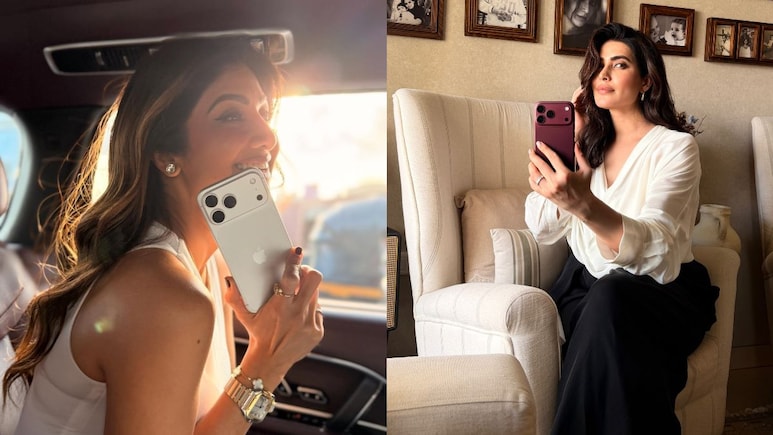
When Phil Dunphy in Modern Family got sad about Claire not getting up in the morning to stand in line to purchase the latest iPad, everyone laughed. But on September 18, the iPhone 18 Pro and iPhone 18 Pro Max went on sale in India, and the queues outside Apple outlets were just as long.
People are equally, if not more, crazy about purchasing the latest iPhone models, but this time, it isn't funny.
It almost looked like a cry for help. People have reportedly sold gold to purchase the latest tech models, and others have reportedly confessed to buying these exorbitantly priced gadgets without any rational justification.
As celebrities took to Instagram to flaunt their upgrades to the iPhone 18 and iPhone 18 Pro Max, and influencers shared reels of attending the Apple event in Mumbai, FOMO (fear of missing out) hit many consumers.
Those who could not keep their purchase anxiety in check stood in endless queues for hours to upgrade to the latest version, while others kept scrolling through their phones, checking their balances, and wondering whether they should make the purchase or sit this one out.
Is FOMO For New Gadgets Making People Anxious
"FOMO is just an old fear wearing new clothes. It is that nagging sense that everyone else is in on something good, and you're the one standing outside. We're wired for belonging. Being excluded from the tribe used to be dangerous, so our brains still treat it that way, even when the 'tribe' is just Instagram," Neelam Mishra, a consultant clinical and rehabilitation neuropsychologist at Sir Ganga Ram Hospital, told NDTV.
The expert noted that these launches work because they are ticking time bombs. Brands come up with limited-time offers, exclusive quantities, and countdowns that build the hype and purchase anxiety along with it.
"It tells your brain that you are not choosing to skip something, you're losing something. And with social media, that pressure is basically 24/7 now," the neuropsychologist noted.
#WATCH | Noida, UP: A buyer says, "I bought two iPhone 18 Pro Max. I came from Punjab and have been standing in the queue since 6 AM. Mine was the very first booking; I am the first one who has got the phone..." https://t.co/ZfhLUMhw5i pic.twitter.com/rVR3U5CNZI
— ANI (@ANI) September 18, 2026
Financial Mistakes People Make While Upgrading To New Gadget Models
Often, when a new phone hits the market, especially the latest iPhone model, people rush to purchase it. With EMIs, these purchases have become impulsive, as buyers are willing to let go of a large chunk of their monthly earnings without thinking twice, as long as the latest iPhone version is in their pockets.
Shreesham Gupta, Director at Rupeezy, explained, "There isn't just one financial mistake people make. I would say there are a couple of mistakes people make when buying premium smartphones under FOMO."
He explained that, often, in the race to get their hands on the upgrade, buyers don't take into account post-purchase expenses, including high-cost device insurance, expensive official chargers and cases, and out-of-warranty screen replacements (which can cost 20 to 30 per cent of the phone's value).
"So your real cost of ownership is not just the cost of the phone. There are additional costs, including accessories, insurance and EMI processing fees, even on some zero-cost EMI plans. So the biggest mistake is assuming that the phone is the only thing you're paying for," he added.
According to the finance expert, the biggest mistake that people make while purchasing new gadgets is dipping into their emergency funds.
"Don't pull out money from your emergency fund or reserve money to buy these latest models. Keep them separate from your regular expenses. Those are for rainy days, and they come unannounced," he advised.
How Celebrities And Influencers Fuel Impulse Spending
Harshavardhan Pusala, Founder & CEO, Techurate Systems Pvt. Ltd., added, "Flagship launches are designed to create urgency. Even financially responsible people can start feeling that they are 'falling behind' if they don't have the latest device."
The fintech founder told NDTV that celebrity endorsements and influencer content can turn a product from something consumers want into something they feel they need.
"Traditional advertising tells you why a product is valuable. Influencer content adds social proof: you see someone you follow buying, unboxing and using the product. That creates familiarity and reduces the psychological barrier to purchase," he added.
The expert said that social media also creates a powerful feedback loop. Once a new smartphone launches, consumers can see hundreds of posts, reviews, comparisons and "first impressions" within hours. Repeated exposure can make the product feel ubiquitous and, therefore, necessary.
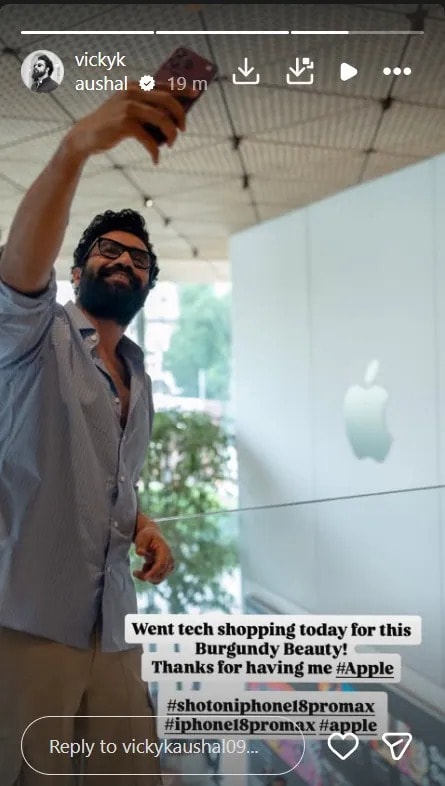
Celebrity endorsements and influencer content can turn a product from something consumers want into something they feel they need. Photo: Vicky Kaushal/ Instagram
How Expensive Gadgets Have Become A Status Symbol
Owning an iPhone has always been associated with status, but no-cost EMIs have allowed everyone to chase status and flaunt their wealth.
Neelam Mishra noted, "We've always used objects to say something about ourselves without actually saying it. That's not new. But phones are a bit different because they're never tucked away; they're in your hand in every meeting, every photo, and every dinner table."
The expert added that pride is harmless, but it becomes harmful when not owning the latest model fuels the feeling of lagging behind. Yes, buying a new phone can uplift a person's mood, but the excitement quickly fades away within a couple of weeks.
"Then your brain resets and starts comparing you to whatever's next. The buzz is genuine; it's just never designed to last as long as the price tag suggests it should," she added.
VIDEO | Delhi: People line up outside Apple Store at Select Citywalk Mall ahead of the official sales launch of the iPhone 18 Pro and iPhone 18 Pro Max in India.#Apple #iPhone18Pro
— Press Trust of India (@PTI_News) September 18, 2026
(Full video available on PTI Videos - https://t.co/d8jp61yd2p) pic.twitter.com/8PXqrTlwS2
How To Navigate Impulse Spending Triggered By Social Media
A gadget is a depreciating asset, and spending lakhs on it yields near zero in five years, according to Shreesham Gupta. He suggested creating a goal and starting investing accordingly. When you reach that goal, spend that money. "It ensures that you are spending on your target without feeling guilty," he added.
The finance expert also suggested following a 10-day or 30-day waiting rule. You must delay the purchase for a definite period and revisit it later to see if you still want to buy it.
"If the urge persists and fits your allocation, proceed; most desires fade within a week," he advised.
On the other hand, Harshavardhan Pusala suggested another test: If you wouldn't be comfortable spending the full amount from your available savings, don't use EMI simply to make the purchase feel affordable.
"Look at the total cost, existing obligations, emergency fund requirements, and opportunity cost before taking on debt for discretionary technology," he advised.
Every celeb and Bollywood star ⭐ making it feel like not having the iPhone 18 means you're a looser in life. 😭 pic.twitter.com/nel5ctPDBB
— Kiara (@Kiara_X_X1) September 19, 2026
Are Younger Consumers More Vulnerable To Tech-Related Social Pressure
According to Neelam Mishra, younger consumers are often more susceptible to the impulse to purchase a new phone while their previous one is working just fine.
"Peer approval just matters more at that stage. It's not a character flaw; it's part of development. Young professionals get hit from another angle too. There's pressure to look a certain way at work, but often without the salary to match it yet, so the gap feels sharper," the expert added.
She also said that while FOMO may not affect everyone equally, it is there and can trigger anxiety, leading a person to make an impulse purchase, which they may or may not regret later.
The base models of the iPhone 18 Pro and iPhone 18 Pro Max start at Rs 1,64,000 and Rs 1,79,000, respectively. The iPhone Duo's based model is priced at 2,99,900.
Needless to say, the cost of the upgrade is high, especially this year. So before you go ahead and upgrade your phone, ask yourself if you actually need it or if FOMO is driving the impulse to make the purchase.
Also Read | Why Jyotika And Suriya Left Their Rs 200 Crore Chennai Bungalow For A 1,700 Sq Ft Mumbai Home
Track Latest News Live on NDTV.com and get news updates from India and around the world
