





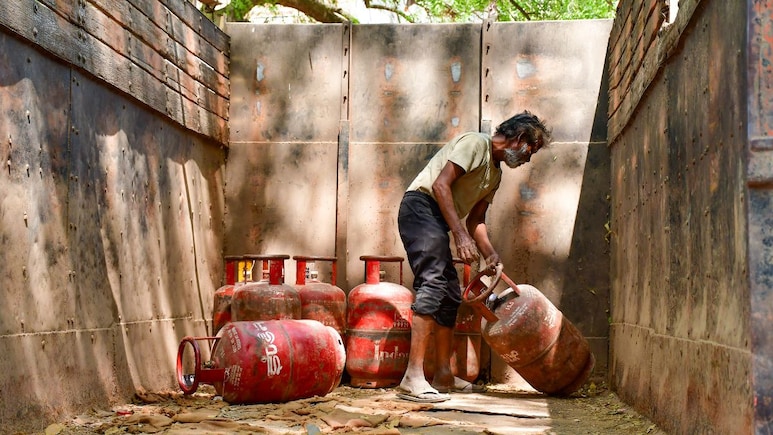
The Indian household and hospitality market are feeling the ripple effects of the United States and Israel's war on Iran. In several cities, consumers have reported longer waiting times for Liquefied Petroleum Gas (LPG) cylinders and occasional supply disruptions.
A significant portion of oil and gas exports from Gulf countries passes through the Strait of Hormuz, a narrow maritime route that Iran has now effectively shut.
India imports roughly 80-85 per cent of its LPG through this corridor, meaning any disruption can affect supplies reaching the country.
The government insists there is no nationwide shortage of cooking gas.
The situation has also prompted a question among consumers: can LPG cylinders be filled with another gas, such as piped natural gas (PNG)? The short answer is no.
What is LPG?
Liquefied Petroleum Gas (LPG) is a mix of hydrocarbon gases, mainly propane and butane, produced during crude oil refining and natural gas processing.
One key reason LPG is used in cylinders is that it can easily be turned into liquid under moderate pressure. When compressed, LPG becomes liquid and occupies much less space than gas.
This allows large amounts of fuel to be stored in compact steel cylinders that can be transported and used in homes across the country.
What is PNG?
Piped Natural Gas (PNG) is natural gas supplied to homes through pipelines. It mainly contains methane, a lighter hydrocarbon gas extracted from underground gas fields.
Unlike LPG, methane is difficult to liquefy and requires extremely high pressure or very low temperatures to turn into liquid.
Because of this, natural gas cannot be stored easily in household cylinders. Instead, it is delivered directly to homes through underground pipelines in cities with the required infrastructure.
This is why PNG connections are mostly limited to urban areas.
Why LPG Works Better In Cylinders
- Easier storage - LPG can be liquefied under relatively low pressure, allowing large amounts of fuel to be stored in compact cylinders. Natural gas requires much higher pressure, which would need thicker and heavier cylinders that are difficult to handle in kitchens.
- Distribution - LPG cylinders are portable and can be transported by road, rail or boat to homes across the country, including rural areas. PNG requires a pipeline network, which is expensive and mostly limited to cities. Government schemes such as the Pradhan Mantri Ujjwala Yojana have also expanded LPG access to millions of households.
- Safety regulations - LPG cylinders are designed for specific pressure levels. Filling them with natural gas could increase the risk of leaks or explosions because the cylinders are not built to handle the higher pressure. Safety rules therefore prohibit this.
- Higher heat output - LPG has a higher calorific value than natural gas, meaning it produces more heat when burned. This allows food to cook faster and makes LPG more efficient for everyday cooking.
Safety Differences Between LPG and Natural Gas
LPG and natural gas behave differently if a leak occurs.
LPG is heavier than air, so it tends to settle near the ground. It also contains a strong odour, which helps people detect leaks quickly.
Natural gas is lighter than air, so it rises and disperses upward rapidly. This can sometimes make leaks harder to notice in enclosed spaces.
Will PNG Replace LPG?
India is expanding piped gas networks under the Petroleum and Natural Gas Regulatory Board, which oversees city gas distribution. LPG will remain because pipelines cannot easily reach rural and remote areas.
Track Latest News Live on NDTV.com and get news updates from India and around the world

