Opinion | What Happens If Saudi Arabia Really 'Asks' Pakistan To Go To War?
Since the beginning of the Iran-Israel war, questions have been raised about what role Pakistan would play on the side of the Saudis. The answer is getting murkier.
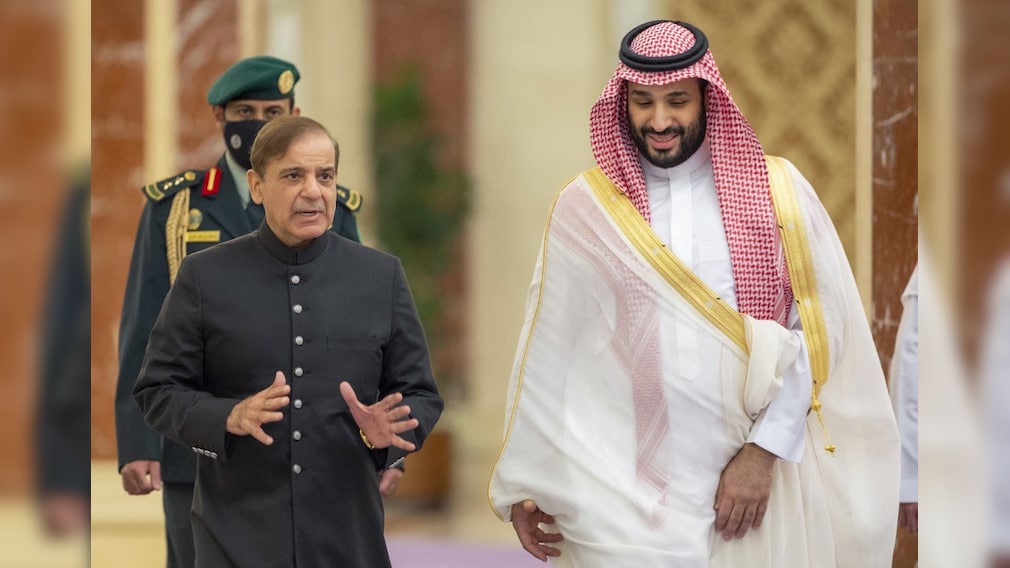
When Pakistan signed the Strategic Mutual Defence Agreement (SMDA) with the Kingdom of Saudi Arabia in September last, its military-controlled regime never imagined that this agreement would soon become so onerous. Pakistani generals and politicians had convinced themselves and their public that Saudis would shower Pakistan with money and, in return, Pakistan would guarantee Saudi security while expanding its own political and diplomatic influence all over the Middle East. The way the Pakistanis sold this deal was that it was a recognition of their military prowess and that it was primarily directed against Israel, which had carried out an airstrike in Doha just days before Pakistan and Saudis signed the SMDA. There was some talk of Pakistan giving Saudi Arabia security assistance against the Houthis and other para-state and state actors.
An Unexpected Turn
The Pakistanis, however, never imagined that their 'rent-for-hire' security services would be requisitioned against Iran. This was because Saudi Arabia and Iran were steadily improving their relations and putting their bitter rivalry, even enmity, aside. But Pakistan's too-clever-by-half calculations have caught them in a bind between the US-Israeli Operation Epic Fury (and Lion's Roar) on one side, and on the other, Iran's Operation Fatah Khyber. With Iran targeting Saudi Arabia among other Arab Gulf states that are allies of the US, Pakistan fears being called upon to fulfil its SMDA obligations towards Saudi Arabia, something it is reluctant to do because of its larger and long-term repercussions for Pakistan's own stability and security.
Since the beginning of the conflict, questions have been raised about what role Pakistan would play on the side of the Saudis, especially since Iran was lobbing missiles and drones at targets in the country. The Pakistanis claimed that it was their clear warning to Iran not to force their hand, which, ultimately, made Iran spare Saudi Arabia to some extent. Pakistan's Foreign Minister postured that Iran was so scared of Pakistan jumping into the fray to support the Saudis that while it launched multiple attacks on other Gulf countries - Kuwait, UAE, Oman, Bahrain and Qatar - it avoided targeting the Saudis. This was sold as a sort of satisfactory military and diplomatic solution for both Saudi Arabia and Pakistan.
No Time For More War
At a time when Pakistan is battling two full-blown insurgencies in Balochistan and Khyber-Pakhtunkhwa, waging an undeclared war against the Islamic Emirate of Afghanistan, contending with widespread civil disturbances with sectarian overtones after the killing of Iran's Supreme Leader Ali Khamanei, and trying to keep the political opposition at bay and manage a broken, bankrupt economy, the last thing Pakistan wanted would be to get embroiled in a wider Middle Eastern war, and that too along with Israel and the US against another Muslim country.
The fact that the Arab states, including Saudi Arabia, are reluctant to declare war or even retaliate against Iran - they have all only tried to defend themselves against the Iranian missile and drone attacks - has created some space for Pakistan. After all, if Saudi Arabia was not ready to declare war on Iran, how could it expect Pakistan to do so on its behalf? The Saudi reluctance was, in part, a function of their vulnerabilities to Iran targeting their critical assets - refineries, oil fields, infrastructure. Pakistan, in their view, was better-placed to open a second front on Iran's rear. But Pakistani analysts argued that the SMDA pact was for Saudi Arabia's defence and not for attacking another country. At the same time, Pakistani leaders were quick to sweet-talk the Saudis. Shahbaz Sharif told a gathering saying that he and Pakistan will be forever indebted to Saudi Arabia for assistance during its nuclear tests in 1998 and all the financial assistance that Saudi Arabia has bestowed on Pakistan. Shahbaz's spokesman declared in a TV interview that Pakistan will always stand with the Saudis, no matter what.
These empty words are cold comfort for the Saudis, who expected Pakistan to step up to the plate when push came to shove from Iran. According to the Saudis, Iran has been firing missiles at them, which have been intercepted by Saudi air defence. While the damage has been limited so far, the fact remains that because Saudi Arabia has been targeted by Iran, it obligates Pakistan to come to the latter's aid under SMDA. But Pakistan is conflicted between the benefits it could expect coming its way and the political and security fallout of opening yet another front against Iran when it is already engaged on multiple fronts against Baloch freedom fighters, Pakistani Taliban insurgents, Afghan Taliban Emirate, a restive Shia population incensed over the attacks on Iran and growing public frustration over rising inflation and economic distress.
Hiding Behind Russia, China
The UNSC resolution against Iran, which was moved by Bahrain and co-sponsored by 135 countries, including Pakistan, could serve as a cover for Pakistan. Propagandists of the Pakistan military are putting a spin on their support for the resolution by hiding behind Russia and China, both of which abstained and did not veto the resolution. The logic being given is that if Russia and China, both close to Iran, did not stand up for Iran, how could Pakistan?
Iran's Growing Isolation
The resolution itself is a sign of Iran's total isolation. Its strategy of widening the conflict has a certain logic. Iran seems to have strategised that the Arabs have no stomach for a fight and will respond only non-kinetically to its attacks. The Iranian calculation is that if it can hold the entire global economy hostage for a long time, it could force its enemies to end the fight. If this means burning down the entire Middle East economy and the global economy, so be it. This is an asymmetric strategy combining low-cost weapon systems with high-value political and economic brinkmanship to raise costs to an unacceptable level for everyone.
The problem is that the pain this Iran's strategy inflicts is not just on Gulf states but on the entire world. In other words, Iran has earned the wrath of the world, even of countries that otherwise might have been somewhat sympathetic towards them. Of course, given that Iran is fighting not just for regime survival but also for state survival, it can go to any extent to defend itself. A UNSC resolution isn't going to make it step back from upping the ante.
Shahbaz In Saudi?
But Iran might actually end up worsening things for itself if other fronts open up.
Pakistan's PM Sharif has apparently made a dash to Saudi Arabia after being summoned by Crown Prince Mohammad bin Salman. The grapevine is that Shahbaz is going to be confronted with an ultimatum to open a second front against Iran. This could involve the use of ground troops - some unconfirmed and unverified reports suggest movement by the Pakistan Army towards the Iranian front a few days back - as part of the next stage of the war. If indeed things move in this direction, then this conflict will enter the next stage, which, in many ways, will be a more dangerous, devastating and destabilising phase. If Pakistan decides to follow Saudi orders, it can hope for financial rewards that will ease its economic pain. But the security and political fallout of such a move could actually prove more expensive than whatever mercenary payment Pakistan's for-hire Army hopes to earn for its services.
(The author is a Senior Fellow at ORF)
Disclaimer: These are the personal opinions of the author
-
Game Of Drones: Ukraine's Sting Answer For US' Shahed Problem

The Iranian-designed Shahed-136 drone has become one of the most recognisable weapons of the modern battlefield.
-
Oil Wars: How Iran's Hormuz Grip Is Bleeding Americans' Wallets
Tehran's response to US-Israel strikes that began Feb 28 was to target oil infrastructure in Gulf nations, an early and clear sign it is trying to force the US to answer questions from the global community about a cost-of-living crisis.
-
Opinion | The Real Winner Of Iran-Israel War Is Someone Trump Never Accounted For
The current crisis promises tens of billions of dollars to Russia in additional revenue. Here's how.
-
Opinion | Iran-Israel War, And The 'War Logic' Behind Bombing Oil Depots
The thinking presumably was that targeting economic interests may, in some sense, galvanise and mobilise the Iranian public against the current administration. But that didn't happen.
-
Opinion | Is Trump Starting To Regret Backing Netanyahu's Iran Gameplan?
Netanyahu may not mind the Iran war, as a prolonged conflict suits him politically. But for the US, it is fast shaping up to be a disaster.
-
Opinion | Amid Growing LPG Crisis, Why Your Piped Gas May Be The Real Winner
While LPG distribution falters amid the Hormuz crisis, PNG supplies to households in major cities continue largely uninterrupted. Will it last?
-
On Disagreement, Democracy: An Open Letter To Mani Shankar Aiyar - By Shashi Tharoor
Congress's Lok Sabha MP Shashi Tharoor responds to a recent "assessment" by Mani Shankar Aiyar of his positions - and 'character'.
-
Harish Rana Can Die Because Aruna Shanbaug Lived: India's Euthanasia Journey
A brutal sexual assault caused severe brain damage and left Aruna Shanbaug in a vegetative state for four decades
-
After Oil, Gas, Iran's Hormuz Chokehold Raises Fertiliser Red Flag For India
The data suggests India faces a 20-25 per cent exposure to fertiliser supply chain disruptions due to the war and informal blockade on the Hormuz.
-
Opinion | 'We Protect America, Not Vice Versa': Inside Gulf's Growing Frustration With Trump
Arab states are increasingly waking up to the bitter truth that the US compromised the region's safety for Israel's war goals, despite millions of dollars spent on security arrangements.