





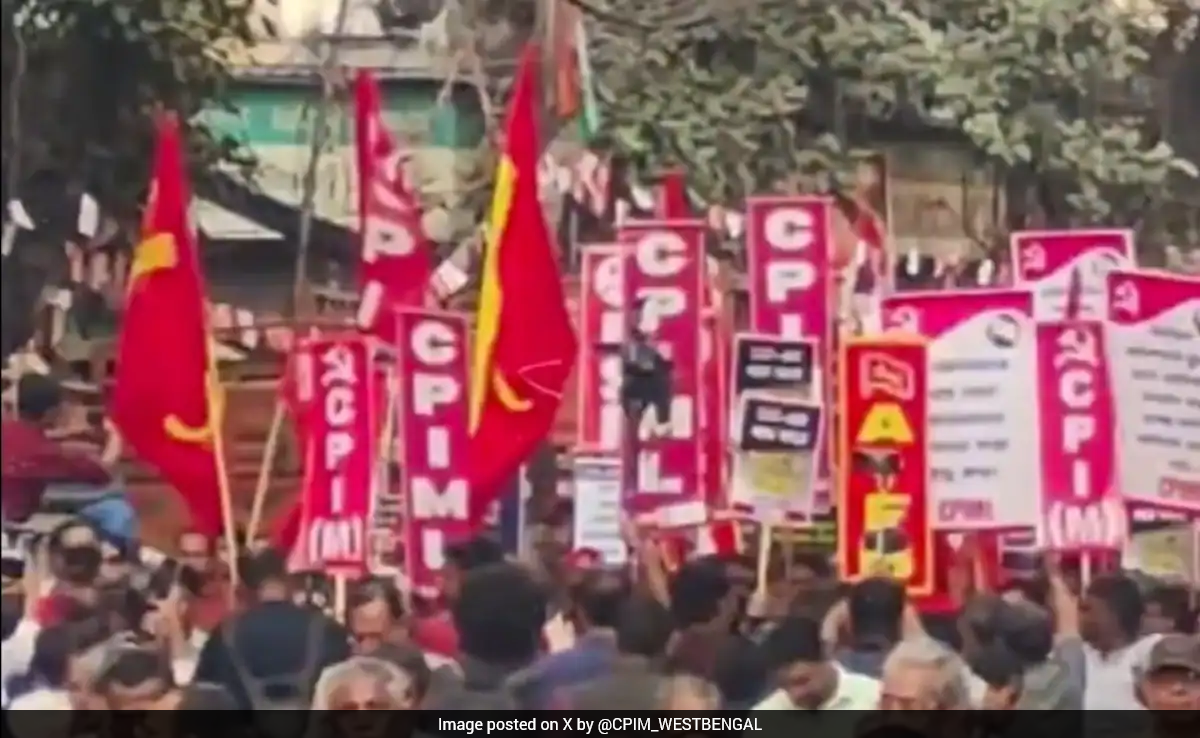
Even when the CPM-led Left Front lost to Mamata Banerjee's Trinamool Congress aided by ally Congress in 2011, after ruling West Bengal for seven consecutive terms or 34 straight years, the CPM party had kept its 40% vote share intact in one the country's strongest Red bastions.
How did the CPM vote share drop to 5% in just 10 years, bringing its seat tally to zero in the 2021 assembly polls?
This disaster for the Left was preceded by its poor showing two years earlier in the 2019 Lok Sabha elections. During that cycle, the CPM and its allies plummeted to a 6.28% vote share with just three parliamentary seats, yielding almost the entire opposition space to the BJP. The BJP made a historic mark in Bengal with 18 parliamentary seats, climbing up from just two seats in 2014, when the rest of the country was swept by the "Narendra Modi wave".
The political vacuum created by the disappearance of the Left vote was ironically filled by the BJP - ideologically opposite to the Communists and a relatively new entity in Bengal. But how did the "Left" supporters take a "Right" turn toward the BJP, to vent their anti-incumbency against the Mamata Banerjee government?
In the face of attacks from a ruling Trinamool Congress (TMC), which was busy dismantling the well-entrenched Left Front machinery in the state in 2011, it became increasingly difficult for CPM leaders and cadres to sustain themselves. Bengal party leaders had reportedly warned the CPM's central leadership about this struggle as early as 2011.
Having been the ruling class for over three decades, many in the party had never experienced the grassroots struggle of the Communists to establish their movement. Consequently, even for those well-trained in ideology and practice, "street-fighting" survival skills were poor, conceded one party veteran.
The CPM fell from its 40%-plus vote share to 23% (and two seats) in the 2014 parliamentary elections, and subsequently to 20.1% (and 26 assembly seats) in the 2016 state polls. Unable to beat the odds, the rank and file grew restless to oust the Mamata Banerjee government at any cost.
It was at this juncture that BJP began making inroads into a state where it had little presence and organisational strength. In the absence of a robust Left and a weakened Congress, "the BJP found an unlikely ally in the polar opposite Red camp, with CPM cadres helping it at the ground level to fight Trinamool Congress," reported a leading English daily in May 2019.
That organisational support helped the BJP transfer a good share of the anti-Trinamool and pro-Left votes into its "kitty".
The 2019 results showed BJP gaining 23% vote share to reach a total of 40.6%, while the CPM plummeted from 23% to 6.28%. The 17% vote share the CPM lost was almost exactly reflected in the BJP's gains.
This shifting of opposition votes in 2019 cost the Left dearly. Once established, the BJP used its vast resources to consolidate these votes, eventually winning a historic 77 seats in the 2021 assembly polls, rendering the two other opposition parties -- CPM and Congress -- redundant, with no seats in the assembly.
The 2024 Lok Sabha polls too saw "zero" for the Left, while Congress managed one MP. However, the BJP score dropped from 18 to 12 seats, with the ruling Trinamool gaining most ts from the shifting dynamics - bagging rest of the 42 seats in the state.
The "fatigue factor" of living with 34 years of Left rule had finally caught up with voters. According to party veterans speaking on condition of anonymity, the Left party had failed the aspirations of its base. For instance, the failure to implement cooperative farming as a follow-up to successful land reforms carried out by the Left government hampered the agricultural sector.
Additionally, after two decades of rule, the lines between the administration and the party blurred. The party became the dominant factor in daily life. Also, all governmental failures were blamed directly on the CPM. As the party became all-powerful, internal degeneration set in. Party offices turned into hubs for distributing government work, fostering corruption.
When the Left Front finally attempted to re-industrialise, the tragedies of Singur and Nandigram shifted the narrative against them. The anti-Left mood helped Mamata Banerjee build her movement.
Since losing office in 2011, a leadership crisis in the party has surfaced. The Left lost its greatest edge: mass contact. Within the party, leaders began relying on digital media and phones rather than in-person interactions. Grievances from the ground and from within the ranks often remained unaddressed, conceded insiders.
The most recent instance of this friction was the departure of young and dynamic CPM leader Pratikur Rahman, who joined Trinamool on February 21. A rising star from student politics (served as state president and national vice president of Students Federation of India), Rahman, who was a member of CPM's state committee, alleged that the state leadership ignored his work and refused to hear his complaints.
Pratikur, who was the CPM contestant from Diamond Harbour in 2024 LS polls, against Trinamool general secretary Abhishek Banerjee, was accepted into Trinamool by him.
If youth leaders in the Left parties are finding it this difficult to find space within the once-powerful CPM, and if internal interactions continue to diminish, it may take long for the Left voters to return to their comrades.
Track Latest News Live on NDTV.com and get news updates from India and around the world

