





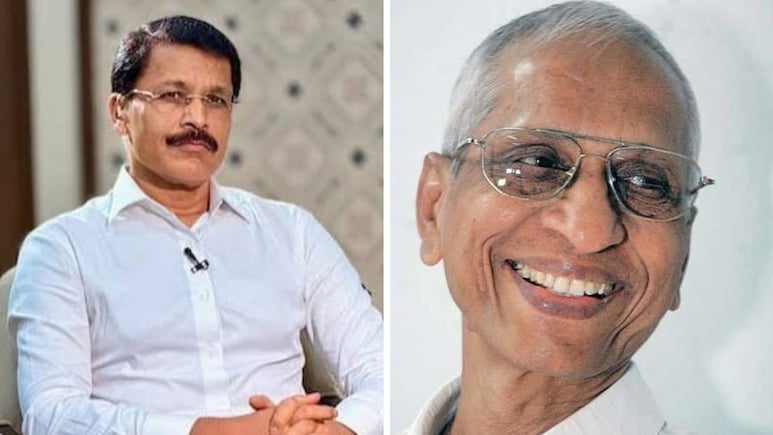
- Tukaram Mundhe's team inspected the Bombay High Court canteen after the court's criticism
- Mundhe cancelled many Maharashtra food licenses citing hygiene breaches in 3 months
- Mundhe is being compared to Govind Khairna, an officer who targeted constructions linked to Dawood Ibrahim
A day after the Bombay High Court pulled up the state's Food and Drug Administration Commissioner over his conduct, his team turned up to inspect the High Court's own canteen. It is a small but telling episode in the career of Tukaram Mundhe, a 2005-batch IAS officer of the Maharashtra cadre, whose style of working has put the spotlight on officers who take on those in power.
Since taking over as Commissioner of the Food and Drug Administration (FDA) three months ago, Mundhe has put the state's entire food and beverage industry on edge. Pointing to breaches of hygiene standards and threats to public health, he has cancelled the licences of numerous well-known restaurants, ice cream parlours and dairies across Maharashtra. No one has been spared, from five-star hotels to government-run canteens.
When the High Court criticised him for allegedly going beyond his powers while acting against a hotel, his team responded by inspecting the High Court canteen the following day.
Also Read: 'Chalta Hai' Attitude Won't Be Tolerated: Tukaram Mundhe To NDTV
Mundhe is known for being blunt and for rarely making exceptions. That approach has come at a cost: he has been transferred more than 25 times over a twenty-year career. Few bureaucrats in Maharashtra in recent memory have drawn this level of attention.
Mundhe's style has drawn comparisons to another officer who made headlines in the 1990s for much the same reasons: Govind Ragho Khairnar.
Khairnar, too, was known for taking on those in power, and for going after illegal construction linked to underworld figure Dawood Ibrahim. That reputation earned him the nickname Mumbai's "Bulldozer Man."
From Clerk To "Bulldozer Man"
Khairnar joined the Maharashtra government as a clerk in 1964 and worked his way up to become Deputy Commissioner of the Mumbai Municipal Corporation. Once in the role, he began targeting illegal hawkers and unauthorised constructions linked to influential politicians.
After the 1993 Mumbai bomb blasts, Khairnar drew up a list of illegal buildings built by Dawood Ibrahim. He would turn up unannounced at these sites and have the structures torn down.
One of the buildings on his list was "Mehjabeen" on Pakmodia Street, an elaborate property Dawood had built in his wife's name. The building had glass walls, a swimming pool, Italian marble flooring and every modern comfort, giving it the feel of a five-star hotel.
One day, Khairnar arrived at the site with a bulldozer and a team of BMC workers. The demolition took the whole day, and by the end of it, Dawood's "Sheesh Mahal" (palace of glass) had been reduced to rubble.
Khairnar went on to demolish another luxury property, this one belonging to Tiger Memon, an accused in the Mumbai blasts, in the Zaveri Bazaar area. It was the same building from which Tiger had run his office while in India.
As Khairnar continued his campaign against the underworld, he faced pushback. He was accused of targeting the neighbourhoods of one particular community. During the demolition of an illegal bookstall on Mohammed Ali Road, a copy of the Quran fell to the ground, triggering controversy. While that demolition was underway, Dawood's associate, Salim Talwar, confronted him in an attempted attack.
Politicians from the ruling party of the time opposed Khairnar's actions, and then Chief Minister Sharad Pawar moved to curb his powers. Khairnar continued regardless, and went on to make serious allegations against Pawar. He was later suspended over charges of indiscipline and misconduct towards senior officials.
During his suspension, Khairnar ran a public awareness campaign against corruption, travelling across the state to address gatherings. At one such rally, he claimed to have truckloads of evidence linking Sharad Pawar to Dawood Ibrahim, though he never produced this evidence publicly.
The Shiv Sena-BJP alliance made use of the wave of allegations Khairnar had raised during the 1995 assembly elections. The damage done to Sharad Pawar's image is considered to have contributed to the Congress party's defeat that year, with the Shiv Sena-BJP alliance coming to power for the first time and Manohar Joshi becoming the new Chief Minister.
Yet no government, regardless of which party held office, seemed willing to keep such an officer in a prominent position for long. After the change of government in Maharashtra, when the question of lifting Khairnar's suspension came up, the same Shiv Sena that had backed him during his campaign against Congress turned against him. Ironically, it was the Congress that stood by Khairnar at that point.
Track Latest News Live on NDTV.com and get news updates from India and around the world

