





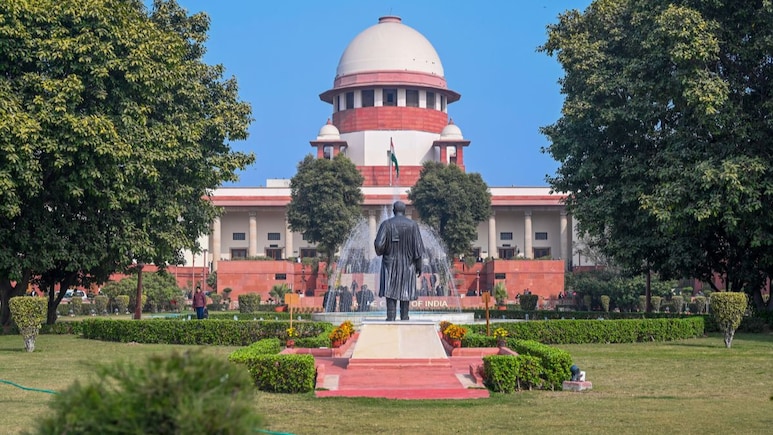
The Supreme Court on Thursday made sharp observations on political parties changing their stance on appointments to the Election Commission once they come to power, calling it “unfortunate for the country.”
Hearing petitions challenging the new law governing the appointment of the Chief Election Commissioner (CEC) and Election Commissioners (ECs), the bench questioned why successive governments failed to create an independent selection mechanism.
Appearing for the Association for Democratic Reforms (ADR), Advocate Prashant Bhushan argued that every ruling party has taken advantage of executive control over appointments to the Election Commission.
“When people were in opposition, they clamoured for an independent body. But once they came to power, they stopped bothering about it,” Bhushan told the court.
He pointed out that senior BJP leader L.K. Advani had earlier criticised the concentration of appointment powers in the hands of the executive when the BJP was in opposition.
‘Whoever Comes to Power Is Doing the Same Thing'
During the hearing, Justice Dipankar Datta remarked that the issue reflected a broader pattern in Indian politics.
“I am reminded of a parliamentarian saying ‘tyranny of the unelected.' This should be equated with tyranny of the elected,” Justice Datta observed.
Justice PK Sharma added: “Tyranny of the majority.”
Justice Datta further remarked: “Whoever comes to power is doing the same thing. It is unfortunate for the country.”
The judge also referred to a BBC documentary on Dr. B.R. Ambedkar, saying Ambedkar had expressed concerns about democracy's functioning in India within just a few years of the Constitution coming into force.
The bench also questioned why Parliament had failed to enact a law on the appointment process before the Supreme Court's 2023 Anoop Baranwal judgment, which had temporarily introduced a selection panel including the Chief Justice of India (CJI).
Under the new law, the CJI has been removed from the selection committee, a move challenged by petitioners as undermining the independence of the Election Commission.
Bhushan argued that the Supreme Court had repeatedly stressed the need for an independent appointment process to ensure free and fair elections and uphold constitutional principles, including Article 14 and the rule of law.
“The requirement of independent Election Commissioners is premised on free and fair elections,” he submitted.
According to Bhushan, the new legislation effectively restores the same defects that the court had previously identified in the appointment process.
“This court took great pains to set things right,” he said.
Bhushan argued that there are at least five Constitution Bench judgments that are contradicted by the new law.
The petitions challenge the Chief Election Commissioner and other Election Commissioners (Appointment, Conditions of Service, and Term of Office) Act, 2023.
The petitioners, who include NGO Association for Democratic Reforms and activist Jaya Thakur, argued that the 2023 law clothes the political executive of the day with a dominant, if not “exclusive”, control over the appointment of the CEC and ECs.
Track Latest News Live on NDTV.com and get news updates from India and around the world

