





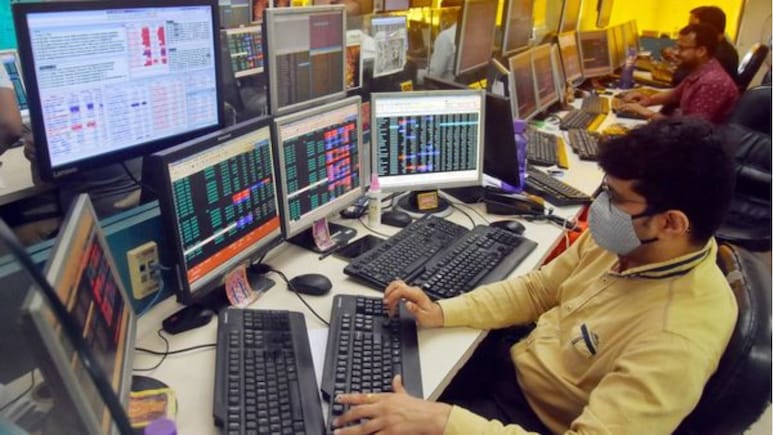
Systematic Investment Plans (SIPs), often sold as the simplest way to build wealth, are testing investors' patience. After nearly 18 months of weak market performance, and a sharp equities sell-off triggered by the Iran conflict, returns over shorter periods have slipped into the red. This has happened for the first time since the Covid-induced market disruption in 2020-21.
An estimated 13 per cent fall in the Nifty and a deeper correction in mid- and small-cap stocks have dragged down mutual fund returns. As a consequence, one- and two-year SIP returns across most equity categories are now negative, while even three-year returns are struggling to cross 5 per cent.
SIP Returns In Red
| Category | 1-Year (per cent) | 2-Year (per cent) | 3-Year (per cent) |
| Large & Mid Cap | -12.3 | -4.1 | 5.2 |
| Large Cap | -13.5 | -5.2 | 2.9 |
| Mid Cap | -10.4 | -3.3 | 7.3 |
| Small Cap | -15.4 | -7.8 | 2.3 |
| Flexi Cap | -13.5 | -5.2 | 3.9 |
| Nifty 50 | -14.9 | -4.7 | 2.2 |
While short-term pain is widespread,10-year SIP returns remain firmly positive across categories. For large and mid cap, 10-years returns are as aggressive as 15 per cent. Even for small cap, SIP returns can go beyond 17 per cent over 10 years.
Why Short-Term SIPs Are Showing Losses
- Geopolitical shock: The Iran-Israel-US conflict triggered a sharp sell-off
- End of bull run: Markets have been correcting since September 2024
- Small-cap correction: Disproportionately hit, dragging SIP averages
Speaking on the downturn, Professor Ramabhadran Thirumalai, Indian School of Business, said, "First off, a disciplined approach to equity investment does not mean investors will earn positive returns at all times. SIPs are meant for medium to longer-term investments, at least three to five years or even longer. At times, over short horizons, SIP-based investment may give negative returns, but investors should not worry about these short-term price dips. Over longer periods of time, these investments would typically earn positive returns. Dips will happen, but part of being disciplined is to stick with the investments and not exit."
What Investors Should Do
1) Don't stop SIPs in panic: Stopping now may feel safe, but it often locks in losses and breaks discipline. "The real risk is not the negative returns. The real risk is the investor who stops the SIP precisely when it is doing its most valuable work," said Hemant Sood Managing Director, Findoc.
2) Understand what's happening
| Scenario | How To Interpret |
| All funds falling | Market-wide issue |
| Only your fund underperforming | Fund-specific problem |
| Short-term losses | Normal in equities |
3) Use volatility to your advantage: When markets fall, your SIP buys more units at lower prices. Future recoveries amplify gains from these cheaper units.
4) Consider topping up (if possible): Fund houses suggest adding up to 10 per cent lump sum during corrections.
5) Diversify your portfolio
| Asset Type | Role in Portfolio |
| Equity funds | Growth |
| Debt funds | Stability |
| Hybrid funds | Balance |
6) Review, don't react
- Compare with peers
- Check alignment with goals
- Review annually-not daily
- Pause only if needed
"Short term SIP losses are not a failure of the instrument, they are the instrument working exactly as designed. SIPs are built for one purpose: to accumulate units cheaply during market downturns. Every negative return you see today represents units purchased at lower prices... Stay invested. Increase if you can. The market rewards patience, not panic," added Sood.
In a similar vein, Shradha Agarwal, Co-founder and Global CEO of Grapes Worldwide, said, "Short-term pressure on SIP returns is quite normal, especially during periods when markets are correcting after a strong rally. Over the past year and a half, a mix of global factors and valuation corrections has impacted equities, so it is expected that SIPs reflect that in the near term. That said, SIPs were never meant to be judged over short windows. Their real strength lies in staying invested through ups and downs. When markets dip, investors are actually buying at lower levels, which can work in their favour over time."
She added, "What we are seeing right now is more about sentiment than the effectiveness of the strategy itself. Market ups and downs like this can feel tough, and it's completely natural to feel unsure at times. Instead of reacting to short-term movements, it helps to stay focused on the larger goal. SIPs tend to work best when you keep investing steadily over time. Markets move in cycles, and those who stay invested through these phases are usually better placed when conditions improve. At its core, disciplined investing is about staying the course, even when the numbers in the short term do not look encouraging."
'See The Bigger Picture'
SIPs work best as a long-term strategy (ideally 7-10 years or more), according to experts. According to CA Foram Naik Sheth, NPV Associates LLP, "Short-term equity SIPs always carry the risk of temporary negative returns due to market cycles. Equity investments are inherently subject to short-term fluctuations and such temporary underperformance does not indicate any flaw in SIP strategy itself. The key lesson in such times is to stay disciplined and avoid stopping investments out of panic. Historically, investors who continued their SIPs through volatile markets have benefited significantly once the market recovered."
Sheth added, "Despite the subdued market, retail investors have shown remarkable discipline, with total SIP inflows surging to a record Rs 3.34 lakh crore in 2025 alone and monthly inflows frequently crossing Rs 29,000-31,000 crore... For short-term financial needs, hybrid or debt funds are generally more suitable than pure equity SIPs... In conclusion, the current phase is a clear reminder that equity investing requires patience and consistency. Short-term returns may go up and down but staying disciplined with your SIPs over the long term remains the key to building wealth successfully."
Track Latest News Live on NDTV.com and get news updates from India and around the world

