





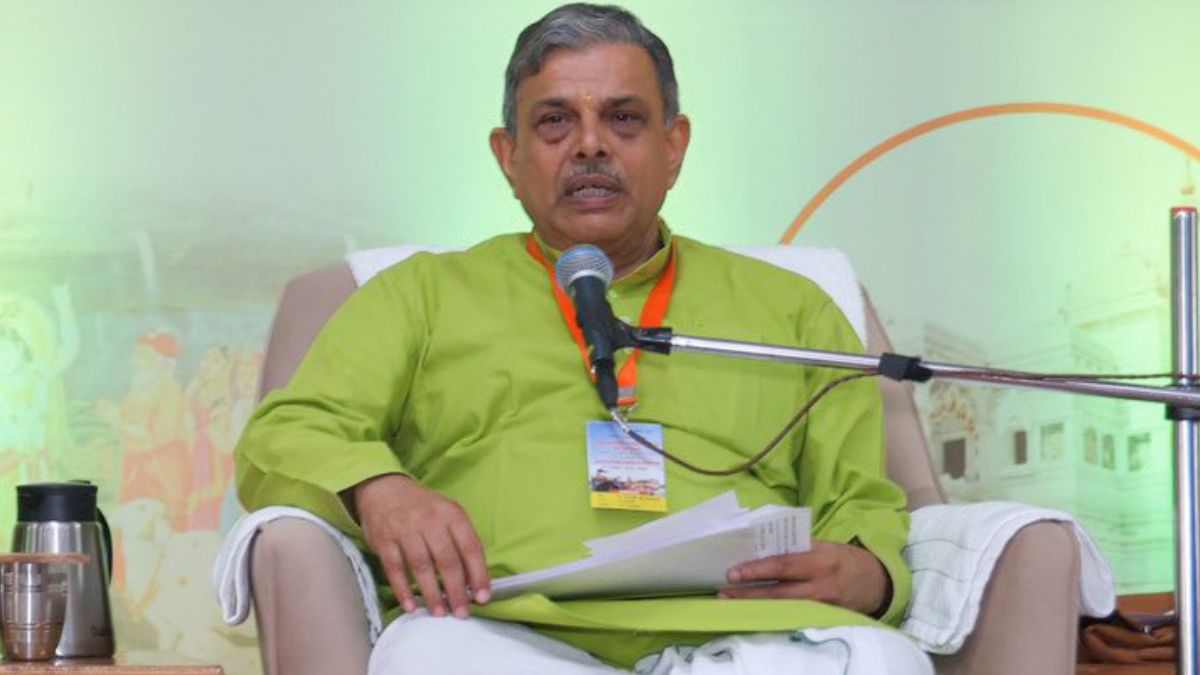
Rashtriya Swayamsevak Sangh (RSS) general secretary Dattatreya Hosabale said that the organisation does not support discrimination based on religion and upholds every citizen's constitutional right to practise their faith, while emphasising India's shared civilisational culture despite religious diversity.
As part of the centenary year celebrations of the RSS, the organisation's Meghalaya unit organised a Prominent Citizens' Meet in Shillong to facilitate dialogue and exchange of ideas among distinguished members of the society.
In his keynote address, Hosabale recalled Shillong's historical association with eminent national personalities, such as Swami Vivekananda, Rabindranath Tagore and Netaji Subhas Chandra Bose, describing the occasion as significant in the centenary year of the organisation. He traced the journey of the RSS since its founding in 1925, noting that the organisation has grown from a single shakha in 1925 to nearly 85,000 daily shakhas across the country today.
Hosabale said that Dr Keshav Baliram Hedgewar, deeply attached to various streams of India's freedom movement, sought to address the fundamental question of why a culturally rich civilisation lost its independence. Observing that organised foreign powers ruled over a socially fragmented society, Dr Hedgewar emphasised the need for social organisation and national awakening, which led to the establishment of the RSS. "RSS wants to organise the whole society rather than to become just another organisation in the society," Hosabale said.
Highlighting India's civilisational ethos, Hosabale said the country's cultural identity reflects a shared heritage that values both individual character and national responsibility. He referred to India's long tradition of inclusiveness, citing historical examples of persecuted communities such as the Parsis and Jews finding refuge in the country. India's linguistic and cultural diversity, he said, does not weaken national unity, which becomes visible during moments of collective achievement. For example, either in sports victory or the launch of Chandrayan-ll, the effort of the RSS is to make such unity enduring through organised social work and character building within individuals.
Hosabale said that the organisation works to strengthen society through swayamsevaks engaged in diverse professions and social sectors, emphasising that social transformation must begin with individuals, families, and ethical conduct guided by dharma understood as moral responsibility rather than ritual practice. Referring to misconceptions about the RSS, he said the centenary year focuses on wider societal engagement with the message, "The country gives us everything, we should also learn to give back."
Hosabale outlined the need for both "systemic reforms" aligned with India's ethos and continuous "social reform." In this context, he highlighted the concept of Panch Parivartan, which includes social harmony beyond caste and tribal divisions, strengthening national selfhood and swadeshi consciousness, preservation of family values, environmental responsibility through daily practice, and awareness of civic duties.
During the interactive session, Hosabale addressed contemporary concerns, including the growing drug menace, which he described as both a lifestyle and security challenge requiring strong family values alongside strict vigilance against cross-border trafficking. On women's empowerment, he noted that Indian traditions historically recognised women's leadership while emphasising the need to eliminate social superstitions and harmful customs. He also stressed the importance of intergenerational harmony within families and greater dialogue to empower youth.
Responding to questions on the Northeast, Hosabale said outreach initiatives and interaction programmes have helped reduce misunderstandings about the RSS, though misinformation continues due to motivated propaganda. He reiterated that the organisation does not support discrimination based on religion and upholds every citizen's constitutional right to practise their faith, while emphasising India's shared civilisational culture despite religious diversity.
Hosabale said national progress depends on collective social responsibility and ethical values, adding that the best way to understand the RSS is through direct engagement and experience.
Track Latest News Live on NDTV.com and get news updates from India and around the world

