





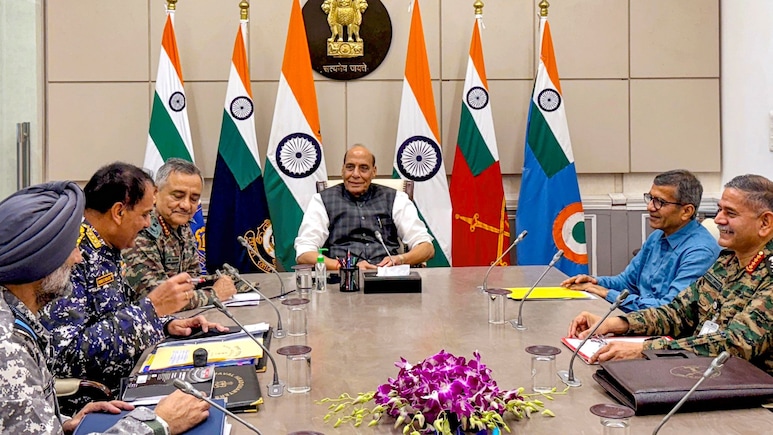
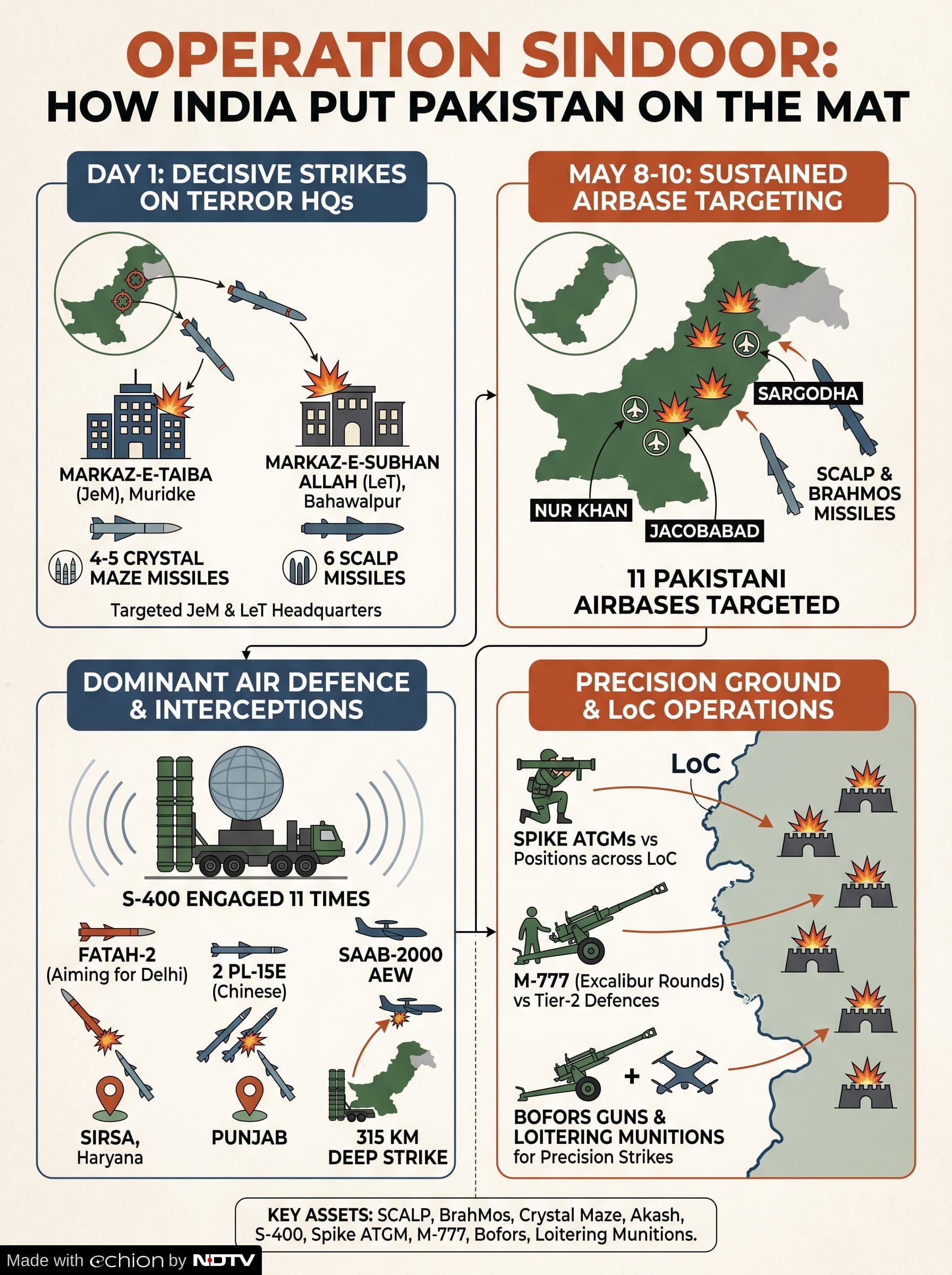
On April 22, 2025, a terror attack in Pahalgam killed 26 civilians. To avenge the loss of innocent Indian lives, the Indian armed forces launched 'Operation Sindoor' in early May. Infrastructure linked to terror groups were struck during the operation.
The armed forces also launched retaliatory strikes on several military bases in Pakistan. The operation didn't just show India's deterrence resolve, it also marked a strategic shift in India's defence doctrine.
Immediate Shift In Defence Doctrine
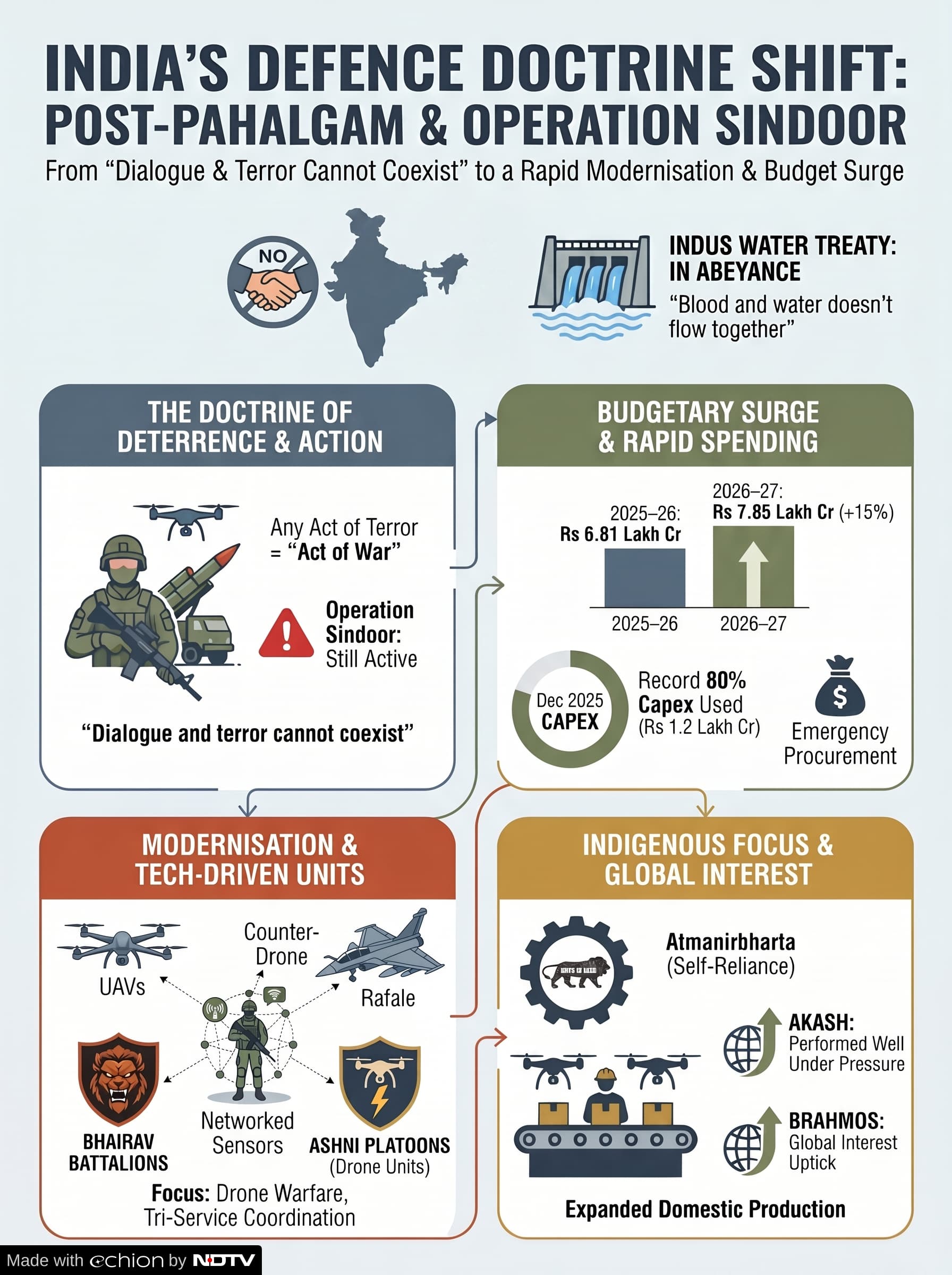
The doctrine of "dialogue and terror cannot coexist" became central to planning. Soon after the Pahalgam attack, the Indian government put the Indus Water Treaty in abeyance. To make sure that "blood and water doesn't flow together", India is rapidly working on its dam infrastructure.
Recently, India completed the Shahpur Kandi Dam project, located on the Ravi river in Pathankot. With this, India can now stop Ravi river water from flowing into Pakistan.
Other than this, the government also announced that any act of terror will be considered an "act of war" against India. In fact, Operation Sindoor, as per the government, is still on.
Meanwhile, India's defence leadership showed that terror attacks would be met with robust military responses. During the operation, the Indian Navy, as per reports, was also kept on stand-by. The message is clear: all three wings of the armed forces will carry out coordinated strikes if there is ever a next time.
Following Operation Sindoor, multi-domain warfare -- drones, electronic systems, layered air defence and joint operations - also became a focus.
Defence Budget & Spending Changes
While India's defence spending had been rising steadily, the outlay for capital expenditure jumped sharply after Operation Sindoor.
The 2025-26 defence budget (presented before the operation) was set at about Rs 6.81 lakh crore, with a large share kept for modernisation and fast procurement. After the operation, the defence ministry increased capex spending substantially. By December 2025, the ministry had used a record 80 per cent of capital expenditure -- around Rs 1.2 lakh crore -- higher than any point in six years.
In fact, the government did not wait for the fiscal year to end. It used emergency procurement powers to buy critical equipment worth tens of thousands of crore rupees quickly.
Subsequently, in the first Union budget (2026-27) presented after the operation, defence spending rose to about Rs 7.85 lakh crore, a 15 per cent increase from the previous year. This rise was among the biggest in recent times. Capital outlays within that budget also rose sharply. It signalled a structural shift from routine spending to long-term acquisition and modernisation.
Modernisation Push & Indigenous Focus
Operation Sindoor reinforced a longer-term modernisation agenda that began years earlier, but gained pace since 2025:
- The government and the Army doubled down on drone warfare. Networked sensors and advanced battlefield systems also became the focus.
- New tactical units and formations were created to exploit technology and mobility. These included: Bhairav Battalions and specialised drone units known as Ashni Platoons.
- Reforms also strengthened tri-service coordination in planning and joint exercises.
To push 'Atmanirbharta' (self-reliance) in defence, production lines for drones and other systems were expanded. In-house defence manufacturing also grew sharply. The operation showed that India's air defence systems - like Akash -- performed well under pressure.
Meanwhile, the world also took note of India's defence prowess. Global interest in Indian defence equipment witnessed an uptick. Several nations showed interest in purchasing the BrahMos supersonic cruise missiles, which were used in the operation.
Strategic Shift & Capability Changes
Following Operation Sindoor, defence planners now focus more on "multi-domain fast response", not just isolated strikes. Similarly, there is more emphasis on information warfare, psychological operations. There has been a significant increase in cyber capabilities as well.
Significantly, India is also working on the "Sudarshan Chakra" project -- the indigenous version of the Israel's Iron Dome air defence system. The air defence system is intended to protect important strategic and civilian areas by 2035. Also, advanced missile tracking vessels have taken centre stage.
The intent behind this push to upgrade and expand defence capabilities, as per analysts, is to make sure that the adversary pays a heavy cost for any military misadventure. The hope is that this cost will serve as a deterrent, keeping our cities (and borders) safe.
Track Latest News Live on NDTV.com and get news updates from India and around the world

