A Year After Pahalgam, India Contends With Desperate Enemies, Distracted Friends
The most challenging question on this anniversary is what might happen if another Pahalgam-scale attack were to occur today. New Delhi finds itself in a strategic pincer.
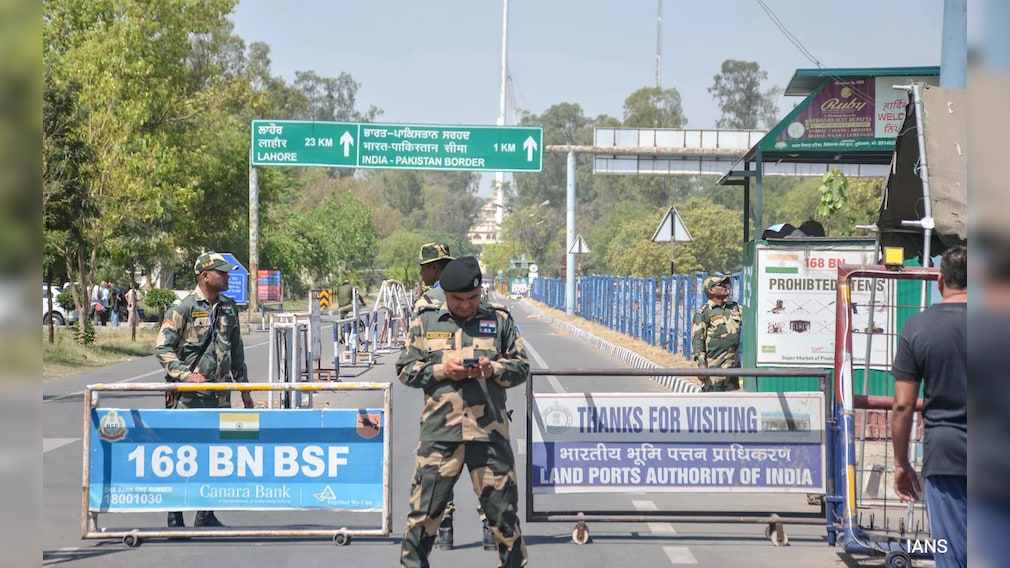
The sun over the Lidder Valley no longer feels like the warm embrace of a Himalayan spring. One year ago today, on April 22, 2025, the crisp mountain air of Pahalgam was shattered by staccato bursts of gunfire and the horrified screams of those who had come seeking peace and a pleasant escape from the world below, only to be met by bigotry and blood.
Today, the valley is quiet, but it is a silence heavy with the ghosts of twenty-six innocent souls, mostly tourists and pilgrims, whose lives were extinguished in the deadliest terror strike the region has seen in decades. Reflecting on the anniversary of the Pahalgam attack requires us to mourn the heart-rending tragedy. But it also requires more than just mourning; it demands an incisive look at how that single afternoon fundamentally rewired the geopolitics of South Asia, leading us into an era of Operation Sindoor, shifting alliances, and a strategic environment that feels more like a powder keg than ever.
Cynical In The Extreme
The attack was brutal in its simplicity. Five armed militants, later identified as part of The Resistance Front, an offshoot of Lashkar-e-Taiba, targeted a cluster of tourist vehicles near the town centre. They asked people for their religion and killed the non-Muslims in cold blood, sparing one Hindu professor who could recite the Kalima. The intention was cynical in the extreme: to send a chilling political message, to provoke a Hindu backlash in the rest of India, and to devastate the prospects of Kashmir's revival on the resurgence of tourism. The toll was devastating, claiming the lives of 25 Indian nationals and one Nepalese citizen.
Unlike previous attacks that targeted security convoys, this was a direct assault on civilians, on India and on the "Naya Kashmir" narrative - the idea that the region had returned to a state of safe, idyllic normalcy. The imagery of blood-stained woollens and abandoned cameras in Lidder's shadow did not just cause grief; it sparked a cold, calculated fury in New Delhi. The photograph of the young honeymooner, newly wedded and on her knees in grief beside the body of her slain husband, will be seared forever into the nation's consciousness.
India's Fury, Exercised Beyond Hesitations
India's response was swift and lacked the diplomatic hesitations of the past. Under the codename Operation Sindoor, the Indian Air Force and Army launched a multi-pronged offensive on May 7, 2025. For the first time, India targeted nine distinct terror camps not just in Pakistan-administered Kashmir, but deep within the Pakistani heartland, including sites in Bhawalpur and Muridke. Reports suggest over one hundred militants were neutralised in a campaign that saw the first real drone war in the subcontinent, with Indian missions reportedly crippling nearly 20% of Pakistan's frontline air infrastructure. India made it clear it was interested only in retribution against terrorists, and not in escalating the confrontation to a state of war with their sponsor, Pakistan. While a ceasefire was eventually brokered after Pakistan's military leadership reached out on the military hotline, the damage to bilateral relations was profound. India formally suspended the Indus Waters Treaty and terminated the visa-free travel regime, effectively placing Pakistan in a state of total diplomatic quarantine.
Munir Is Now Trump's Favourite 'Field Marshal'
One year later, the world looks vastly different, and the eruption of the Iran War in late 2025 has redrawn the strategic map. As the United States and Israel engage the Islamic Republic, Pakistan has skilfully leveraged its geography to become an indispensable broker. The second Trump administration has further complicated India's calculus. President Donald Trump's transactional fondness for Pakistan has been bolstered by Islamabad's role as a mediator in the Gulf and, it is alleged, a January 2026 agreement involving the Trump family's digital ventures. His public fondness for Pakistani strongman Asim Munir, whom he has hailed as his "favourite Field Marshal", has also given Pakistan a diplomatic shield it hasn't enjoyed in years. While India remains a vital strategic partner for the United States, the blank check for retaliation that New Delhi felt it possessed during Operation Sindoor is now subject to the whims of a White House that views Pakistan as a useful tool in the Iranian theatre.
A Continuous Rumble In Kashmir
Despite the firm and often heavy hand of the Indian state, the shadow of the gun remains persistent. In the year since the Pahalgam-Baisaran attack, Jammu & Kashmir has reportedly witnessed roughly 30-35 terrorist incidents, ranging from encounters and ambushes to targeted killings and attacks on security forces. These operations have resulted in the deaths of an estimated 25-30 security personnel and 10-12 civilians, alongside the killing of 40-50 militants in counter‑terror actions. Though the overall scale of violence remains far lower than during the peak decades of militancy, it is sadly clear that the intent and capability of Pakistan‑backed groups persist, producing a pattern of low‑intensity, geographically dispersed militancy. The absence of spectacular, mass‑casualty attacks like Pahalgam does not indicate the disappearance of the threat; rather, it reflects a shift to a more fragmented, harder‑to‑detect phase of conflict that continues to challenge the region's security environment.
In the year since Pahalgam, Kashmir has seen sweeping counter-terror operations that resulted in nearly 3,000 arrests, drawing sharp criticism from international human rights observers. The conflict has also moved increasingly into the digital and technological spheres, where cross-border drone incursions carrying payloads of small arms and narcotics have become a weekly occurrence. While large-scale attacks have been suppressed by a massive security blanket, the "hybrid militant" phenomenon has led to a persistent trickle of targeted killings, maintaining a climate of fear that persists beneath the surface of the current tourist boom.
What Would The Next Retaliation Look Like?
The most challenging question on this anniversary is what might happen if another Pahalgam-scale attack were to occur today. New Delhi finds itself in a strategic pincer. On one hand, the domestic expectation for a response even more severe than Operation Sindoor is sky-high, as the Indian leadership has conditioned the public to expect immediate, kinetic retribution. However, the escalation ladder has fewer rungs left. Having already struck airbases and terror camps, a future Indian response would likely have to target dual-use infrastructure - such as intelligence hubs or naval assets - to maintain deterrence. This carries the worrying risk of a full-scale conventional war at a time when the Indian and global economy is already reeling from the conflict in Iran.
Pahalgam today stands as a testament to resilience, but also to a hardening of the Indian soul. The attack proved that the Kashmir issue cannot be managed into silence through economics alone. As the nation remembers the victims, the reality is stark: India is more capable than ever of striking back, but the region is more volatile than it has been in half a century. The peace in the valley today is not the peace of resolution; it is the peace of a coiled spring. India's challenge in 2026 is no longer just about defeating the militants in the mountains, but navigating a world where its enemies are desperate and its traditional partners are increasingly distracted.
(Shashi Tharoor has been a Member of Parliament from Thiruvananthapuram, Kerala, since 2009. He is an esteemed author and a former diplomat.)
Disclaimer: These are the personal opinions of the author
-
Opinion | The Last Bet? What Trump's 'Mother Of All Bombs' Could Actually Do To Iran

Can an MOAB deliver a decisive blow to Iran that may force it to surrender immediately, as Japan did after Hiroshima and Nagasaki in World War 2?
-
Hit Songs, Empty Pockets: The Hidden Math Behind India's Viral Music Boom
Over 80,000 brands and five lakh creators in India make branded content. The opportunity is worth around Rs 1,500 crore.
-
Opinion | Great 'Exceptions': How The Oil India Was Attacked For Is The Oil Trump Now Seeks
A law written to punish the buyers of Russian oil was suspended by the US to protect a purchase of Russian oil. India spent fourteen months being lectured for less.
-
Opinion | Louis Vuitton Loot, Torched Cars: France Protests Have An Unlikely Beneficiary
It's an unbelievable moment. Crowds looting the most exclusive stores in Paris, including the famed Luis Vuitton. But what's behind this meltdown?
-
Blog: Kolkata Didn't Learn From 2015. Eleven Years Later, It Proved To Be Fatal
The City of Joy isn't a stranger to crowd control. Be it during Pujo or Christmas at Park Street, Eden Gardens cricket matches, or Derbies between Mohun Bagan and East Bengal. But during Pujo, the entire city is on alert.
-
Opinion | Slurs, Threats, Now A Temple Attack Plot: When Did America Become So Hostile To Indians?
The rising tide of anti-India, anti-Hindu, and racist attacks serves as a stark reminder that economic prosperity does not automatically guarantee social immunity from bigotry.
-
A Step Behind Neha Bora: What Rahul Gandhi's Gesture Says About Congress' Gen-Z Pitch
At INDIA bloc's march to Supreme Court, Rahul Gandhi placed himself a step behind two women, hands resting on their shoulders. One was his sister Priyanka. The one on his right was Neha Bora. Here's what the image means for the protest wave now, and for Rahul's politics in general.
-
Opinion | Imran Khan, And The Perils Of Having An 'Opinion' In Bollywood
The reality of the industry is quite grimy. More often than not, its inhabitants have been fairweather friends, happy to sing the praises of whoever is in a position of authority.
-
Exclusive: India's Food Safety Problem Goes Beyond Just Dirty Kitchens - By Tukaram Mundhe
On World Food Day, Maharashtra's Commissioner of Food Safety explains why instead of taking stopgap measures, the entire supply chain in India needs to be held accountable and made transparent.
-
Opinion | India Has Enough Coal. So Why Are Power Plants Running Short? A 76 Million 'Crunch'
As of October 5, as many as 82 of the 191 thermal plants monitored by the Central Electricity Authority were in the 'critical' category