





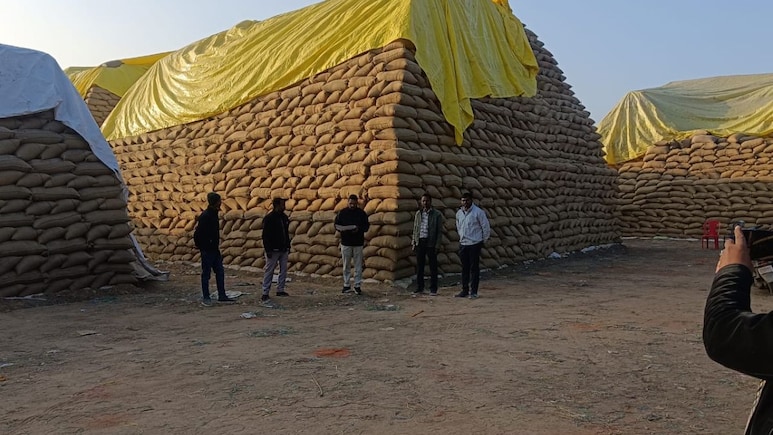
Chhattisgarh, proudly known as the "rice bowl of India", is seeing a crisis. Paddy in the state is now vanishing at the speed of a truck every hour. Officially, it is being eaten by rats, pecked away by birds, dried out by air, or destroyed by termites. Unofficially, the numbers suggest something far more organised than wildlife's appetite or weather damage. Across districts, thousands of quintals of government-procured paddy are going missing every year, and every time the explanation is the same: "drying loss, pests, and natural spoilage".
Nowhere is this pattern more visible than in Mahasamund district, where official procurement data shows that 81,620 quintals of paddy were written off in just ten months in the name of drying and damage. That translates to roughly 11 quintals an hour, 272 quintals a day, and nearly one full truckload of paddy disappearing every hour without pause, day or night.

Across districts, thousands of quintals of government-procured paddy are going missing every year.
The losses are spread across five centres: 25,780 quintals in Mahasamund (3.63%), 18,395 in Bagbahara (3.69%), 6,828 in Pithora (2.67%), 13,428 in Basna (3.79%) and 17,188 in Saraipali (3.65%). Officials maintain that this is normal and within acceptable limits, citing moisture loss, bird damage and termite infestation.
"Issue Is Largely Technical"
Speaking to NDTV, Mahasamund's District Marketing Officer Ashutosh Kosaria said that the issue is largely technical. "We stored the 2024-25 paddy for almost 11 months instead of the usual five. On average, about 3.5 per cent of paddy gets spoilt due to drying across Chhattisgarh, and Mahasamund's figure is 3.57 per percent," Kosaria added.
READ: Rats Behind Rs 8-Crore Chhattisgarh Heist? 26,000 Quintals Of Paddy Missing
Bagbahara procurement in-charge Deepesh Pandey adds that weight loss is inevitable. "The paddy was stored for a long duration, so the moisture in it naturally dried out. After five months, a government team conducted a test. At that time, the coarse paddy, where the standard weight of one sack is 40 kg, was found to weigh 37.48 kg, and the Sarna variety weighed 37.45 kg. During random checking, they themselves acknowledged that about 2.5 kg of weight had been lost due to drying over five months," Pandey said.
He added that the district-level committee itself is determining the matter. Pandey said that paddy arrives during the rainy season, and the tarpaulin covers the black and blue sheets, which absorb heat and moisture.
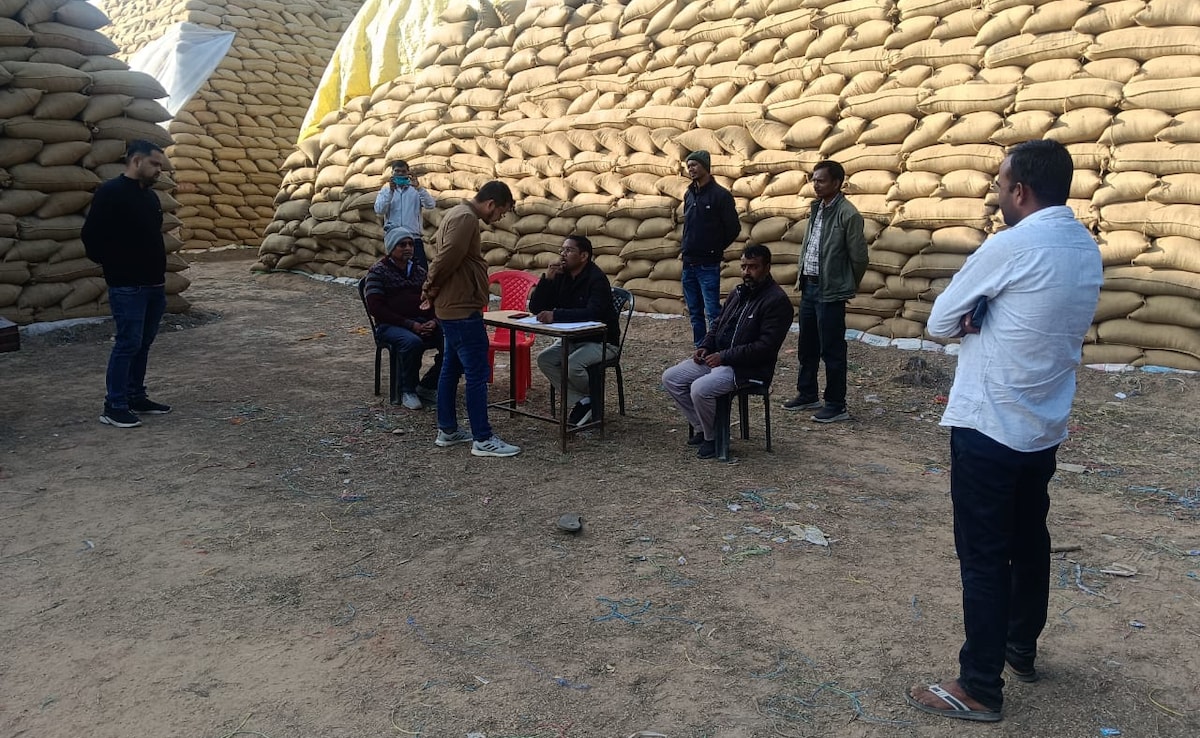
The news of the scam is coming as Chhattisgarh boasts of its massive procurement drive.
"This leads to natural drying. The paddy is being stored in the open. It remained stored for 11 months," the official said.
"When paddy comes to us from the procurement centres, we receive it up to 17 per cent of moisture, and we weigh and accept that quantity. When it is dispatched, the moisture content is 9 to 10 per cent. Over that duration, some natural spoilage is inevitable. Then there are termites, insects, and birds. During the rainy season, a lot of paddy also fell on the ground, which we could not collect, and it got mixed with the mud," Pandey further added.
Pandey's explanation seems to sound thin when seen against the state's own rules.
A September 12 circular from the Food, Civil Supplies and Consumer Protection Department mandates that even a 1 per percent shortage must trigger a show-cause notice, 1-2 per percent a departmental inquiry, and anything above 2 per cent suspension, inquiry and an FIR. Yet in district after district, shortages of over 3 per cent are being quietly normalised as "natural".
NDTV attempted to contact Mahasamund Collector Vinay Langeh by phone and message in connection with the matter, but he did not respond.
A Previous Case That Raises Suspicion
The danger of this casual acceptance became evident earlier in Kawardha, where a 26,000-quintal shortage worth around Rs 7 crore was discovered at the Charbhantha and Bagharra procurement centres. Officials initially blamed rats and insects. An investigation, however, found fake entries, fake bills, fake labour attendance records and tampered CCTV cameras. The centre in-charge, Pritesh Pandey, was removed after the allegations were confirmed.
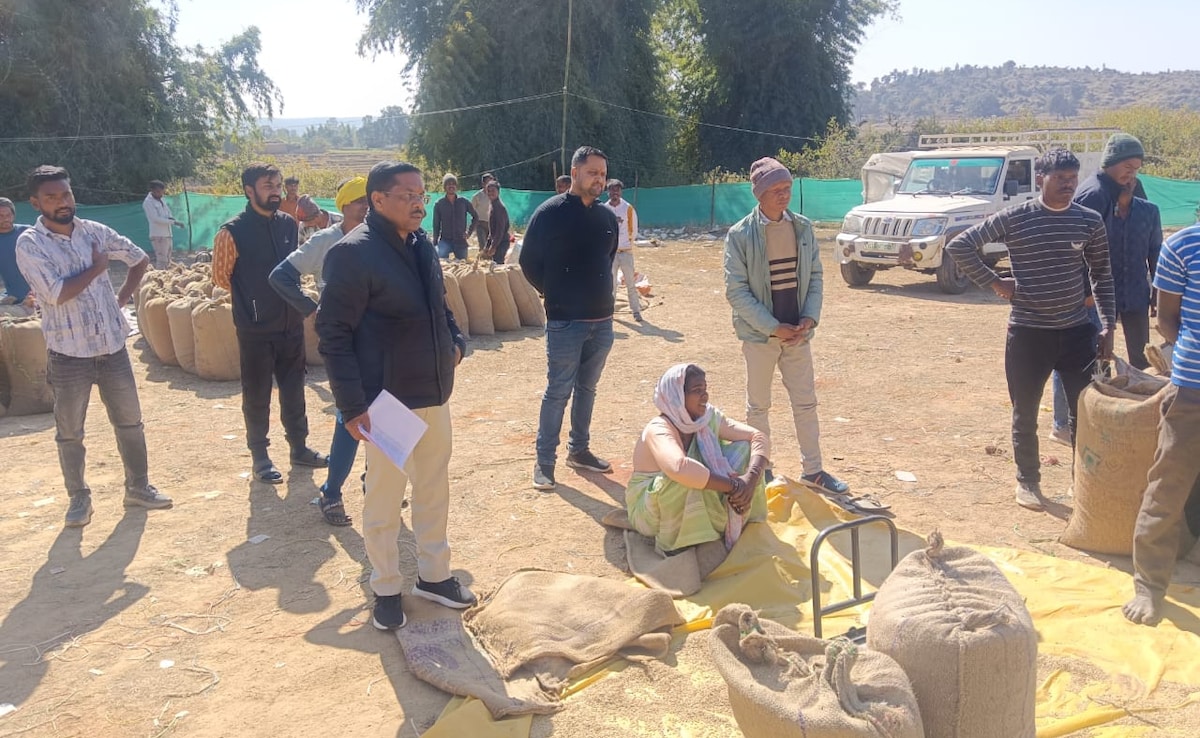
Despite the massive amounts of paddy vanishing, official explanation is the same: drying loss, pests, and natural spoilage.
Now an even starker case has emerged in Jashpur district. During the Kharif marketing season of 2024-25, a financial irregularity worth approximately Rs 6.55 crore has been uncovered at a paddy procurement centre after an inspection by the Apex Bank's nodal officer. Computer records showed that 161,250 quintals of paddy were procured, but only 140,663.12 quintals were actually dispatched to mills and storage centres. This left a shortfall of 20,586.88 quintals.
At Rs 3,100 per quintal, the missing grain alone is worth Rs 6.38 crore. Add to that the cost of 4,898 missing gunny bags worth about Rs 17 lakh, and the total estimated loss to the government stands at Rs 6.55 crore.
READ: iPhone Dream Turns Into Rs 51.82 Lakh Crime Spree In Chhattisgarh
These numbers turn the "rats and birds" explanation into a punchline that no longer feels funny. If rodents are eating Rs 7 crore worth of grain in one district, termites are chewing through Rs 6 crore in another, and birds are finishing off truckloads every hour in Mahasamund, then Chhattisgarh's biggest paddy consumers are no longer farmers or millers; they are invisible, efficient and very well organised.
Scam Comes As State Boasts Procurement Drive
All this is happening even as the state boasts of its massive procurement drive. Since November 14, 2025, Chhattisgarh has procured 93.12 lakh metric tonnes of paddy from 16.95 lakh farmers, paying Rs 20,753 crore directly into bank accounts through 2,740 procurement centres. The scale is impressive. The accountability is not.
NDTV also attempted to contact Food and Civil Supplies Minister Dayaldas Baghel in connection with the matter. He initially did not respond to repeated phone calls, and when he later answered and heard the questions, he said he was "in a programme" and disconnected the call.
The question now is no longer how much grain is being procured, but how much of it is actually reaching mills, ration shops and consumers and how much is vanishing into the grey space between spreadsheets, storage yards and silence. Until that is answered, the rice bowl risks becoming a bottomless bowl, where grain goes in, money flows out, and only the rats are ever truly satisfied.
Track Latest News Live on NDTV.com and get news updates from India and around the world

