





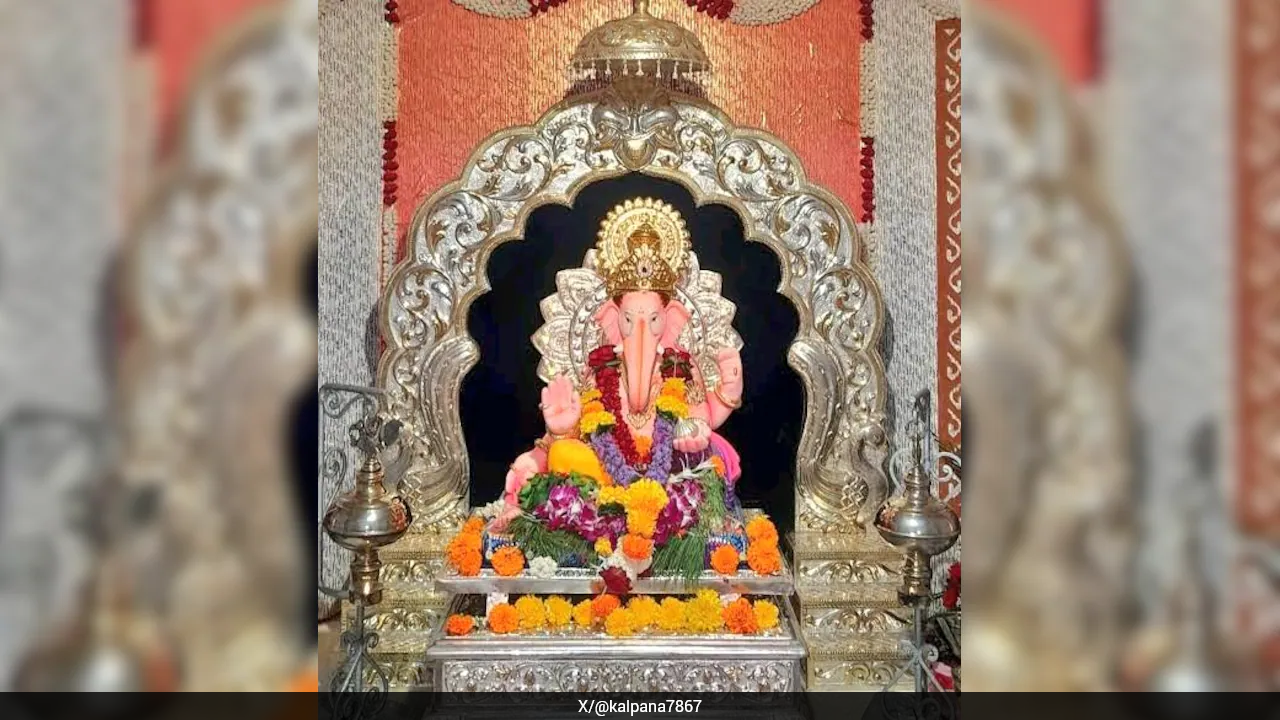
While the concept of time travel remains confined to fiction, a Ganpati pandal in Mumbai takes visitors back to the 19th century during its 10-day celebrations.
A visit to the pandal offers glimpse of a Mumbai that stands in stark contrast to the city's modern skyline. Here, one experiences the Bombay often depicted in black-and-white Bollywood movies. The place is Keshavji Naik Chawl in Girgaon, South Mumbai, widely regarded as the birthplace of Maharashtra's public Ganpati celebrations, known as Sarvajanik Ganeshutsav.
Before 1893, the Ganpati festival was largely celebrated in homes and royal households. It was Bal Gangadhar Tilak who transformed it into a public event. He believed that gathering for the worship of Lord Ganesha could also serve as platforms to discuss social issues and the injustices of British rule.
At Tilak's initiative, two public Ganeshotsav celebrations were organised that year, one in Pune and the other in Mumbai. While the Pune festival one was led by Dagdusheth Halwai community, residents of Keshavji Naik Chawl came together to organise the Mumbai celebration in response to Tilak's call.
A chawl is typically a one or two-storey building with Mangalorean-tiled roofs, where families live in compact rooms and share common amenities. Most residents historically belonged to low-income groups and earned their livelihoods through manual labour in mills, printing press and factories.
Such chawls were once an integral part of Mumbai's identity. However, the real estate boom of recent decade has replaced many of them with high-rise residential towers. Keshavji Naik Chawl is among the few that have survived.
Not only has the structure of the chawl remained intact, but residents have also preserved the original character of the festival as it was celebrated in 1893. The two-feet idol modelled on the original. Even today, the idol is taken to and from the pandal in a traditional palkhi rather than on a truck.
Instead of western musical instruments, traditional dhols, tashas and manjira's accompany the celebrations. Cultural programmes are organised in the evenings. Though Ganesh Utsav has evolved into a highly commercialised festival across Maharashtra, celebrations at the chawl remain simple. That simplicity has become its defining feature, preserved by generations of residents.
Although Keshavji Naik Chawl's Ganpati does not attract millions of devotees like Lalbaugcha Raja, it remains important destination for history enthusiasts and those interested in Mumbai's cultural heritage.
Many original residents have since moved to distant suburbs, but return to Girgaon during Ganesh Utsav each year, drawn by nostalgia.
Track Latest News Live on NDTV.com and get news updates from India and around the world

