





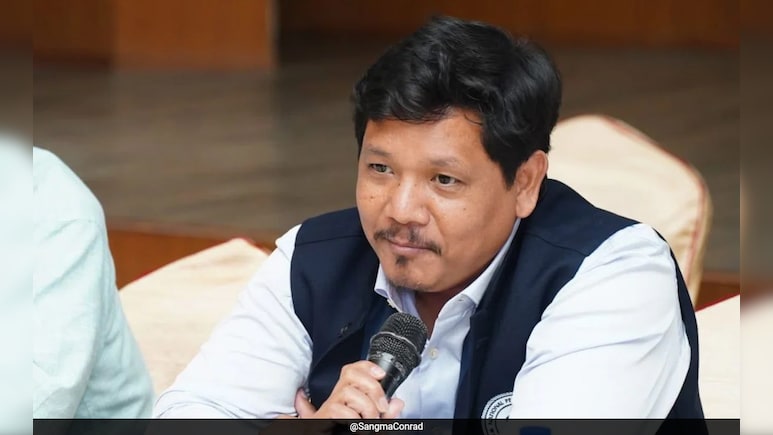
The Meghalaya Legislative Assembly on Wednesday adopted a resolution opposing uranium mining and the establishment of any processing facility in the state. The opposition supported the government on this resolution which was tabled by Chief Minister Conrad Sangma.
The Chief Minister said land in Meghalaya is governed by a distinctive constitutional and customary framework, with community, clan and individual ownership protected under the Sixth Schedule of the Constitution.
He said deposits have been identified in areas including Domiasiat, Wahkyn and Nongstoin. However, proposed mining activities have faced sustained opposition from local communities, traditional institutions, student organisations and civil society groups over concerns relating to health, environmental damage and displacement.
The Chief Minister also told the Assembly that the resolution was intended to formally record Meghalaya's opposition to uranium extraction and processing. The government, he said, would communicate the decision of the House to the Centre.
The resolution gives legislative backing to a decades-old public movement against uranium mining in Meghalaya and makes the state's position clear on any future proposal involving uranium-related activities.
One of the earliest prominent voices was Hopingstone Lyngdoh, who helped mobilise people against uranium mining. Another figure who became synonymous with the movement was Spelity Lyngdoh Langrin of Domiasiat. She reportedly refused a major offer from the Uranium Corporation of India Limited (UCIL) for her land, becoming a powerful symbol of resistance
The roots of Meghalaya's opposition to uranium mining go back to the 1980s, when the Atomic Minerals Directorate for Exploration and Research (AMD) began exploration in the uranium-rich areas of what was then the West Khasi Hills, particularly around Domiasiat and the Kylleng-Pyndengsohiong-Mawthabah region.
The Domiasiat deposit is considered one of India's significant uranium deposits
Track Latest News Live on NDTV.com and get news updates from India and around the world

