





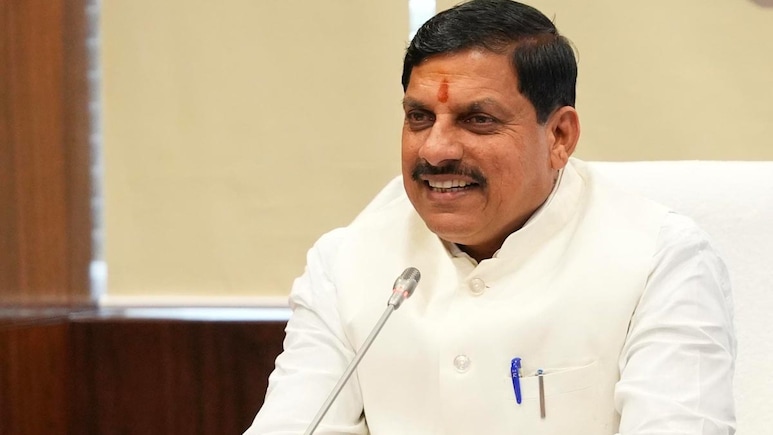
Less than a month after Gujarat passed the Uniform Civil Code (UCC) Bill, 2026, Madhya Pradesh has quietly stepped onto the same path.
Chief Minister Mohan Yadav has directed the Home Department to begin drafting a UCC Bill for the state. The proposed bill, which could be introduced within the next six months, has set off a major legal and political churn in the state.
Enacting the UCC in Madhya Pradesh isn't a novel idea, but a revival of old efforts. In 2022, then Chief Minister Shivraj Singh Chouhan had pitched for a Uniform Civil Code while addressing a gathering in Sendhwa. “Why should anyone be permitted to have more than one marriage? Why should two different sets of laws prevail within a single nation? There should be only one,” he said. He even proposed forming a committee on the lines of Uttarakhand and Gujarat UCC legislations.
However, that moment quickly turned politically awkward. On the same stage was then Animal Husbandry Minister Prem Singh Patel, whom the Congress accused of having four wives. The opposition used the moment to question the credibility of the UCC pitch itself, turning a policy debate into a political flashpoint.
Four years later, the agenda has returned under Chief Minister Yadav, who made his intent clear at a recent public appearance in Jabalpur. "In the times to come, whether one is Hindu or Muslim, no matter what one's status, the law must be equal for everyone. Our government is gradually moving towards the realisation of this Common Civil Code," he had said.
The biggest challenge for the implementation of UCC lies in the state's demographic and cultural complexity. 21% of Madhya Pradesh's population belongs to the Scheduled Tribes -- the highest in the country. With 47 out of 230 Assembly seats reserved for ST communities, the tribal factor is not just significant; it is decisive.
Concerns Around Traditions
Sources indicate that tribal customs could emerge as the single biggest hurdle in drafting and implementing the UCC in Madhya Pradesh.
Traditional practices like ‘Dapa' (the groom's family pays a bride price), ‘Bhageli' or ‘Lamsena' marriages (couples elope and later receive social recognition) are deeply embedded in tribal society. Any attempt to impose a uniform legal framework over these practices could trigger resistance.
This is why, according to sources, Madhya Pradesh is likely to follow the template of Uttarakhand and Gujarat, where Scheduled Tribes have been explicitly kept outside the purview of the UCC. The political signal is also coming from the Centre, with Union Home Minister Amit Shah recently assuring tribal communities in Assam that they would be kept out of the UCC framework.
Committee Composition
Even as these complexities loom large, the administrative machinery has begun moving.
A high-level committee is expected to be formed soon, which will study UCC laws of Gujarat and Uttarakhand, examining how they were drafted, implemented, and structured. Sources suggest that former Supreme Court judge Justice Ranjana Prakash Desai, who chaired similar committees in both states, is likely to be appointed to head the Madhya Pradesh panel as well.
The committee is expected to include 5-6 members, former high court judges, retired IAS officers, legal experts, social workers, and representatives from universities. A formal administrative meeting on this is likely in the coming days.
If implemented, the UCC will bring sweeping changes.
All personal laws governing marriage, divorce, inheritance, and adoption across religions will be replaced by a single legal framework. Marriage registration will become mandatory, minimum age norms will be standardised, and divorce provisions will be uniform for all.
Polygamy, which is allowed under certain personal laws, will be completely prohibited. Inheritance laws will undergo a major shift, with daughters receiving equal rights in ancestral property across all communities.
The blueprint for this transformation already exists.
Uttarakhand became the first state to pass the UCC in February 2024, with the law coming into force on January 27, 2025. It mandates registration of marriages -- and even live-in relationships -- within 30 days, with penalties including imprisonment or fines for non-compliance.
Gujarat followed in March 2026, introducing similar provisions, including equal property rights for sons and daughters, while explicitly exempting Scheduled Tribes.
Goa, meanwhile, continues to operate under a version of the UCC based on the Portuguese Civil Code of 1867.
Track Latest News Live on NDTV.com and get news updates from India and around the world

