





- No discussions have occurred between India and Iran about tolls on Indian vessels in Hormuz Strait
- Iran has imposed new toll booth screening and route changes for ships through the Strait of Hormuz
- Commercial traffic through the strait is at 6% of normal levels, down 94 per cent from last year
The Centre today stated there has been "no such discussion with Iran" over any tolls imposed on Indian-flagged or Indian-operated vessels seeking to pass through the Strait of Hormuz, the vital chokepoint now at the centre of a deepening maritime crisis triggered by the Iran war.
The statement came from Ministry of External Affairs (MEA) spokesperson Randhir Jaiswal during a briefing in the national capital on Thursday.
The denial was issued against a backdrop of new restrictions enforced by Tehran that have turned one of the world's most important shipping lanes into a shadow of its former self. According to Lloyd's List Intelligence, commercial traffic through the Strait of Hormuz is running at barely six per cent of normal levels - a 94 per cent collapse compared with the same period a year ago.
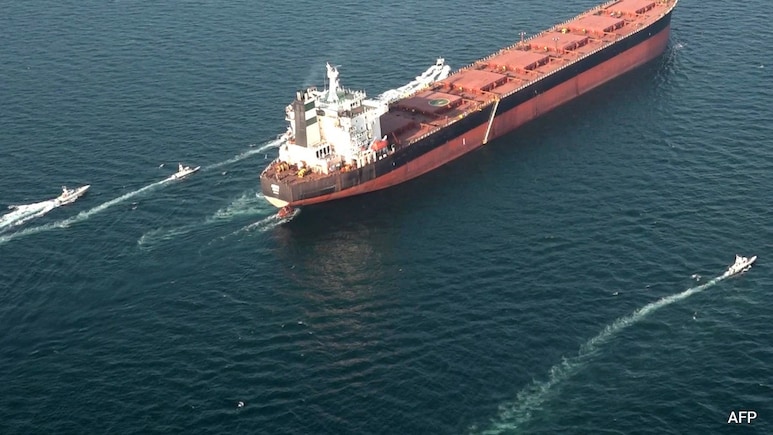
What little movement remains is dominated by sanctions-evading tankers carrying Iranian oil, the shipping data firm reports. Iran has imposed a "toll booth" screening system. Vessels are now required to abandon the usual deep-water channel that runs down the middle of the strait and instead detour north, hugging the Iranian coast around Larak Island.
Before being allowed through, operators must contact intermediaries approved by Iran's Islamic Revolutionary Guard Corps and furnish detailed information on ship ownership, cargo manifests and crew lists.The system has earned its nickname, yet hard evidence of actual cash changing hands remains sparse.
Of the at least 63 vessels that have taken the Larak Island route in the past fortnight, according to Lloyd's List, only two are confirmed to have paid any fee. The remainder appear to have secured passage after diplomatic interventions by their governments.
In peacetime, the strait carries roughly one-fifth of the planet's crude oil and liquefied natural gas.
The conflict erupted on February 28 when the United States and Israel launched air strikes on Iranian targets. Tehran responded with missile barrages across the region and promptly tightened control over the waterway.
Jaiswal added that more than 1,200 Indian nationals have now been safely evacuated from Iran amid the fighting. Of those, 845 are students. The operation has been conducted via two routes -- 996 nationals crossed into Armenia, while 204 travelled overland into Azerbaijan.
Iran earlier today said that its "Indian friends" don't need "to worry" about the Strait of Hormuz.
"Our Indian friends are in safe hands, no worries," the Embassy of Iran in India said in a post on X on Thursday.
Track Latest News Live on NDTV.com and get news updates from India and around the world

