





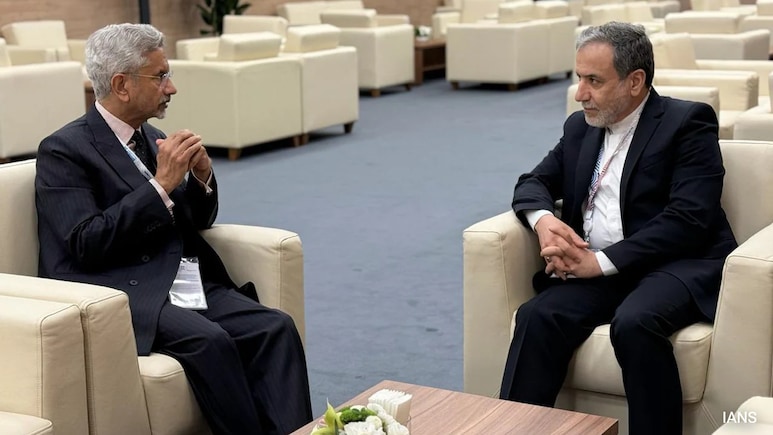
Iranian Foreign Minister Seyed Abbas Araghchi on Wednesday dialled his Indian counterpart S Jaishankar and discussed various aspects of the West Asia crisis.
The phone conversation came two days after Araghchi held wide-ranging discussions with Russian President Vladimir Putin in Moscow.
"Received a phone call from Foreign Minister Seyed Abbas Araghchi of Iran this evening," Jaishankar said on social media.
"Had a detailed conversation about various aspects of the current situation. We agreed to remain in close touch," he said.
Received a phone call from Foreign Minister Seyed Abbas Araghchi of Iran this evening. @araghchi
— Dr. S. Jaishankar (@DrSJaishankar) April 29, 2026
Had a detailed conversation about various aspects of the current situation. We agreed to remain in close touch.
The Iranian embassy in New Delhi said the two sides "discussed and exchanged views on the latest developments related to the ceasefire, bilateral relations, as well as regional and international issues".
During a phone conversation between Seyed Abbas @araghchi, Foreign Minister of Iran, and Subrahmanyam Jaishankar, Minister of External Affairs of India, the two sides discussed and exchanged views on the latest developments related to the ceasefire, bilateral relations, as well… pic.twitter.com/Vx6B5hoezx
— Iran in India (@Iran_in_India) April 29, 2026
It is learnt that the situation arising out of the US's blockade of the Iranian ports, as well as Iran's restrictions on the movement of ships through the Strait of Hormuz, figured in the conversation.
The Iranian foreign minister travelled to Moscow after visiting Oman and Pakistan as part of diplomatic efforts to end the Iran-US war.
The first round of peace talks between Iran and the US, held on April 11 and 12 in Islamabad, failed to bring an end to their conflict.
Last Tuesday, US President Donald Trump extended the two-week ceasefire with Iran indefinitely to give Tehran more time to prepare a unified proposal to end the war.
The war began when the US and Israel jointly attacked Iran on February 28, killing Iranian Supreme Leader Ayatollah Ali Khamenei and several top commanders. The retaliation by the Islamic Republic extended the war to the entire Gulf region.
(Except for the headline, this story has not been edited by NDTV staff and is published from a syndicated feed.)
Track Latest News Live on NDTV.com and get news updates from India and around the world

