





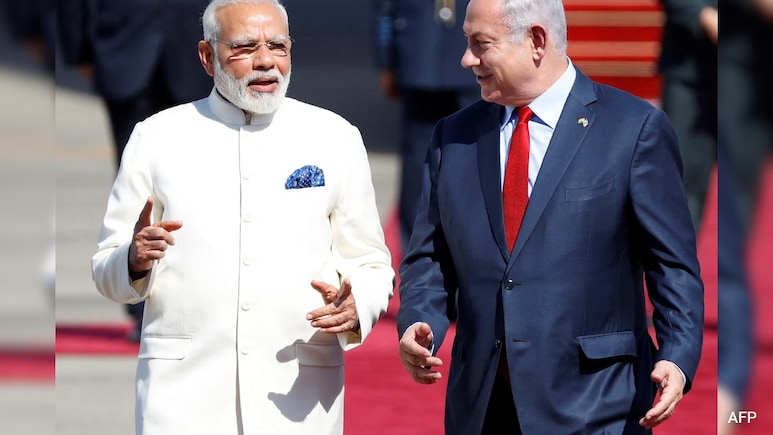
Prime Minister Narendra Modi's visit to Israel on February 25-26, 2026, comes at a moment when defence ties between the two countries are more consequential than ever. The latest Stockholm International Peace Research Institute (SIPRI) data for 2020-2024 shows a clear distribution of India's arms imports across a handful of key partners, with Russia at 36%, France at 33%, and Israel at 13%, followed by the United States at 9.6% and the United Kingdom at 3%, with the remaining 5.4% from other countries.
The takeaway is straightforward: while Russia and France remain the largest contributors by share, Israel has consolidated itself as a major defence partner for India. Crucially, India is Israel's single largest arms customer, taking about 34% of Israel's total arms exports, and PM Modi's trip underscores the centrality of this relationship to India's security planning.
What The Numbers Say And Why They Matter
India's arms import mix in 2020-2024 reflects both legacy platforms and a recent pivot toward technology-heavy capabilities. Russia's 36% share aligns with decades of platform-level cooperation, while France's 33% reflects major aviation and maritime programmes now maturing.
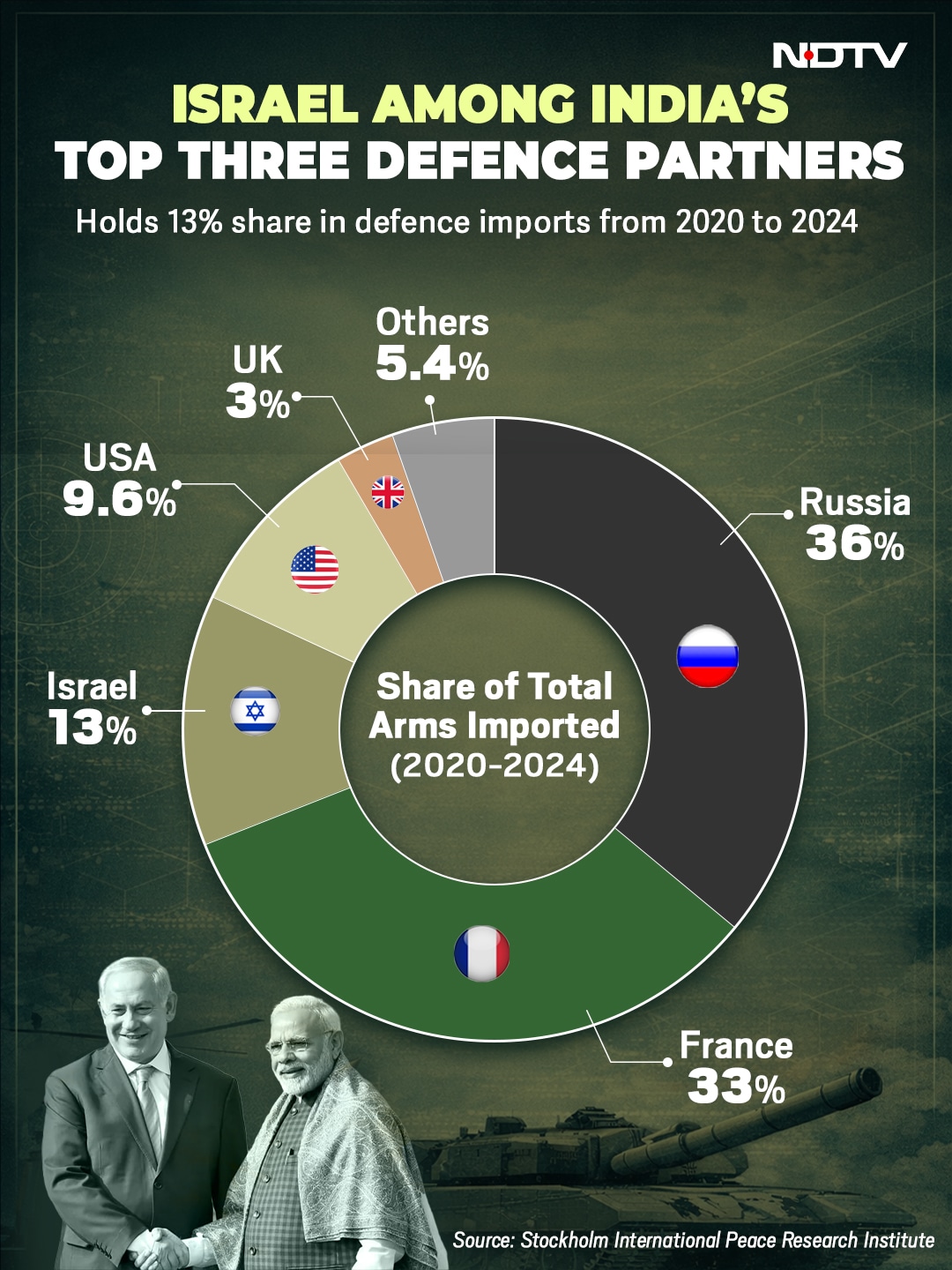
Israel's 13% marks its significance not only in volume terms but, more importantly, in the technological leverage it brings; capabilities that elevate India's awareness, protection, and precision across domains. The United States' 9.6% and the United Kingdom's 3% round out a diversified portfolio that limits single-source dependence and widens India's options for upgrades, maintenance, and co-development.
Why Israel's 13% Punches Above Its Weight
The India-Israel defence channel is defined by high-end, high-utility systems rather than marquee platforms. Over the 2020-2024 period, India's purchases from Israel are concentrated in advanced, technology-dense categories that directly shape deterrence and response times.
- 35% of all imports are missiles, including long-range missiles, loitering ammunition, and precision-strike weapons.
- 24% are sensors, such as radars and optical systems that help India monitor borders and airspace.
- 22% are air-defence systems, which protect Indian territory from enemy aircraft and missiles.
Smaller categories include:
- Naval weapons: 8%
- Aircraft: 6%
- Artillery: 3%
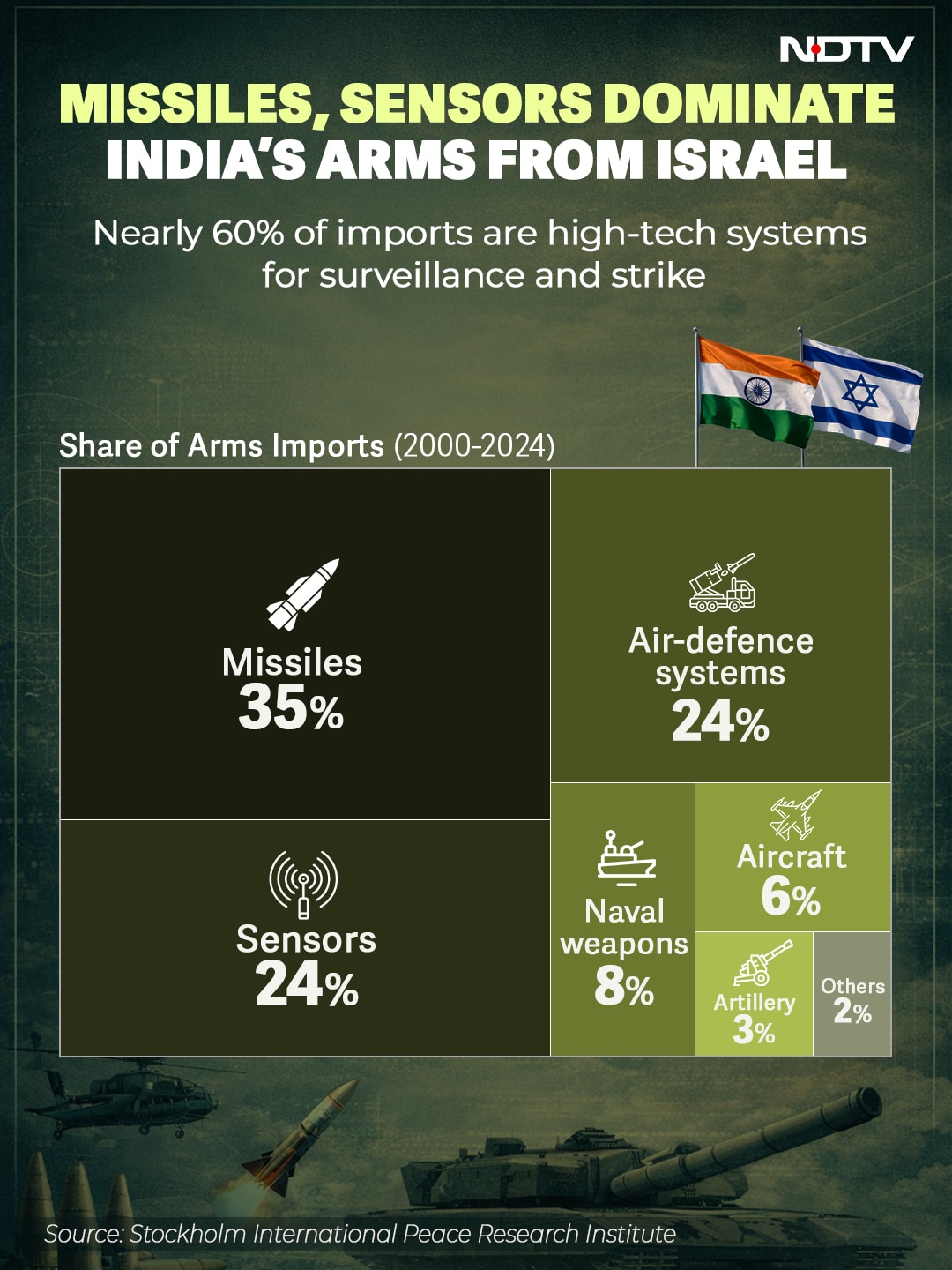
In total, more than 80% of what India buys from Israel is advanced technology designed for surveillance, protection, and accurate strikes.
Why PM Modi's Visit Matters Now
Beyond the optics of a high-profile bilateral, this visit is positioned to deepen precisely those areas where India and Israel already collaborate most effectively. Israel's Prime Minister Benjamin Netanyahu has said he wants to build a new "hexagon of alliances" with India and several other countries. This would be a group that works together on security and counters extremist threats in the region.
During this visit, both countries are expected to talk about:
- Defence cooperation
- Intelligence sharing
- Artificial intelligence
- Quantum technology
- Cybersecurity
- Joint development of new weapons, including anti-missile systems and laser defence
The symbolism is significant as well: PM Modi is set to become the first Indian prime minister to address the Israeli parliament (Knesset), with his agenda also spanning innovation showcases that bring defence primes and start-ups into the same room.
A Strategic Partnership Amid Sensitive Geopolitics
The trip unfolds against a delicate backdrop. It is PM Modi's first visit after the Gaza war that began in 2023, and it comes as multiple political strands intersect: India's vote with more than 100 countries criticising Israeli actions in the West Bank; persistent regional volatility and fears of a US-Iran confrontation; and the fact that relatively few Global South leaders have travelled to Israel since the conflict, making this engagement particularly notable.
Against this churn, the defence channel has remained robust. For India, the value proposition is clear: Israel supplies battlefield-relevant, rapidly deployable technology with proven combat pedigrees and does so at a pace that fits India's operational timelines.
Track Latest News Live on NDTV.com and get news updates from India and around the world

