Opinion | How Israel Once Defied Its Biggest Ally To Secretly Help India Against Pakistan
During the 1971 India-Pakistan war, Israel secretly supplied India with critical military equipment despite the absence of formal diplomatic ties. Then came an 'offer' against Pakistan in the 1980s.
India and Israel enjoy a unique relationship steeped in historic people-to-people connect with ancient roots. The ancient Jewish communities in India, including the Bene Israelis, Cochini Jews, Baghdadi Jews and Bnei Menashe, survived and thrived in India and contributed to India's growth story and cultural treasure. Even though large numbers went back to Israel and the remaining have been invited, they remain a living bridge between the two countries.
Having walked the halls of power from Asia to the Americas to Europe, I have often observed that diplomacy is usually a cold game of chess. Yet, the bond between India and Israel feels less like a match and more like a homecoming.
The 1980s
As we look toward the horizon of 2026, we must ask, what is the true crux of this partnership? It is no longer enough to simply list our trade figures. We must confront uncomfortable realities and the monumental successes that define us.
Real trust is not built on signed papers. It is built by showing up when things get difficult. During the 1971 India-Pakistan war, Israel secretly supplied India with critical military equipment, such as 105 mm mortars, ammunition and specialised training, despite the absence of formal diplomatic ties and defying its own superpower ally, the US. This was a time when the world had turned its back on India. But Israeli Prime Minister Golda Meir reportedly facilitated assistance through an Israeli arms manufacturer and promised continued help. Israel also helped the Mukti Bahini, the Bengali guerilla force fighting Pakistan, which ultimately helped in the creation of Bangladesh.
The episode is recorded in the meticulously maintained papers of Indira Gandhi's principal secretary, PN Haksar, based on which American journalist Gary Bass wrote his book The Blood Telegram.
In the early 1980s, Israel again offered to assist India in destroying Pakistan's Kahuta nuclear facility to dismantle the country's nuclear programme. It even sought permission for its fighter jets to use Indian airspace and refuelling facilities. The plan was shelved only due to fear of retaliation from Pakistan - which could lead to an all-out war - and intense pressure from the US, which, in turn, was relying on Islamabad for its Afghanistan operations. Israel's offer, nonetheless, was an audacious geopolitical move, driven by its own concerns about an 'Islamic bomb' and its implications for West Asia. The whole episode remains one of the great "what ifs" of history.
These precedents became an important precursor to the two countries finally establishing official diplomatic ties in 1992.
Israel's Op Sindoor Support - Despite Trump's Comments
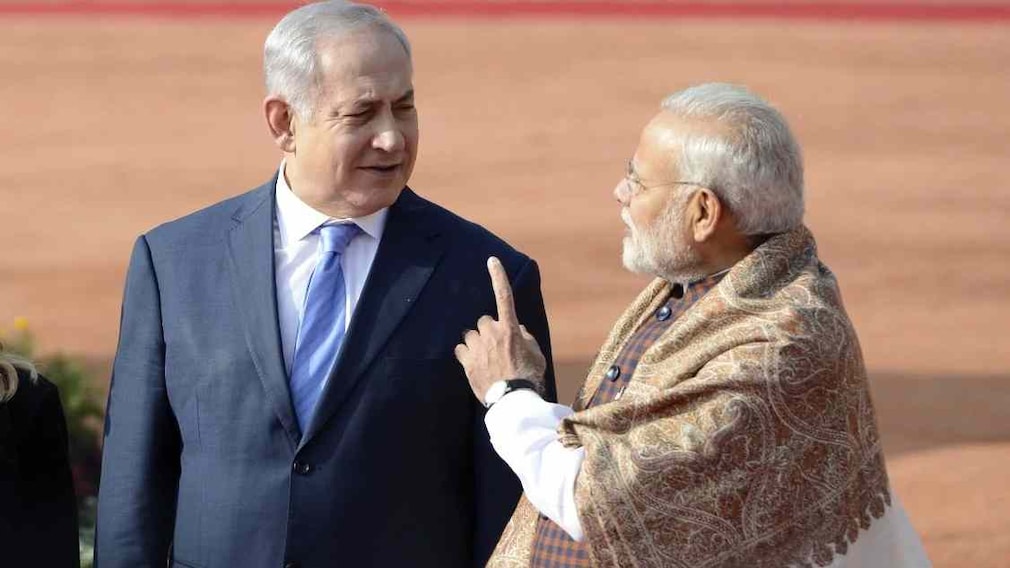
Today, that trust has matured. During the recent Pahalgam terror attacks, Israel's support during Operation Sindoor wasn't just diplomatic; it was a reflection of a shared understanding that terrorism is a civilisational threat. Because of this history, Prime Minister Netanyahu recently suggested that as India becomes a permanent power at the UN, Israel might rely more on New Delhi than on Washington. This is not just talk, it is a sign of deep faith in India as a strong and steady power.
India has always supported a "two-state solution", where both Israel and Palestine live side-by-side in peace. This was recently repeated in the Delhi Declaration at the India-Arab League meeting. For decades, the narrative has been one of "Israeli occupation", but a historical audit reveals a more complex tragedy of missed opportunities.
An Era Of Missed Chances
If India is to "put some sense into Israeli heads", as Yasser Arafat once hoped, we must also acknowledge the "sense" that was rejected. In my view, this has also been an era of missed opportunities when, with a little foresight, a viable solution could have been found.
On at least five critical occasions - the 1937 Peel Commission, the 1947 UN Partition, the 2000 Camp David Summit, the 2001 Taba talks and the 2008 Olmert offer - Israel proposed a sovereign Palestinian state. In 2008, Ehud Olmert offered nearly 94% of the West Bank with land swaps and international control of Jerusalem's Holy Basin. These offers were rejected because of disagreements over the "Right of Return" and the status of Jerusalem.
For peace to last, India's balanced policy must encourage leadership on both sides to accept realistic solutions rather than holding out for "everything or nothing". But India also welcomes and makes efforts through regional and sub-regional arrangements like Abraham Accords, I2U2 and IMEC, where dialogue, diplomacy and peace are the underlying features for a viable cooperation.
Other Forms Of Cooperation
The most "humane" aspect of our bond isn't found in defence deals but in the soil of rural India through MASHAV (Israel's Agency for International Development Cooperation). This isn't just "tech transfer", it's a revolution in dignity for the Indian farmer. Through the MASHAV program and the Indo-Israel Agricultural Project, our two countries have set up 30 centres of excellence across India. These centres teach over a million farmers how to use technology to grow more food while using much less water. In places like Gujarat, this has allowed farmers to use 80% less water while seeing their crop yields grow significantly.
This cooperation serves people in other ways, too. The India-Israel Innovation Fund (I4F) is currently funding a project that uses Artificial Intelligence to find tuberculosis early in rural areas. We are also working together on drone systems to keep our borders safe and on solar-powered water pumps for poor villages. This is what a "strategic partnership" looks like when it actually helps regular people.
India's Unique Position
The tension in West Asia today is a major risk that could hurt India's energy supply and the millions of Indians living in the Gulf. India can no longer just watch from the sidelines. Our friendship with both the Arab world and Israel means we are in a unique position to help keep the region stable. As Prime Minister Modi visits Israel again, our goal should be to move from just buying technology to building it together. Our relationship is "beyond words" because it is now about our shared survival and growth.
Hopefully, PM Modi's visit will ensure not only the strengthening of bilateral relationship with several agreements and strategic institutional arrangements but will also help stabilise the delicate and fragile regional matrix by emphasising peace, dialogue and diplomacy.
(Anil Trigunayat is a former Indian Ambassador to Jordan, Libya and Malta and Distinguished Fellow and Head of West Asia Experts Group at the prestigious Vivekananda International Foundation)
Disclaimer: These are the personal opinions of the author
-
Blog | 'Baap Da Brat': Kerala Mini Cooper Crash, And Why 'Daddy' Can't Keep Saving You

There are three things you should never underestimate in India: the power of 'jugaad', the elasticity of the law, and the confidence of a 'Baap da Brat' who believes his Papa Posh can fix absolutely anything.
-
Opinion | 'Say Our Name': Why A Tiny Island Nation Wants The World To Get Its Name Right
Standing before the UN hall of nations, Naoero President David Adeang asked the world to unlearn its comfortable habits and speak a restored truth.
-
TVS Succession Row Explained: Why Venu Srinivasan's Family Is Divided Over Wealth
TVS Family Dispute: TVS Holdings is a key entity because it owns a controlling stake in TVS Motor Company. It owns 50.26% of TVS Motor.
-
Opinion | The US Is Showing India Just How Cheap Its 'Friendship' Is
Can local talent fully replace Indian contribution? Why is the US leading in setting up Global Capability Centres in India - over 60% - and pocketing the IP?
-
Jantar Mantar Tells Time. The Clock Just Stopped On Its Time As An Iconic Protest Site
On Monday, October 12, 2026, Delhi Police denotified Jantar Mantar Road as a designated site for demonstrations. The Supreme Court had given it a nudge. Here's how history met politics on that street for decades.
-
Opinion | Saudi Airport Attack, And Why Pakistan Keeps Biting Off More Than It Can Chew
For all those who were envious of Pakistan's 'new status' as "mediator extraordinaire", here is a reality check
-
Opinion | Visa Shocks To Racist Attacks, When Did America Come To Hate Indians So?
Sometimes it is about H-1B visas. Sometimes it is jobs. Sometimes it is "foreigners." Sometimes it is about temples. The language of the attack varies, but the message is consistent
-
How El Nino And Warming Oceans Could Shape Earth's Climate In 2027
From changing ocean currents to extreme weather, scientists are watching a combination of climate signals that could influence temperatures, rainfall and ecosystems in the months ahead.
-
Blog | Nana Patekar, And The Sharp, Lasting Sting Of His 'Plain-Speak'
"Subah ghar se niklo, bheed ka hissa bano..." Nana Patekar's characters often spoke with the bluntness of men who had little patience for pretence. Just like Nana himself.