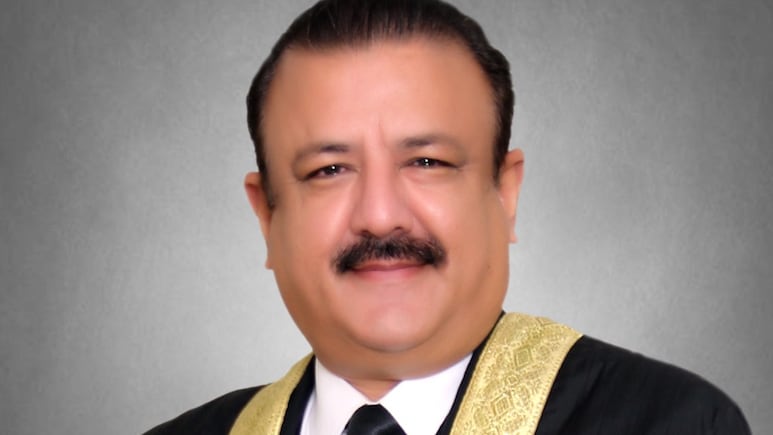
A judge from Pakistan served in the Islamabad High Court (IHC), delivering judgements without anyone discovering that he held a fake law degree. The IHC bench where he practised law for 5 years rendered his law degree void ab initio, or void from the beginning. Therefore, his appointment as a High Court judge was legally invalid.
According to a report in Dawn, the Islamabad High Court issued a detailed 116-page judgement on Monday, February 23, removing one of its judges, Justice Tariq Mahmood Jahangiri, from his post. Jahangiri was appointed to the High Court in December 2020 but was barred in September last year from performing judicial duties as a judge.
The High Court's decision was based on the original records provided by the Karachi University Registrar. The court stated that Jahangiri's educational documents were fraudulent, including impersonation and attempting to evade punishment.
The judgement noted that Jahangiri sat for the exam in 1988 using a fake enrolment number. He was caught cheating in the exam, and in 1989, the university banned him for three years. Jahangiri resorted to fraudulent means instead of accepting the punishment. The following year, he sat for the exam again under the name "Tariq Jahangiri", using an enrolment number that had been assigned to another student named Imtiaz Ahmed.
Furthermore, the principal of Government Islamia Law College told the court that he "was never admitted" to the institution.
In the judgement, the court has noted that despite Jahangiri being given multiple opportunities to produce original documents and a written reply, he failed to do so.
Instead, he moved applications requesting a full bench, the recusal of the chief justice, and an indefinite adjournment, citing related proceedings pending before the Sindh High Court.
The bench said that these are "dilatory tactics" and stated that since evidence had been produced by the petitioner, the burden has shifted to the respondent to prove his law qualifications. His failure to produce evidence warranted an opposite inference.
Track Latest News Live on NDTV.com and get news updates from India and around the world


