





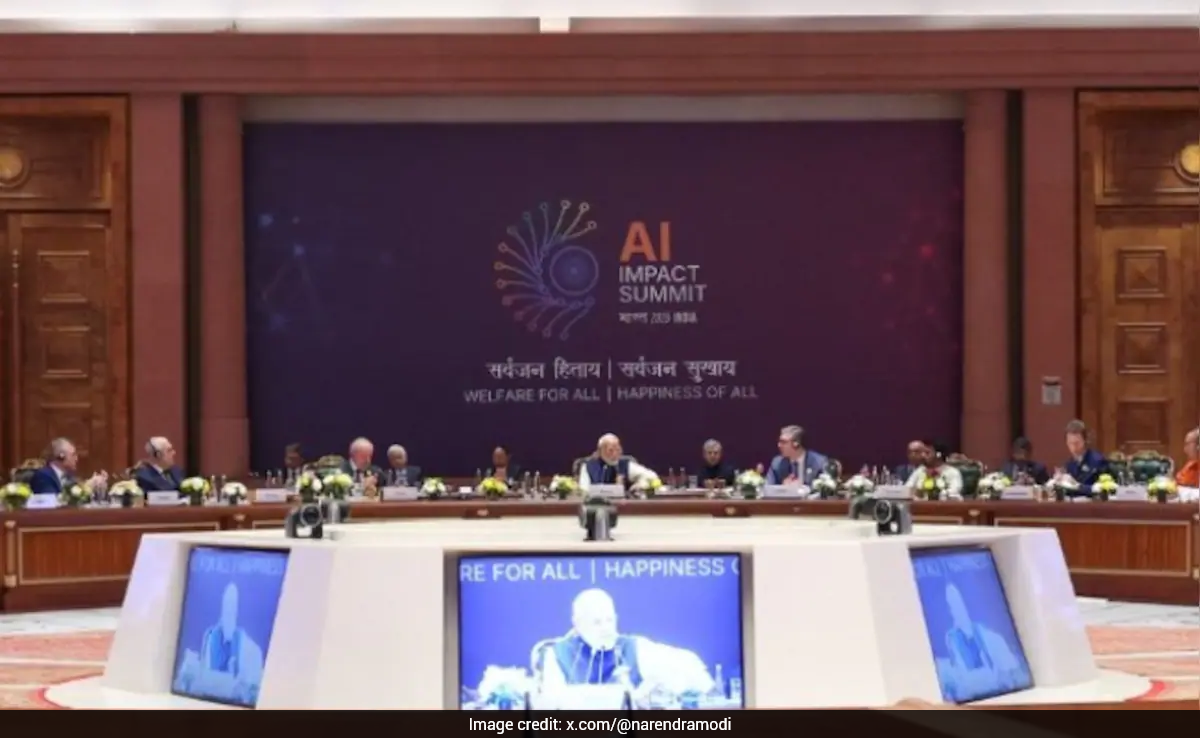
As the AI Impact Summit unfolded at Bharat Mandapam with unprecedented scale and ambition, one voice stood out for blending hard technology with human values.
In an exclusive conversation with NDTV's Senior Executive Editor Aditya Raj Kaul, Nir Dagan, Head of Innovation, Data and AI at the Israel National Digital Agency, described India not just as a rising AI power, but as a country uniquely positioned to shape the moral compass of the artificial intelligence age.
Speaking on the sidelines of the summit at Bharat Mandapam, Dagan said the scale of the New Delhi gathering was unlike anything he had seen before. "If 300,000 people arrived in Tel Aviv, it would double the population of the city," he remarked, calling the summit extraordinary not only for its size but also for the quality of debate and organisation.
With heads of state, ministers and technologists in attendance, Dagan said the event underlined India's arrival as a serious global force in artificial intelligence.
For Israel, India is no longer just a friendly partner but a strategic ally in what Dagan described as the next technological revolution. "India is becoming a superpower in AI, and that matters from a global perspective," he said, pointing to deepening academic exchanges, innovation partnerships and the growing presence of Indian talent in Israel's technology ecosystem.
Dagan's comments came at a time when India has formally joined Pax Silica, a US-led technology alliance focused on semiconductors, AI and secure supply chains. Israel is among the countries closely associated with this emerging framework.
Dagan said such alliances could help promote peace and stability by ensuring that advanced technologies are developed and deployed through trusted networks. "We believe this alliance can enable peace using AI technologies and the entire chain of AI production," he said, adding that India and Israel could work together across sectors ranging from healthcare and welfare to agriculture and security.
Looking ahead, Dagan expressed optimism about the future of bilateral ties, particularly with Prime Minister Narendra Modi expected to visit Israel later this year. According to him, both sides are working on concrete memorandums of understanding linked to the visit, with a focus on practical outcomes rather than symbolic gestures. "We want Indian companies in Israel and Israeli companies in India," Dagan said. "We want thought leadership together and a serious dialogue on how we transform the public sector using AI and how we do it responsibly."
A striking theme in the conversation was Dagan's emphasis on ethical and responsible AI, an area where he believes India has a global leadership role. Calling India one of the world's leaders in ethical AI, he said the country's democratic values and civilizational depth give it a unique advantage. "AI must see real people and real civilians," he noted. "India is the largest democracy in the world, but it is also a hub of spirituality and spiritual leadership."
Dagan warned that the rapid advance of AI could trigger a deeper crisis of meaning, as machines increasingly replicate human skills. In that context, he argued, India's long tradition of exploring the human spirit could help the world navigate the psychological and philosophical challenges of automation. "People may feel that a computer can do their work. India can help the world find new meaning to life in the age of AI," he said.
When asked what makes Israel a global innovation hub despite its small size, Dagan downplayed cultural explanations and instead pointed to necessity. "We live in a desert, so we had to innovate in water. We needed better agriculture, so we innovated there. We live in a tough neighbourhood, so security innovation became essential," he said. That same logic, he added, applies to India, which also faces complex regional challenges. Working together, he argued, the two countries can develop solutions not just for themselves but for global needs.
As the interview concluded, Dagan struck a hopeful note, expressing his wish for deeper collaboration focused on resilience, innovation and people-centric technology. At a summit dominated by algorithms, chips and compute power, his message was a reminder that the future of AI may ultimately depend as much on values and vision as on code.
Track Latest News Live on NDTV.com and get news updates from India and around the world

