






The Twisha Sharma death case has been dominating headlines and sparked a public discourse centered not only on allegations of dowry harassment and mental cruelty, but also on the deeply gendered scrutiny women often face in the urban landscape. It has also pushed forward the debate around "adjustments" married women are expected to make.
Twisha's mother-in-law, retired judge Giribala Singh, has publicly denied wrongdoing and made several claims about Twisha's mental health and personal life. In recently surfaced audio recordings that have triggered widespread debate, Singh is purportedly heard defending questions about Twisha's past relationships and insinuations of comparing certain behaviour to "promiscuity" or transactional "intimacy".
Also Read | In Twisha Sharma Case, Madhya Pradesh's 'Minus 80 Degrees' Conundrum
The 33-year-old was allegedly questioned about whether she had been in relationships with other men, if they would continue after marriage, and whether any such relationships were linked to personal or financial benefits. The recordings have been widely discussed in the media and remain part of an ongoing investigation into the case.
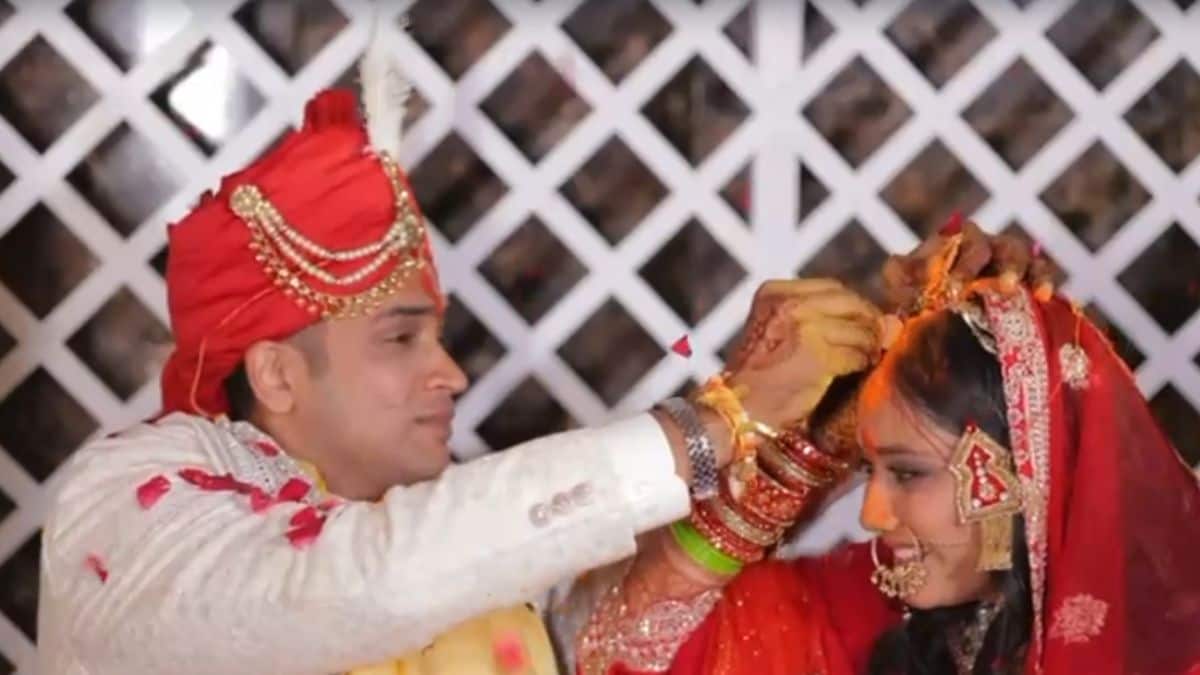
Moreover, Singh in media interviews, has also spoken about Twisha's alleged restlessness over her pregnancy, mental health issues and has also levelled allegations surrounding 'marijuana' use. The retired judge is currently serving as Chairperson of the District Consumer Disputes Redressal Forum in Bhopal and now the Madhya Pradesh government has initiated legal proceedings against Singh following the registration of a First Information Report (FIR) in Twisha Sharma's death case.
"This is such a tragedy. The girl kept screaming for help, and the response she received was appalling. Her family should have worked harder and faster to get her out of that situation. Women are often invisibilised and asked by their own families to 'adjust' in deeply distressing circumstances. Over time, this creates a sense that they have no real support system. Abuse thrives on power dynamics," said Advocate Audrey D'Mello, Director of Majlis, a legal centre for women and children facing sexual and domestic violence.
'Respectability' And Emotional Abuse In Urban Households
Advocate Audrey D'Mello described retired judge Giribala Singh's remarks about Twisha as deeply disturbing. "Even if one were to assume that everything she said was true, the real question is: what should your response be when you see someone in your own home suffering like that? The statements are deeply problematic," D'Mello said.
Also Read | 'We Were Sworn Enemies At One Point': Twisha Sharma's Husband In Wedding Video
Cruelty under the law includes both mental and physical cruelty, said D'Mello, asking observers to look for invisible injuries as well. Citing the Domestic Violence Act, Dmello said: "It recognised emotional, psychological and physical abuse, yet people still tend to look only for visible injuries. Our current systems - including the police and judiciary are still not adequately trained to understand how domestic violence actually operates. Abuse does not always leave physical marks. This is also one of the reasons many such cases fail. The lived realities women endure are often very different from the kind of evidence the criminal justice system expects."

Twisha Sharma, 33, was found hanging at her matrimonial home.
D'Mello added that "immense shame" is attached to speaking about abuse in middle- and upper-middle-class families.
"Respectability and social image become a cover for what happens behind closed doors, and that silence is often what allows abusers to get away with it. In many lower-income communities, despite other vulnerabilities, there can sometimes be fewer pressures around maintaining a polished social image, making people more likely to speak openly about violence," she said, adding, "Abuse also evolves over time - the longer it continues unchecked, the more confidence an abuser gains in exerting control and escalating violence."
Legal experts say the cycle of abuse often consists of persistent taunts, humiliation and degrading comments about a woman's character, personality, appearance, and even household skills, gradually escalating into deeper forms of emotional and psychological control.
Opinion | Twisha Sharma And The Case Of The Ever-Innocent Indian Husband
Speaking to NDTV, advocate Flavia Agnes echoed similar sentiments regarding the visible and invisible divide of abuse in lower-income households versus affluent families.
"Many women suffer in silence to the point where they begin to feel death is the only escape. The causes may vary - it may not always be about dowry. In fact, conversations around emotional and psychological abuse remain extremely rare," Agnes said.
"Abuse does not have to be physical to be devastating. Mental cruelty alone can be enough to destroy a woman's sense of self and stability. It can come through constant comments about her cooking, character, appearance or weight in urban and high class societies. There is also financial abuse, where women are denied access to money or made completely dependent. In many upper-class families, approaching the courts is still seen as shameful, and due to this stigma most women never seek help," the women's rights lawyer said.
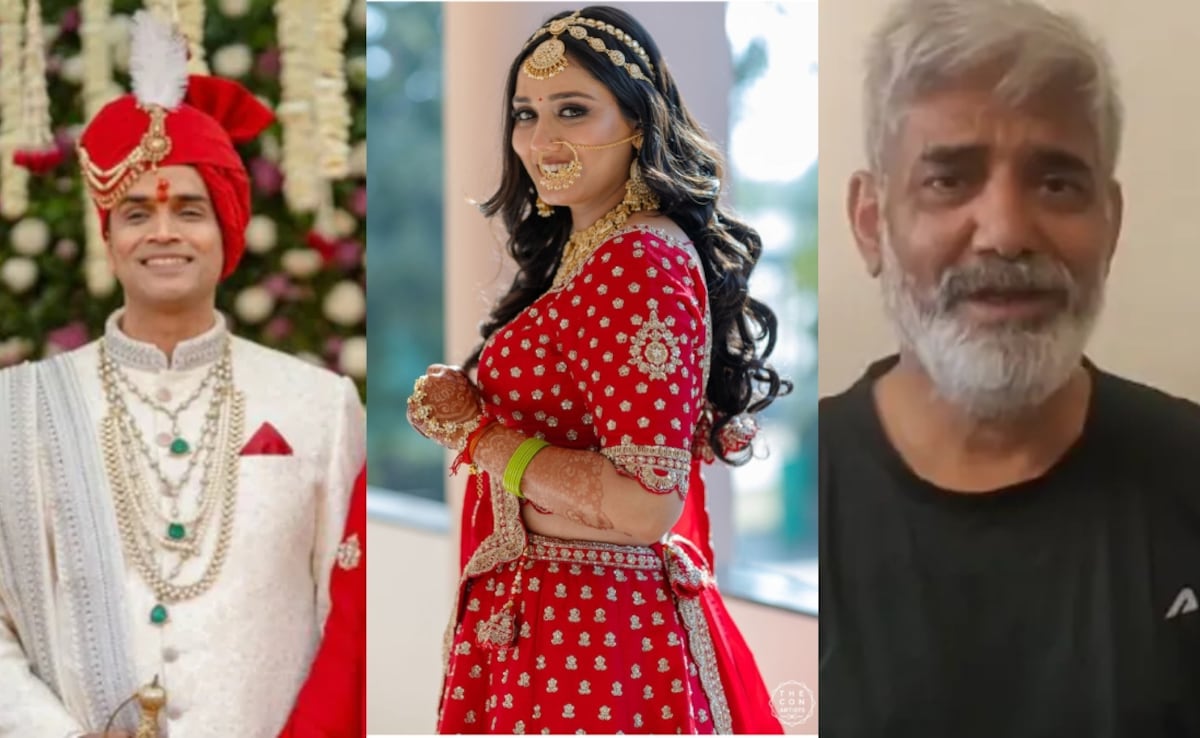
Twisha Sharma's father's (R) demand for a second post-mortem has been rejected.
Culture Of Control
According to psychologist Dr Itisha Nagar, much of the mistreatment in affluent and upper-middle-class families takes the form of emotional abuse masked as concern. "Emotional abuse harms a person's self-esteem through dismissiveness, patronising behaviour, invalidation, backhanded comments and shaming. It is often subtle rather than openly aggressive because the abuser wants to maintain their image," Dr Nagar said.
"There is often an air of superiority and image management aimed at confusing the recipient. Nasty comments are sugar-coated, making the abuse difficult to identify - this is essentially gaslighting. It can easily be misconstrued as concern. Wealth, education and social respectability create an illusion of civility, which is why psychological degradation in affluent families often goes unnoticed. Psychological scars remain unseen and unheard," Nagar added.
Also Read | Twisha Sharma's In-Laws Hid Phone With Evidence, Recordings From Cops: Friend
She said prolonged emotional abuse gradually destroys a woman's self-worth. What is served as "constructive criticism" is actually control resulting in anxiety, body image issues, confusion, brain fog, and a complete breakdown of self-esteem. This can make anyone shrink emotionally and disconnect from their authentic self, she added.
"We continue to hold onto the myth that education, modernity and sensibility naturally go hand in hand. Money, education and progressiveness do not guarantee empathy. Many families simply reproduce them in more sophisticated ways," she said.
Human Rights Defender, and Women's Rights Activist Khadijah Farooqui said that in upper middle-class households within the urban landscape only the results of abuse are seen and heard and not when the abuse takes place.
"In upper-middle-class societies, women are often subjected to constant taunts and made to feel as though they are never good enough, not accomplished enough, not presentable enough, not ideal enough. Restrictions imposed on modern women frequently lead to deep emotional trauma. In many such households, abuse is less visible physically but far more psychological and emotional in nature," Farooqui said.
The larger social system as well as the justice system itself often remains deeply anti-woman, she concluded.
Track Latest News Live on NDTV.com and get news updates from India and around the world

