





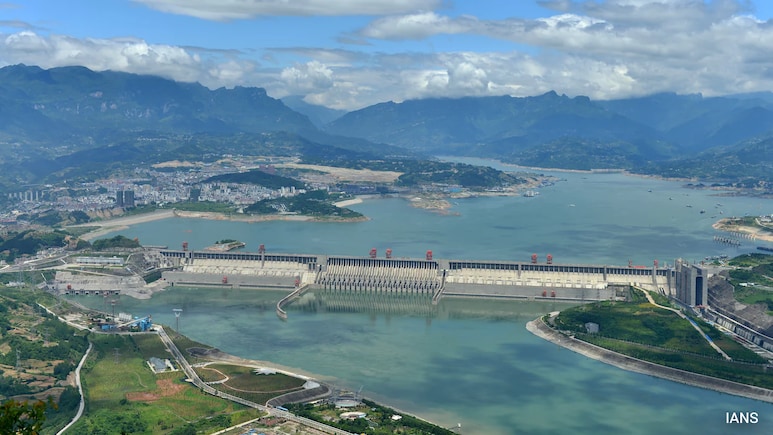
New satellite images of China's proposed 60,000 megawatt (MW) hydropower project on the Yarlung Tsangpo river shows fresh construction activity at several locations, including road networks, cleared settlements and infrastructure linked to the project's proposed tunnel system, a recent study has found out.
The findings are part of an assessment by EarthSense Labs, a geospatial AI startup incubated at the Foundation for Innovation and Technology Transfer (FITT) at IIT Delhi.
The analysis of the river compares EarthSense Labs' satellite images taken over several years to track changes around the proposed Medog hydropower project, located upstream of Arunachal Pradesh, on the other side of the Line of Actual control (LAC).
The Yarlung Tsangpo enters India through Arunachal's Siang valley, where it is known as the Siang. Further downstream, it joins other rivers to form the Brahmaputra, which flows through Assam.
One of the key locations examined in the assessment is the proposed main dam site near Mainling. Satellite images from July 2025 showed settlements and agricultural land in the area. By December 2025, several settlements appeared to have been cleared, with earthwork visible at the site.
Images from August this year show further changes along the northern bank of the river, including newly developed roads, temporary accommodation and office facilities. The assessment also points to activity that could be associated with preparations for diverting the river, although the imagery alone does not establish the exact nature or purpose of the work.
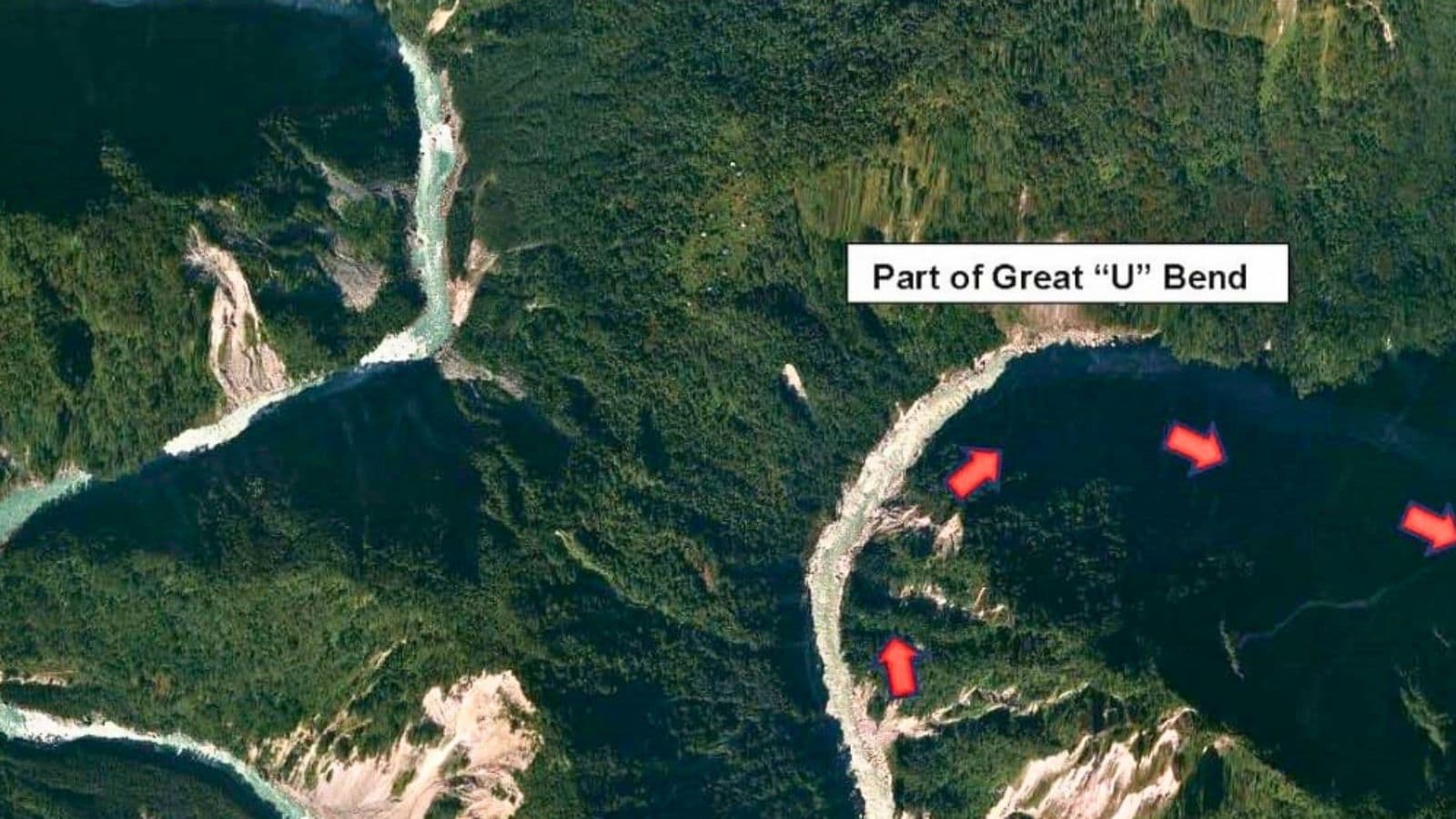
A file image of the same location which was surveyed by EarthSense Labs
The study tracked construction around the proposed tunnel outlet downstream of Medog County. Massive infrastructure development has come up in the area. Road development in the area was visible in satellite images dating back to 2018.
By 2021, a bridge, additional groundwork and an industrial-residential complex had appeared.
Further changes were recorded between 2023 and 2024, when more buildings, concrete production facilities and bridges came up. Heavy machinery was also visible in the area, indicating continued infrastructure development, the analysis has found out.
China plans to develop five cascade hydropower stations along the lower reaches of the Yarlung Tsangpo. The project is located near the river's Great Bend, where it turns around the Namcha Barwa mountain range before entering India. The steep elevation difference of more than 2,000 metres in this stretch is central to the project's power-generation potential.
Beijing formally launched the project in July 2025 at a groundbreaking ceremony attended by Chinese Premier Li Qiang in Tibet. The estimated investment is around 1.2 trillion yuan, or approximately $168 billion. Once completed, the project is expected to have an installed capacity of 60 GW, placing it among the largest hydropower developments in the world.
Its location has made the project a concern for India, particularly for communities and governments in Arunachal Pradesh and Assam. The issue is the possible impact of a large upstream project on river flows, water availability and the ecological system downstream.
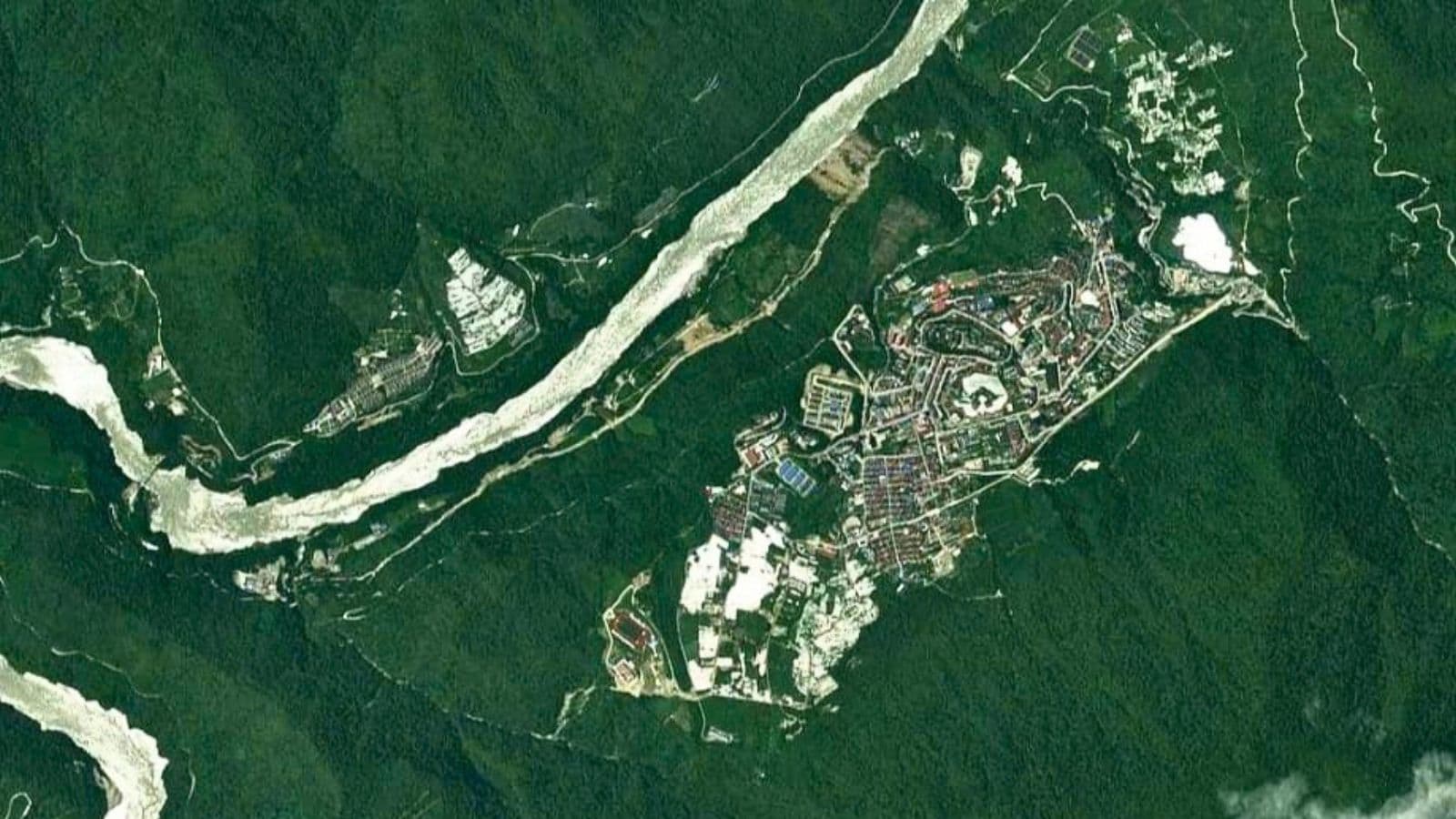
A file image of the project located near the river's Great Bend, where it turns around the Namcha Barwa mountain range before entering India
India has been considering a major storage project of its own on the Siang. The proposed 11,200 MW Siang Upper Multipurpose Project (SUMP) is planned across Upper Siang, Siang and East Siang districts of Arunachal Pradesh.
Both the state and central governments have said the project could help regulate river flows and provide a safeguard against sudden changes in water discharge from upstream China. Arunachal Pradesh Chief Minister Pema Khandu has cited its proposed live storage capacity of around 9.2 billion cubic metres (BCM) while making the case for the project.
Khandu has also repeatedly raised concerns over the absence of a binding water-sharing agreement between India and China and the lack of a transparent mechanism for sharing hydrological information.
The proposed Chinese project's reservoir storage capacity has been estimated at around 5.2 BCM in some accounts. However, the figure should be treated with caution, as a publicly established Chinese technical specification confirming that capacity has not been cited here.
The Indian proposal, meanwhile, has faced opposition from sections of the Adi community, who fear that a large reservoir could submerge ancestral land, displace settlements and affect traditional livelihoods.
The Adi Bane Kebang United and the Siang Indigenous Farmers' Forum have jointly approached Union Home Minister Amit Shah, seeking his intervention against the project. Their memorandum raises concerns over the social, cultural and environmental consequences of the proposed development.
In his last week's visit to Arunachal Pradesh, Shah reached out to the protest groups of Siang Valley, who are opposing the proposed mega dam on the River Siang, assuring them dialogue and compensation on the first day of his two-day visit to Arunachal Pradesh
"Through the media and as briefed by the chief minister, I have understood the concerns on the Siang Mega dam. This is a national project. It is a strategic project and important for the growth and development of Arunachal Pradesh. I want to assure the people of Siang Valley we will have dialogue in the most positive way; we will discuss every factor. I want to assure the people that the indigenous heritage, customs, and traditions of the people won't be compromised and we will come up with the best compensation package in the country," Shah said.
SUMP has not reached the construction stage and remains at the pre-feasibility stage, with no final decision on construction.

