





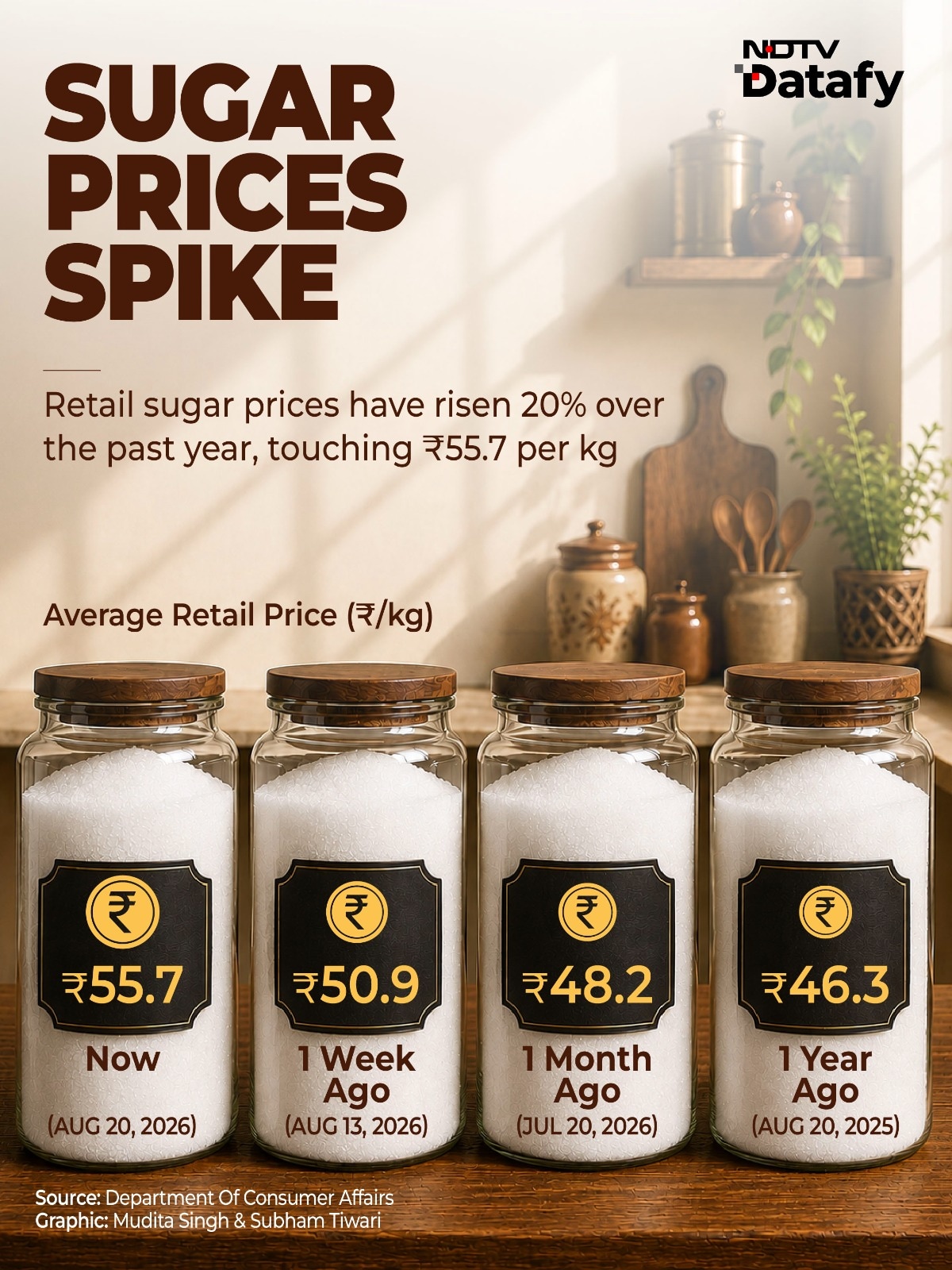
The average sugar price in India has shot up by more than 15 per cent in a month to Rs 55.7 per kilogram on August 20. In Delhi, retail sugar prices have crossed Rs 60 per kg. According to government data, prices have climbed more than 20 per cent in a year.
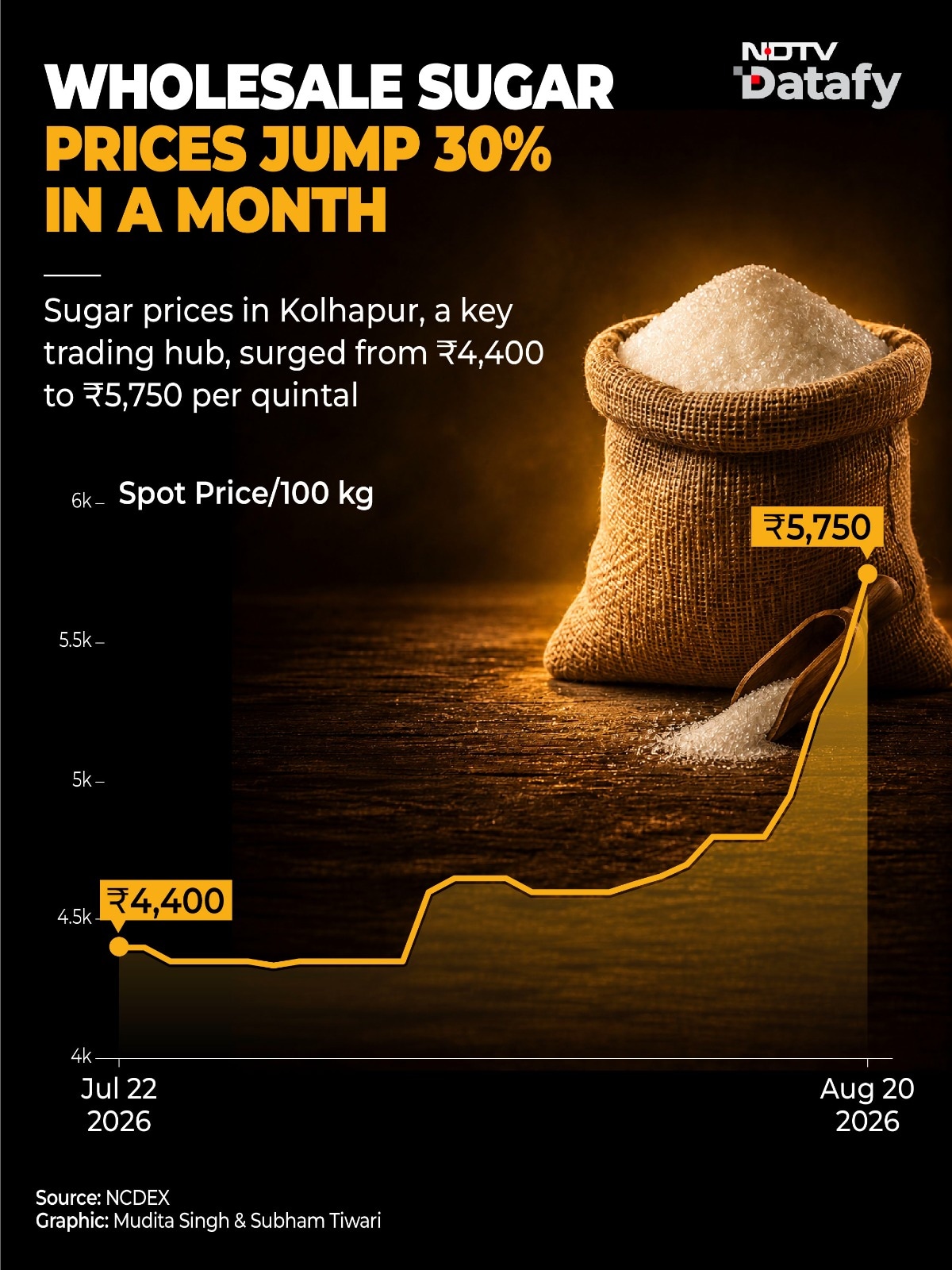
In Kolhapur, one of India's key sugar trade centres, wholesale sugar sold for Rs 5,750 per quintal on August 20, as per the National Commodity and Derivatives Exchange Limited (NCDEX).
This rise has forced the government to allow the duty-free import of 10 lakh metric tonnes (LMT) of sugar for the first time in a decade. It has also limited stocking of sugar by bulk consumers and dealers to stop hoarding, and ordered physical verification of stocks at sugar mills.
Why Are Prices Rising?
India, the largest consumer of sugar in the world, requires 270-297 LMT of sugar for the domestic market.
The rise in sugar prices is being attributed to hoarding and concerns over tight supplies, following a fall in sugarcane harvests caused by flooding in some states and poor rainfall in others, particularly in top sugarcane-producing states like Uttar Pradesh, Maharashtra and Karnataka.
In a press release, the government said sugar production during the current season is expected to be around 306 lakh metric tonnes (LMT), compared to the initial estimate of around 343 LMT by sugarcane-growing states. It attributed the drop in production to Red Rot and Top Borer diseases in sugarcane, as well as waterlogging caused by excess rainfall.
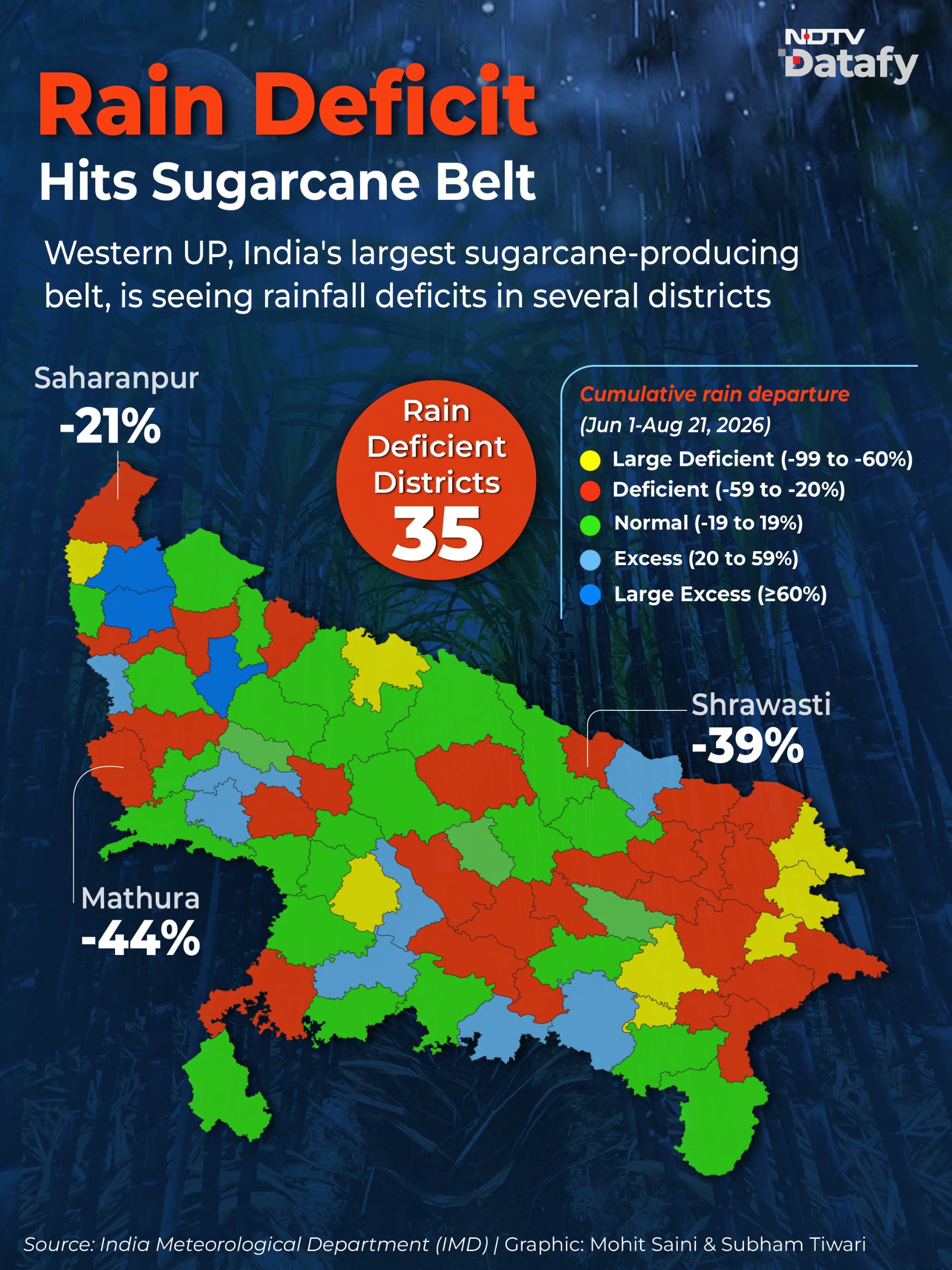
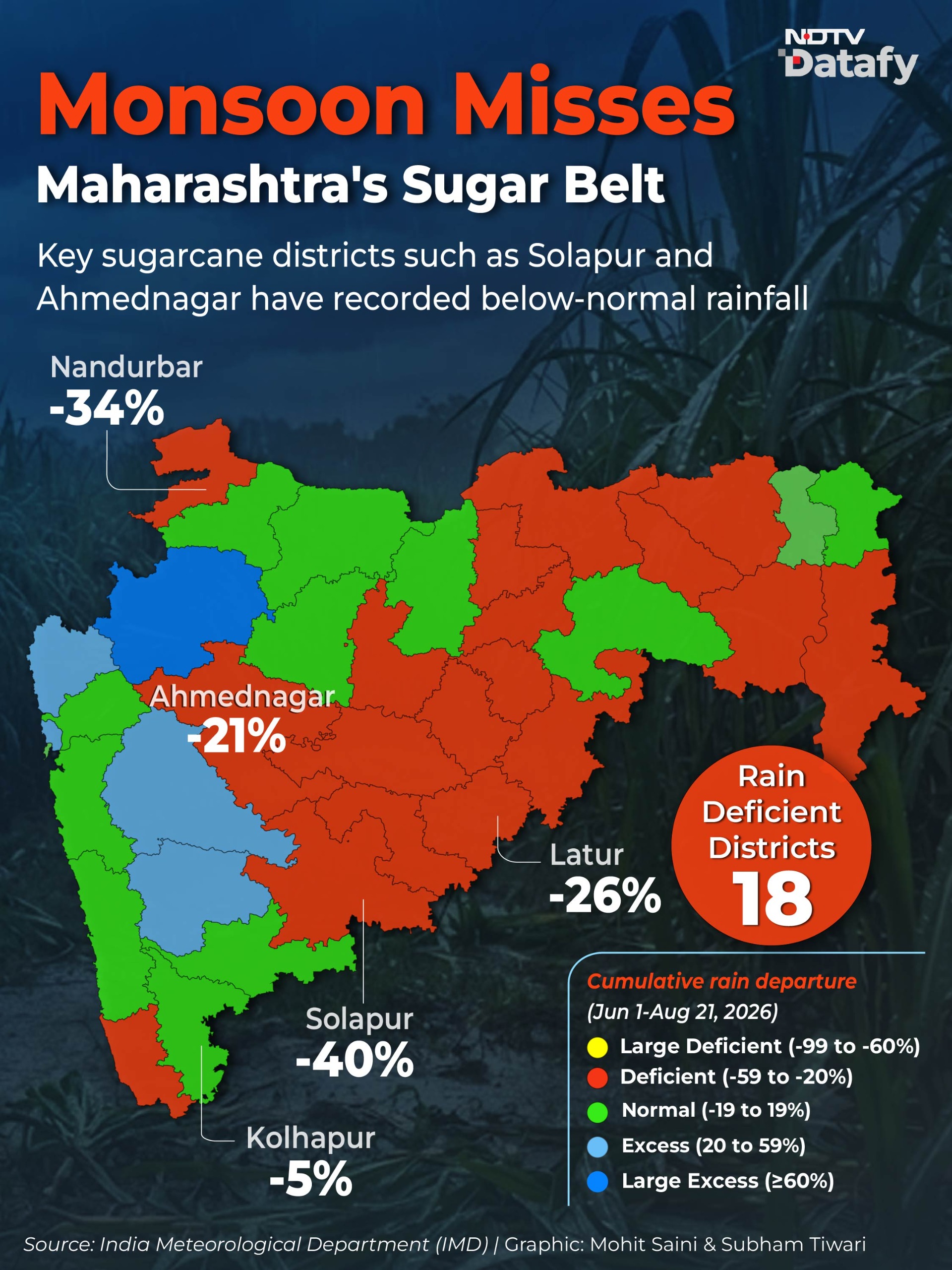
Data from the India Meteorological Department (IMD) shows that at least 35 districts in Uttar Pradesh, including many of the top sugarcane-producing districts, were rain deficient. Uttar Pradesh is the largest sugarcane producer.
Many leading sugarcane-producing districts in Maharashtra, like Solapur, Latur, Nandurbar, Beed, Parbhani and Ahmednagar, are rain deficient as of August 21. The state is the second-largest producer of sugarcane in India.
Karnataka, the third-largest sugarcane producer, has received 22 per cent less than normal rainfall this year.
"Despite the lower than estimated production, adequate sugar stocks are available in the country to meet domestic demand until the new crushing season begins in October," the statement said, without specifying the quantity of the stocks.
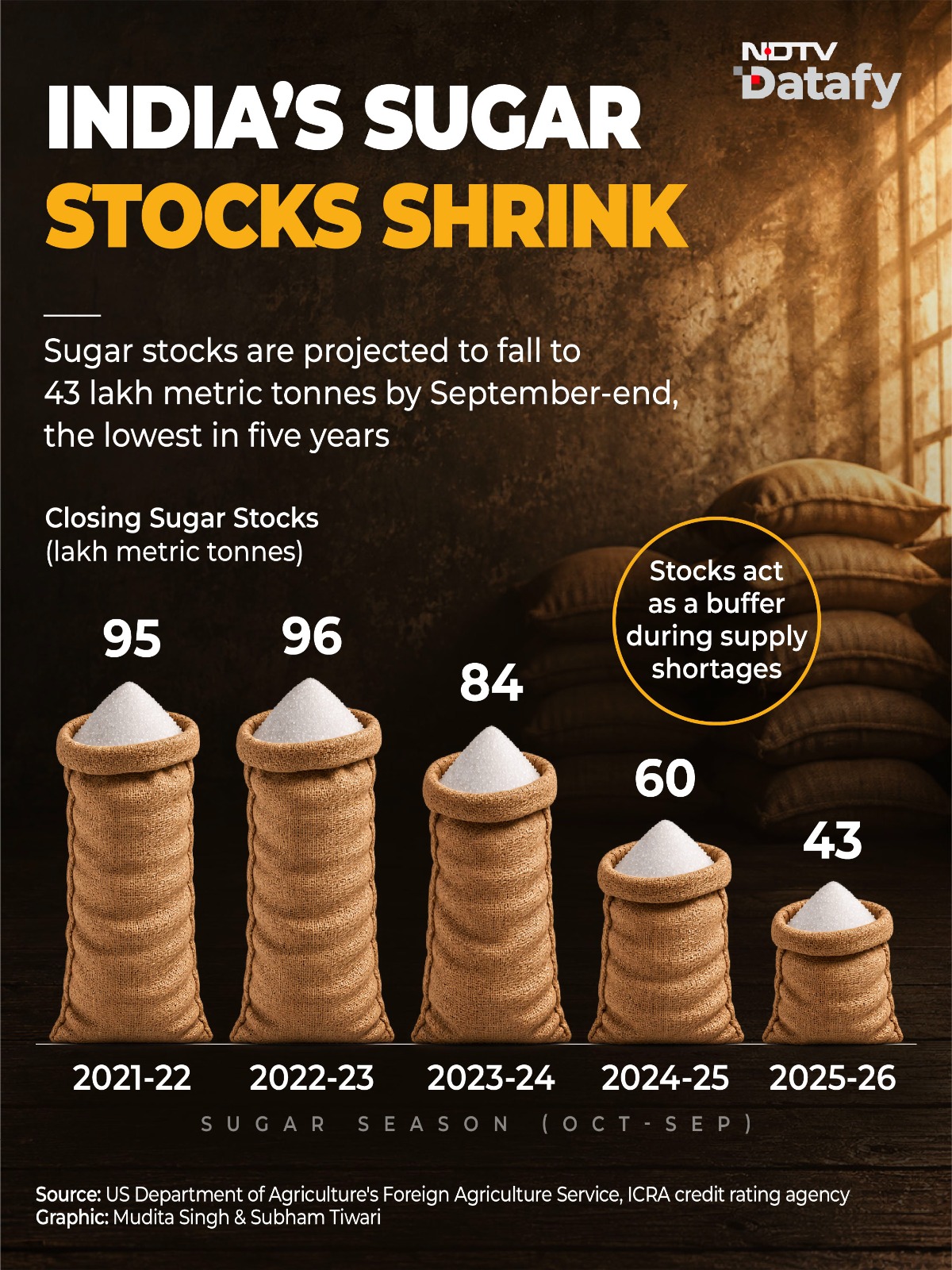
Data shows that sugar stocks, which are necessary to shield domestic consumers from market disruptions, have fallen over the years and could hit the lowest in at least the last five years before the next crushing season begins in October.
Is Ethanol Responsible For Sugar Shortage?
Many on social media have blamed the diversion of sugar for ethanol production to meet the 20 per cent petrol blending goal. However, data shows the allocation of sugar for ethanol production has remained largely stable despite fluctuations in overall sugar production.
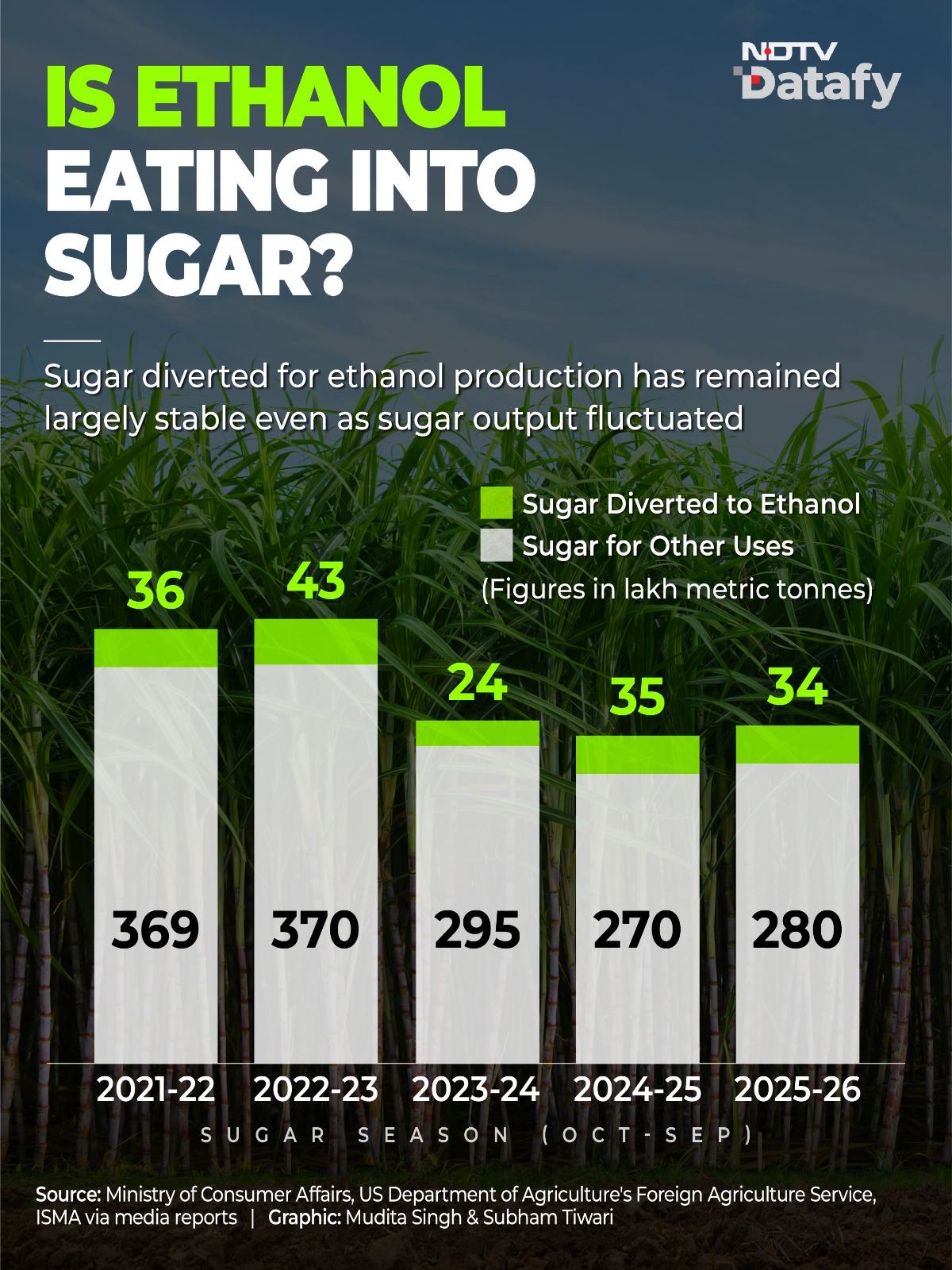
The government, on August 21, said around 9 per cent of overall sugar produced in the country has been diverted for ethanol production in 2025-26, adding that nearly three-fourths of the ethanol produced in the country now comes from grains, particularly maize.
Track Latest News Live on NDTV.com and get news updates from India and around the world

