



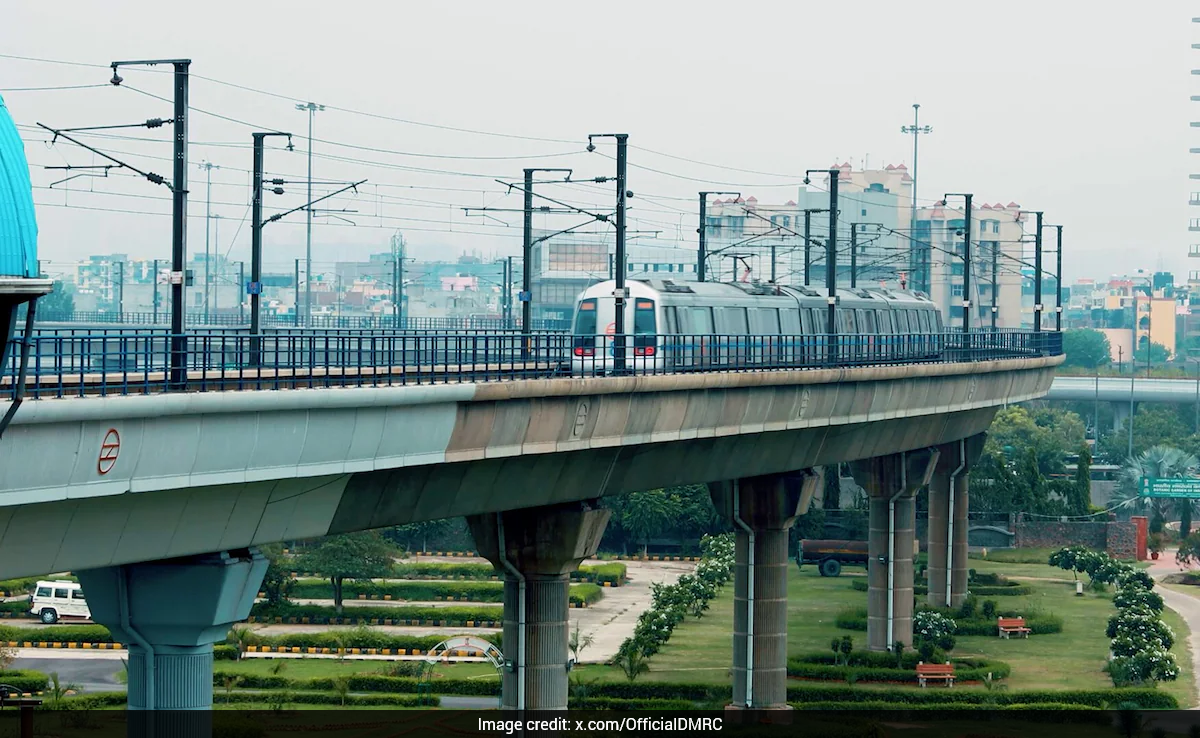
The Delhi Metro Rail Corporation (DMRC) on Friday formally started construction on the long-awaited Lajpat Nagar-Saket G Block corridor under Phase-IV.
The project, known as Golden Line-11, is expected to significantly transform connectivity across South Delhi.
The first test pile and the ceremonial groundbreaking were conducted near Pushpa Bhawan, close to Saket.
DMRC begins the construction work on Lajpat Nagar-Saket G Block Corridor
— Delhi Metro Rail Corporation (@OfficialDMRC) December 12, 2025
The Delhi Metro Rail Corporation Limited (DMRC) today commenced construction work on the all important Saket G Block- Lajpat Nagar corridor of Phase-IV. This is the first section beyond the Phase-IV's… pic.twitter.com/8y3jH8V4es
Senior DMRC officials, including Managing Director Dr Vikas Kumar, were present at the event. Representatives from Rail Vikas Nigam Limited (RVNL), which is responsible for executing the construction work, were also in attendance.
This is the first new section after the primary Phase-IV corridors where actual civil construction has begun and is being regarded as a major milestone in the expansion of the Delhi Metro network.
Delhi Metro 'Golden Line' To Have 8 Stations
The new corridor from Lajpat Nagar to Saket G Block will be a completely elevated line with eight stations:
- Lajpat Nagar
- Andrews Ganj
- GK-1
- Chirag Delhi
- Pushpa Bhawan
- Saket District Centre
- Pushp Vihar
- Saket G Block
The route will serve dense residential pockets such as Greater Kailash-1, Saket, and Pushp Vihar, and provide easier access to multiple schools and government offices. Daily travel for hundreds of thousands of commuters in the region is expected to become faster and more convenient once the corridor becomes operational.
Connectivity Through 3 Interchanges
The new line will integrate with three major existing metro corridors. Key interchange points include:
- Lajpat Nagar - Interchange with Violet Line and Pink Line
- Chirag Delhi - Interchange with Magenta Line
This corridor will turn Lajpat Nagar into a triple-interchange station.
Each coach on the upcoming corridor will be designed to accommodate approximately 300 passengers, including both seating and standing capacity. The total capacity will reach around 900 passengers per trip. By 2041, with increased train frequency and the area's continued growth, the corridor is expected to handle over 1.2 lakh passengers per day.
Track Latest News Live on NDTV.com and get news updates from India and around the world

