




The Central Reserve Police Force (CRPF) has reported zero deaths of its personnel in 2026, for the first time in decades. This comes hand in hand with another key shift in the internal security landscape of India - the near-complete elimination of left-wing extremism from areas once considered strongholds of Naxal violence.
Historical data suggests the two trends are closely linked.
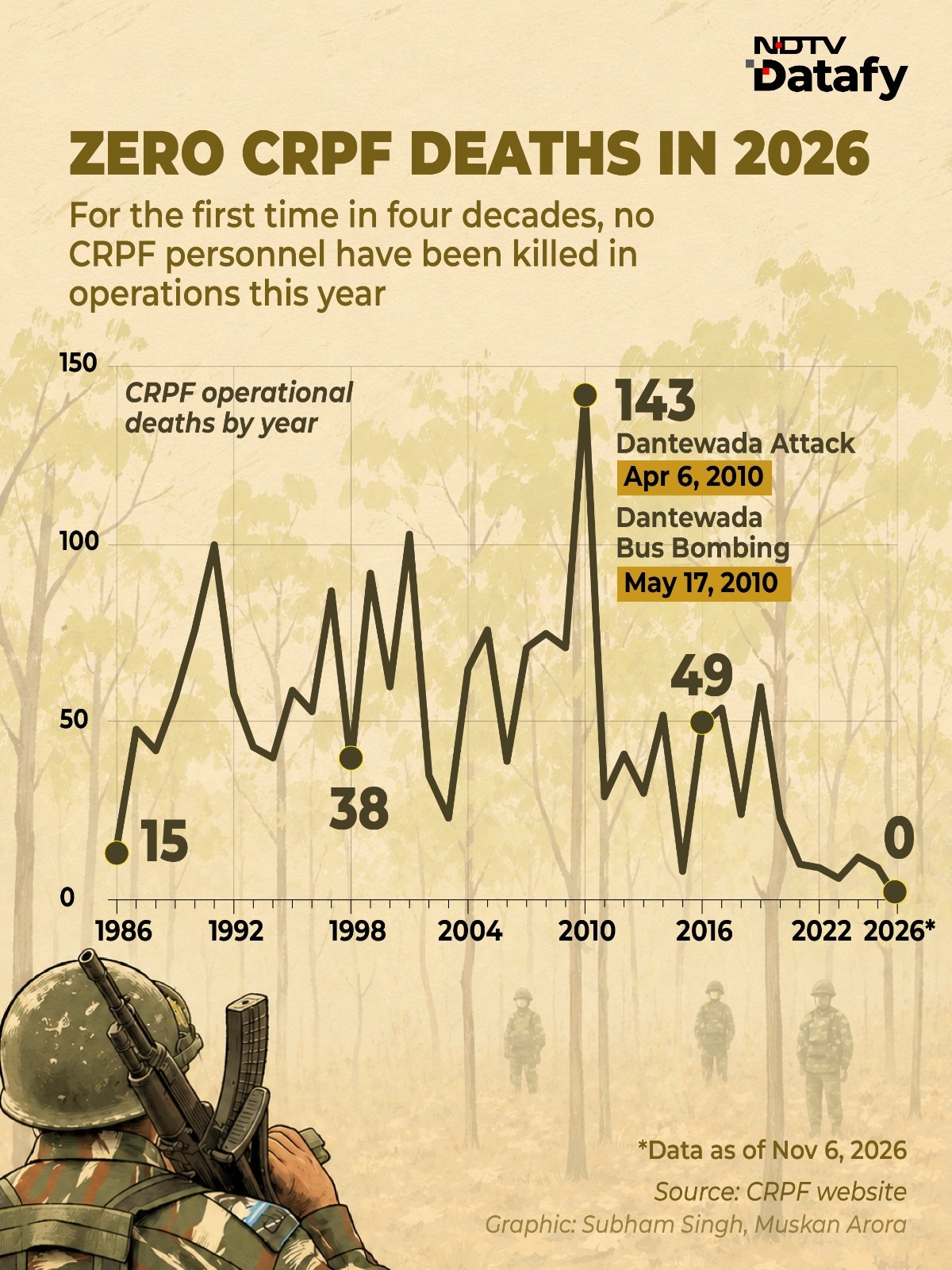
Data on CRPF deaths since the mid-1980s shows that 2026 stands out as the only year with no reported casualties. This marks a turnaround from 2010, when the force lost 143 personnel, the highest annual number in the available data. For much of the last three decades, CRPF losses routinely ranged between 40 and 100 personnel a year. In 2001, 103 personnel were killed, followed by 76 in 2005, 71 in 2007, 75 in 2008 and another 71 in 2009.
The decline became more visible in the last decade. Deaths fell to just eight in 2015, remained below 25 in most years after 2018, and dropped to single digits in 2022, 2023 and 2025. In 2026, the number reached zero.
An analysis of the causes behind CRPF deaths between 1987 and 2026 offers a clue to this long-term decline. Left-Wing Extremism, including Naxal and Maoist violence, accounted for 719 CRPF deaths during the period, making it the single largest cause of fatalities. Armed groups and terrorists were responsible for 682 deaths, while North-East extremist groups accounted for 519. Other causes and unspecified incidents together made up less than 70 deaths.
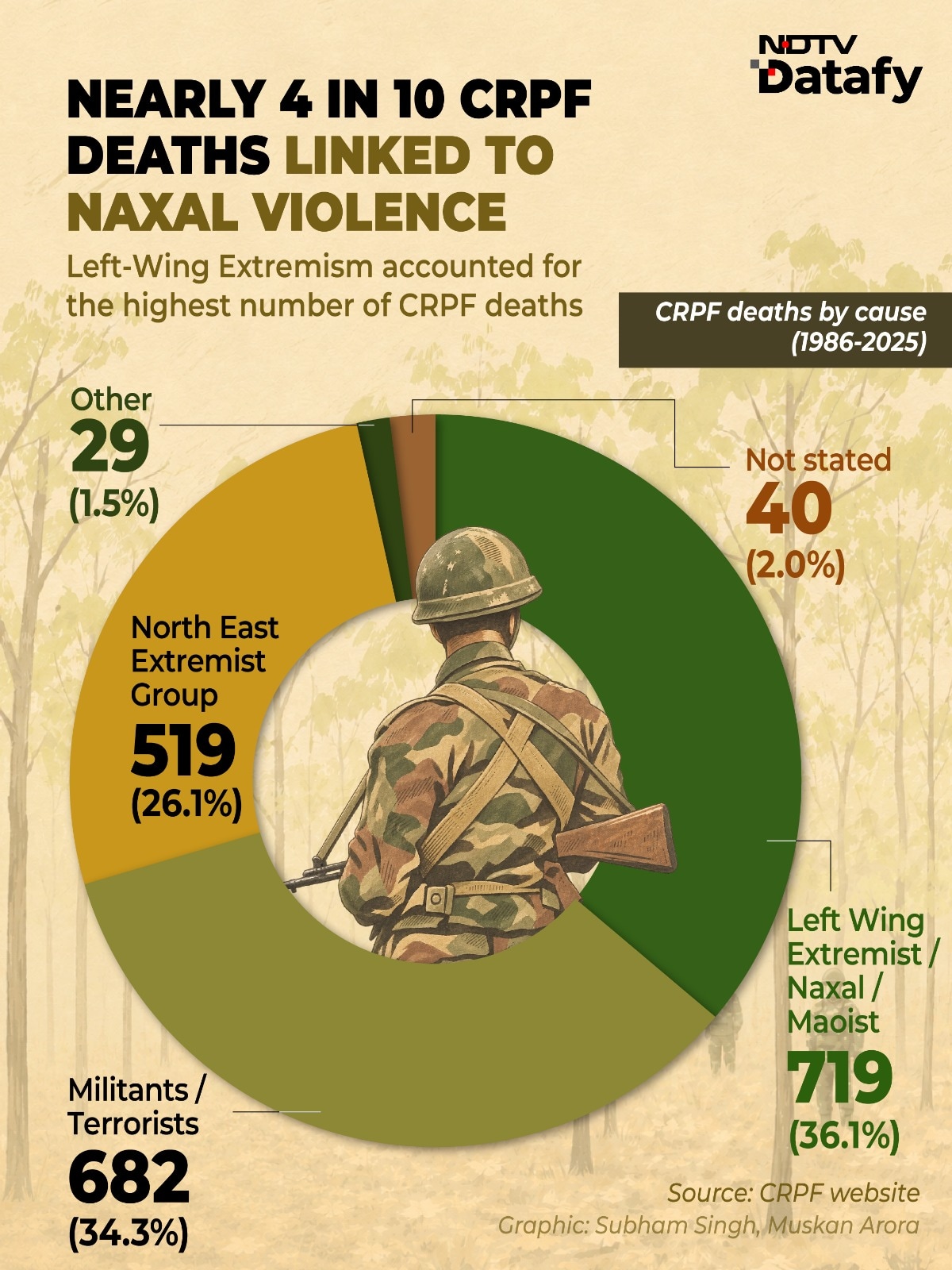
Roughly four out of every ten deaths recorded during the period were linked to Naxal-Maoist violence.
The geography of the insurgency has also changed dramatically. In 2013, the Ministry of Home Affairs identified 182 districts as affected by Left-Wing Extremism. These districts stretched across a vast swathe of central and eastern India, forming what was commonly known as the "Red Corridor".
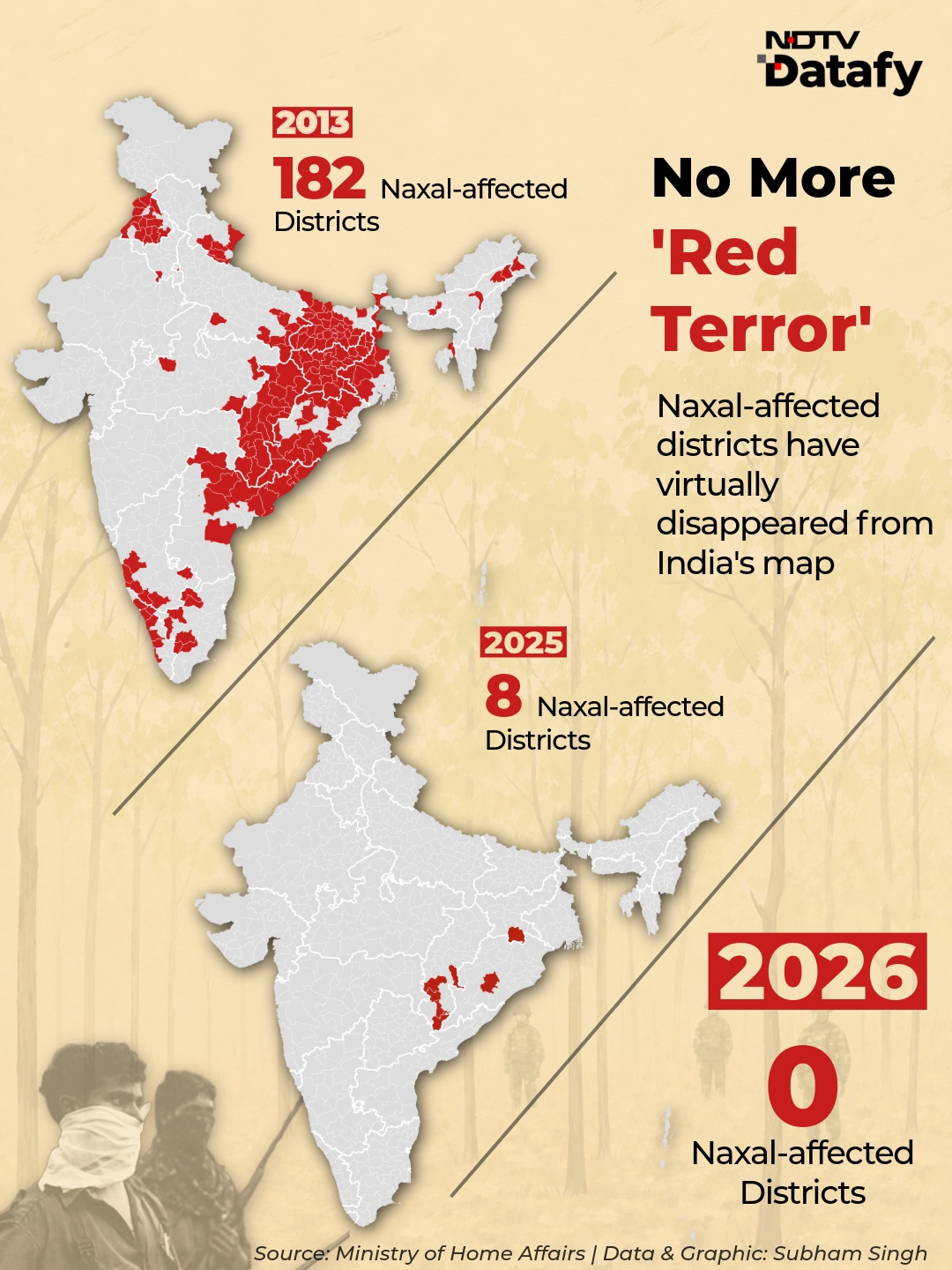
By 2025, that number had fallen to eight districts. In 2026, no district remained on the government's list of Naxal-affected areas.
#Datafy | For the first time in decades, the Central Reserve Police Force (CRPF) has reported zero personnel casualties in 2026. The milestone comes alongside another significant shift in India's internal security landscape: the near-complete elimination of Left-Wing Extremism from districts once considered strongholds of Naxal violence. Historical data suggests the two trends are closely linked.
— NDTV (@ndtv) November 6, 2026
Areas once considered major centres of Maoist activity have steadily disappeared from official lists over the last decade. As the insurgency receded geographically, the operational risks faced by security personnel also declined.
The trend is reflected in the data regarding deaths. The CRPF's deadliest years broadly coincided with the period when Left-Wing Extremism had its widest reach. As the number of affected districts reduced from 182 to zero, CRPF casualties also moved in the same direction, eventually falling to none in 2026.
Track Latest News Live on NDTV.com and get news updates from India and around the world

