





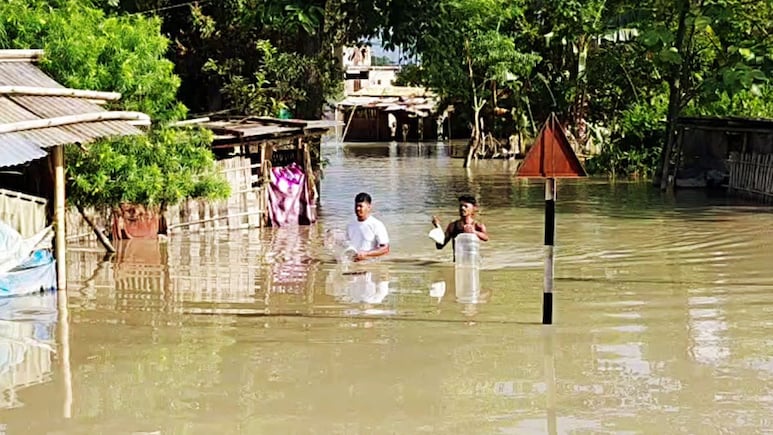
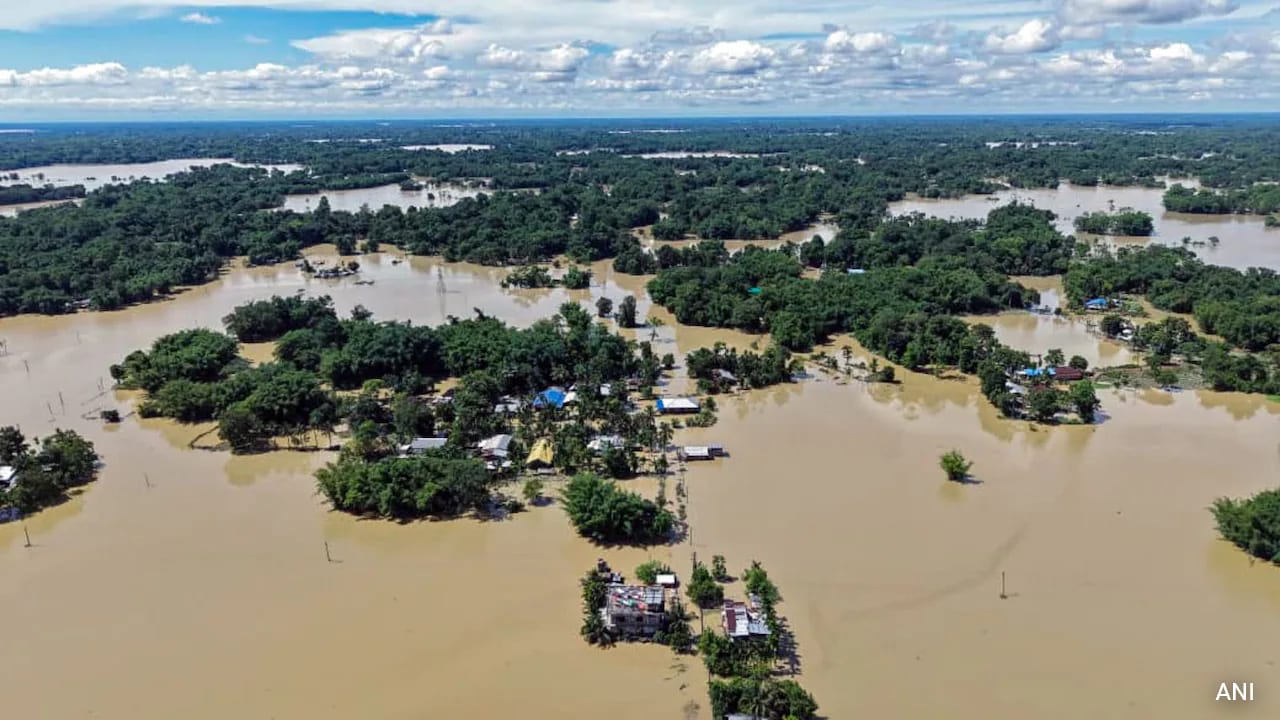
Over the past few days, visuals from Assam have captured the devastating impact of the floods, with villages inundated, roads submerged, and people scrambling to put their lives back together. According to the Assam State Disaster Management Authority, 5.24 lakh people across five districts have been affected by the floods.
People in Sivasagar, Golaghat, Charaideo, Jorhat, Nagaon, and Kamrup (Metropolitan) have been impacted. The death count stands at 68. Multiple agencies, including the NDRF, SDRF, and civil defence personnel, are carrying out the rescue and relief operations, with 67 boats deployed in the affected areas.
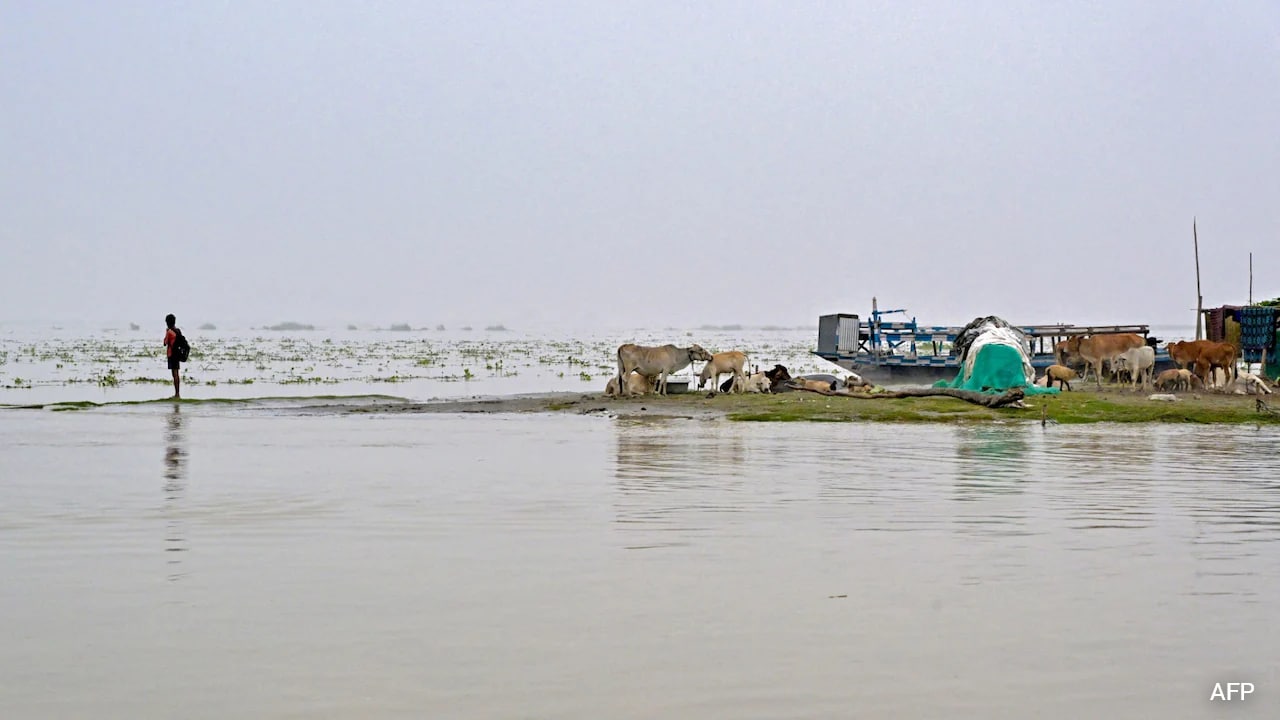
37,139.52 hectares of area under crop coverage are still submerged, while 26,679 animals have been washed away. Damage to houses, roads, and other infrastructure has also been reported from various parts of the affected districts.
The Brahmaputra valley transforms into an "unforgiving expanse of water" every monsoon. While the popular narrative often frames the events as purely "natural acts of God", environmentalists and scientists blame human activities.
Professor Dhrubajyoti Sahariah of the Department of Geography and Director, Centre for Brahmaputra Studies, Gauhati University, says the severe floods devastating the region cannot be understood through the lens of rainfall alone.
Professor Sahariah explains: "This year's flood was driven by a complex interaction of natural processes and anthropogenic factors. Intense rainfall in the narrow valleys triggered a rapid surge in river water levels, which was further intensified by continuous hill excavation, widespread deforestation, and breaches of embankments. A possible impact of dam water release cannot be ruled out, collectively culminating in a catastrophic disaster."
Professor Sahariah says Assam's flooding crisis is a "compound disaster" where extreme meteorological events coincide with a degradation of ecology and infrastructural weaknesses.
What are the reasons for such calamities?
Deforestation
When forests get cleared out and surrounding hills are excavated for construction and urban expansion, loose topsoil washes into the river system. This causes heavy siltation in the Brahmaputra's riverbed and dampens its water-carrying capacity, thereby causing rivers to breach their banks even during moderate rain surges.
Also read: Assam MLAs To Donate One Month's Salary For Flood Aid
Weak Embankments & Water Regulation
Year after year, Assam has depended largely on earth embankments as its key flood defence. However, many of these structures are decades old and poorly maintained. During extreme rainfall events when there is a surge, the ageing embankments often breach under pressure, allowing predictable rising waters to turn into violent, destructive flash floods.
Adding to the problem is the accumulation of water in hydro projects. When severe rainfall threatens structural overload, dams are forced to release high volumes of water, adding to the surge in downstream valleys already struggling under regional rainfall.
Also read: Assam Floods: Death Count Remains At 68, Over 5 Lakh People Affected
Way Forward
Experts say one must consider shifting from reactive relief operations to proactive water management. Experts point towards dredging/desilting primary river channels to bring back historical water capacity. All this must be done while keeping aquatic ecosystems intact. Transitioning from fragile embankments to reinforced, smart-monitored systems which have real-time pressure sensors may help.
Not just this, one must look at data as well by establishing real-time data-sharing systems. Experts argue that there must also be coordination with upstream dam operators for controlled releases well ahead of heavy rainfall events.
Environmentalists say there must be proper enforcement of anti-excavation laws on hill slopes. Not just this, there must also be large-scale planting of trees to help stabilise topsoil and reduce silt runoff into the river systems.
Track Latest News Live on NDTV.com and get news updates from India and around the world

