



- Pilot misjudgement during landing may have caused the crash, priliminary probe indicates: Sources
- Initial findings indicate pressure to land on schedule, common in VIP flights and helicopter operations
- The aircraft could have diverted to Pune but the pilot chose to land in Baramati: Sources
A possible pilot misjudgement while landing amid poor visibility may have led to the plane crash that killed Maharashtra's Deputy Chief Minister Ajit Pawar and four others yesterday, sources have said, citing the findings of a preliminary probe into the tragic incident. Sources said that technical snags are also being investigated.
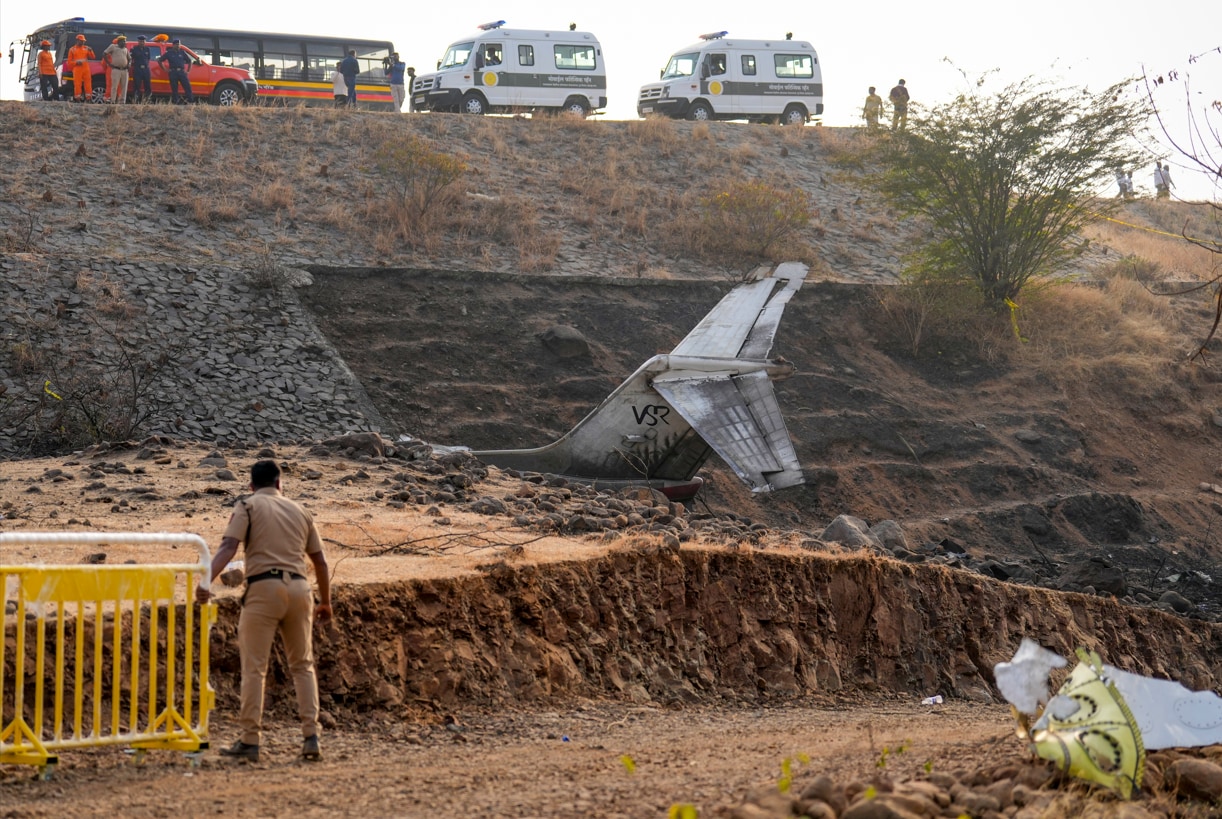
The Learjet 45 XR aircraft carrying the senior politician crashed during a landing attempt near Baramati and caught fire early morning on Wednesday. All five on board, including the NCP chief, died on the spot.
It was the aircraft's second landing attempt, and the visibility in Baramati was reportedly poor. A preliminary analysis of the crash suggests there was a possible pilot misjudgement, sources said.
Read: Farewell, Dada: Ajit Pawar's Funeral With State Honours, Thousands Mourn
"The aircraft could have diverted to Pune, but the pilot decided to land in Baramati in the second attempt. If he missed the second attempt, he would have had to redivert the aircraft to another airport. He tried to realign the aircraft, but the effort came too late due to the aircraft's speed and positioning," a source said.
Pilots who have flown this sector said that attempting such an approach at an uncontrolled airfield is considered risky, particularly when the runway was not visible minutes earlier.
Top officials confirmed to NDTV that the standard Visual Flight rules require a visibility of 5 km at such uncontrolled airfields. However, the pilot in command can invoke special VFR if visibility is 3 km, which was the case here.
Investigators are now examining the flight alignment, the aircraft's distance from the runway, and the sequence of events to find out what exactly went wrong and at what point that led to the tragic crash.
Further, the Class G (uncontrolled) Baramati airfield does not have navigational aids and a proper or full-time Air Traffic Controller (ATC) system in place, as opposed to other airports.
Read: "Oh S***": Last Words From Cockpit Of Ajit Pawar's Plane
"The pilot, after acquiring visual contact with the runway, may have made a judgement error and may have attempted to make drastic corrections, which may have led to the aircraft losing control. Further investigation is to ascertain the exact causes of this tragedy," the source added.
Sources also said that once the probe is completed, advisories would be issued on guidelines for uncontrolled airstrips so that such mishaps can be avoided.
The Wednesday Crash
Around 8 am, Ajit Pawar left Mumbai in a Learjet 45 operated by Delhi-based company VSR Ventures. He was scheduled to address four election rallies in his hometown, Baramati, ahead of local body polls.
The crash occurred around 8:45 am while attempting a second approach to Baramati Airport.
Besides Pawar, his personal security officer and attendant, and two cockpit crew, pilot-in-command Sumit Kapur and first officer Shambhavi Pathak, were among those on board who died in the crash.
A specialised team from the Aircraft Accident Investigation Bureau (AAIB) visited the crash site last evening to initiate a forensic probe into the tragic accident. They have recovered the aircraft's "black box", which comprises the Flight Data Recorder and Cockpit Voice Recorder, which will now be analysed to determine the cause of the accident.
Pawar's death leaves a power vacuum in Maharashtra politics, including that of a caring leader deeply involved in the state's progress, besides an empty deputy chief minister and the Nationalist Congress Party's chief's posts.
Track Latest News Live on NDTV.com and get news updates from India and around the world

