

)
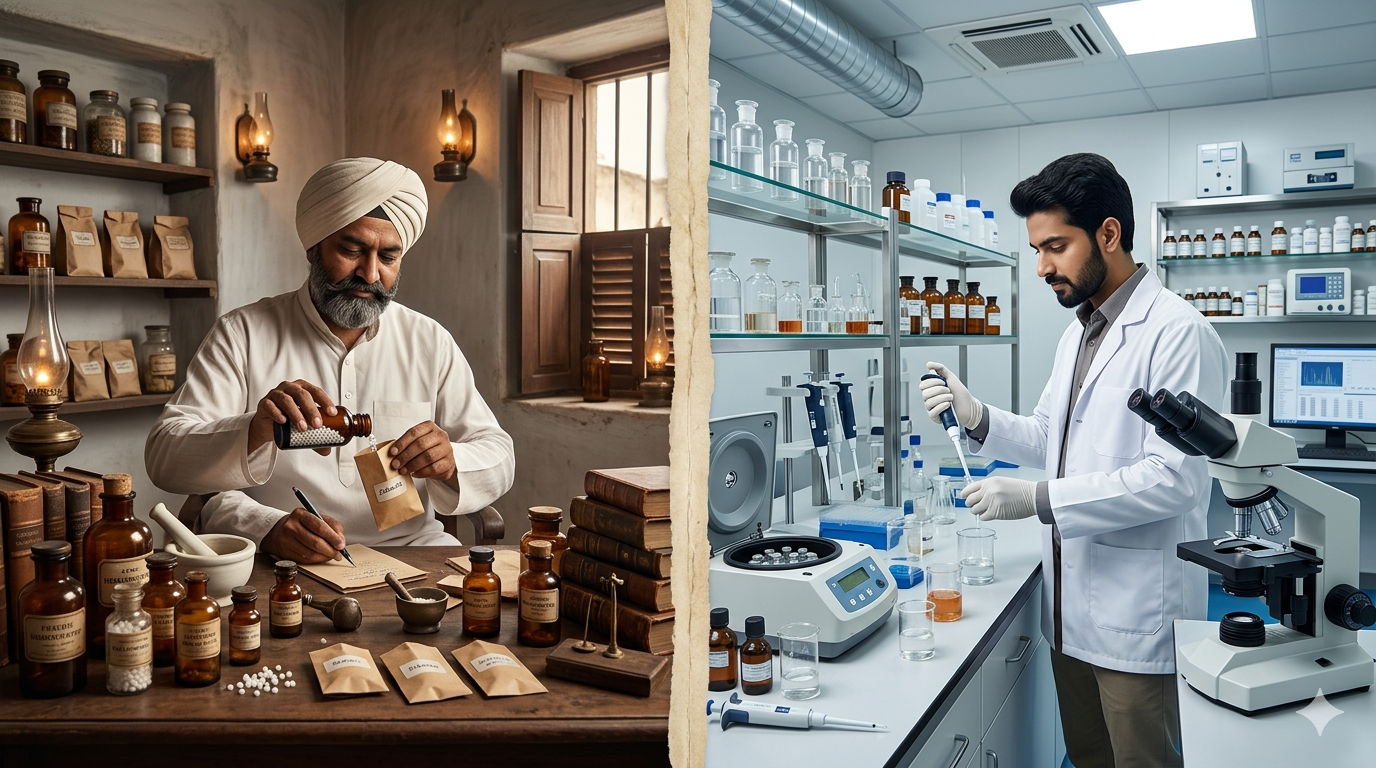
'Davayi ki puriya' was a phrase so deeply associated with homeopathy for decades since its arrival in India. Homeopathy, in its stages of infancy (perhaps somewhat into its adolescence too), was often dispensed in small paper packets. Meant to be consumed without fingers touching, only a limited number of doses could be accommodated in this mode of dispensation. One would have to trek back to the homeopath for 'puriya' refills.
A Revolutionary German Seed: Logic in the Chaos of Medicine
Homeopathy has come a long way since then. Even in its nascent stages, its origin in Germany was borne of a need to find some logic in therapeutic interventions: a rather revolutionary idea for conventional medicine of the late 18th and 19th centuries.
Homeopathy paved the way for concepts of evidence-based medicine by observing changes in healthy people after administering homeopathic medicines to understand its therapeutic effects. Thus, its name, 'similar suffering'.
Royal Courts and Social Reformers: Planting Roots in Indian Soil
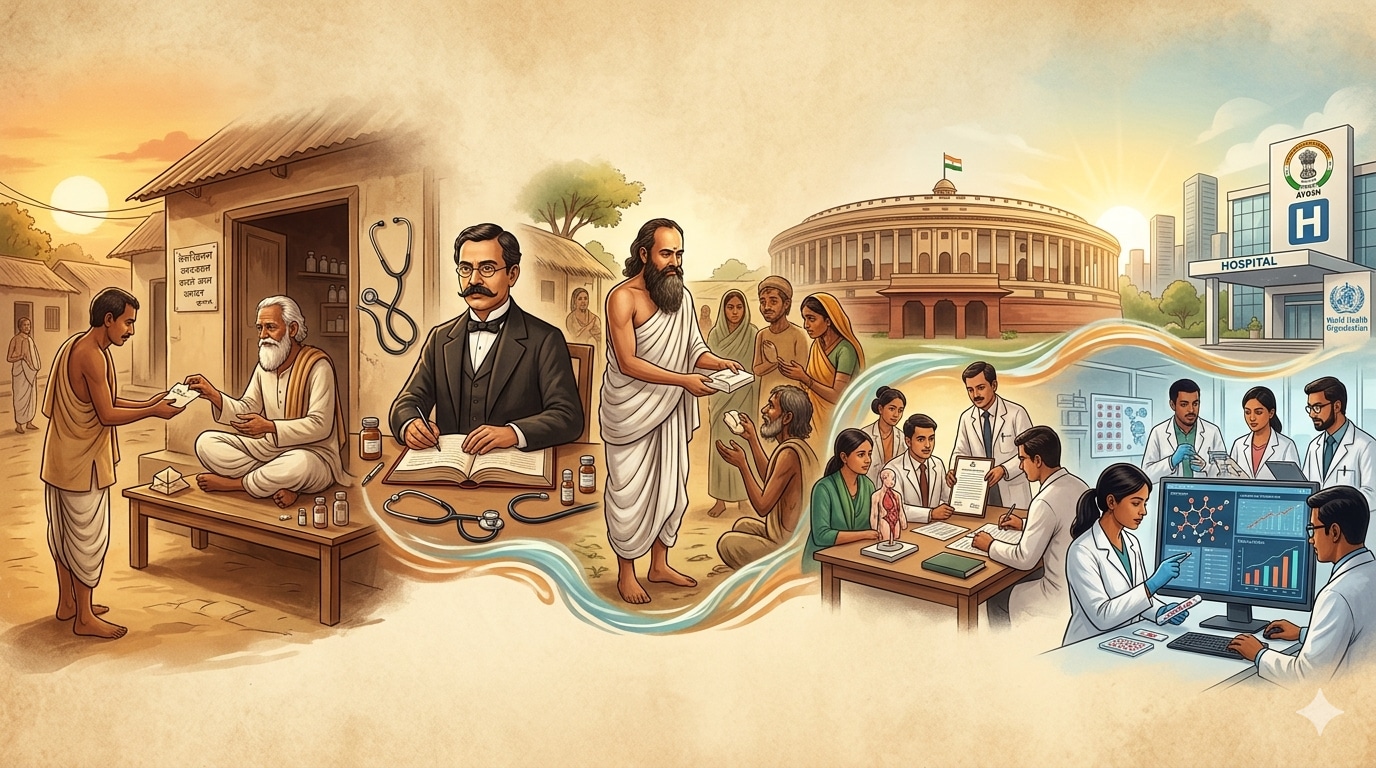
The court of Raja Ranjit Singh in the mid-19th century helped lay the seeds of homeopathy in the country and its popularity skyrocketed.
In the east, eminent practitioners of allopathy like Dr. Mahendra Lal Sarkar 'converted' to homeopathy. The great social reformer, Pandit Ishwarchandra Vidyasagar played a pivotal role in popularising the system amongst the masses by using homeopathy as a tool of social service.
From Acts to AYUSH: Building a Regulated Global Powerhouse
In 1930 and 1940, The Chopra Committee report and the Drugs and Cosmetics Act recognised Indian Systems of Medicine and included homeopathy in it. The Central Council of Homeopathy Act was passed in Parliament in 1973. The importance of these policy decisions during a time of flux for India, cannot be overemphasised.
Indian homeopaths are counted as amongst the best in the world, today, in large part, due to the training, structure and regulation that these acts provided. The evolution at the policy level continues with becoming the 'H' in AYUSH in 2014 and the passing of the National Commission for Homeopathy Act in 2020.
Global Recognition: Meeting the Challenges of Modern Disease
The World Health Organisation recognises homeopathy as the second most popular system in the world. Homeopathy has taken great strides over the last few decades as the landscape of disease has shifted.
Even with the emergence of new disease entities, homeopathy continues to prove itself in the only outcome that matters: helping patients get better. Whether it is the COVID pandemic or mixed connective tissue disease from a dysfunctional immune system, patients report improvements in a panoply of conditions. The core advantages of freedom from side effects and reducing recurrence still hold true for its patients, two hundred years on.
The Road Ahead: Strengthening Science and Fighting Bias
There remains a lot of work to be done. The evidence base in support of homeopathy needs rapid and robust strengthening. More resources should be allocated for this purpose. The fundamental sciences have begun the process of explaining the science of homeopathy but this area of research needs impetus. The demands of patients wanting homeopathy should be reflected in the policies of the countries they reside in.
Demand in several parts of India and the world is outstripping supply. Publication bias in peer reviewed journals and in the news, media should be called out and corrected. Awareness about the scope of this system should be increased amongst citizens and practitioners of other systems. Fixing a patients' illness should be prioritised over allegiance to a system of medicine.
Most importantly, India must acknowledge its position as the torch bearer of homeopathy for the world today and act accordingly.
(By Dr. Kushal Banerjee, Senior Homeopath, Dr Kalyan Banerjee's Clinic and Dr. Kalyan Banerjee, Founder, Dr Kalyan Banerjee's Clinic, New Delhi)
Disclaimer: The opinions expressed within this article are the personal opinions of the author. NDTV is not responsible for the accuracy, completeness, suitability, or validity of any information on this article. All information is provided on an as-is basis. The information, facts or opinions appearing in the article do not reflect the views of NDTV and NDTV does not assume any responsibility or liability for the same.