

)
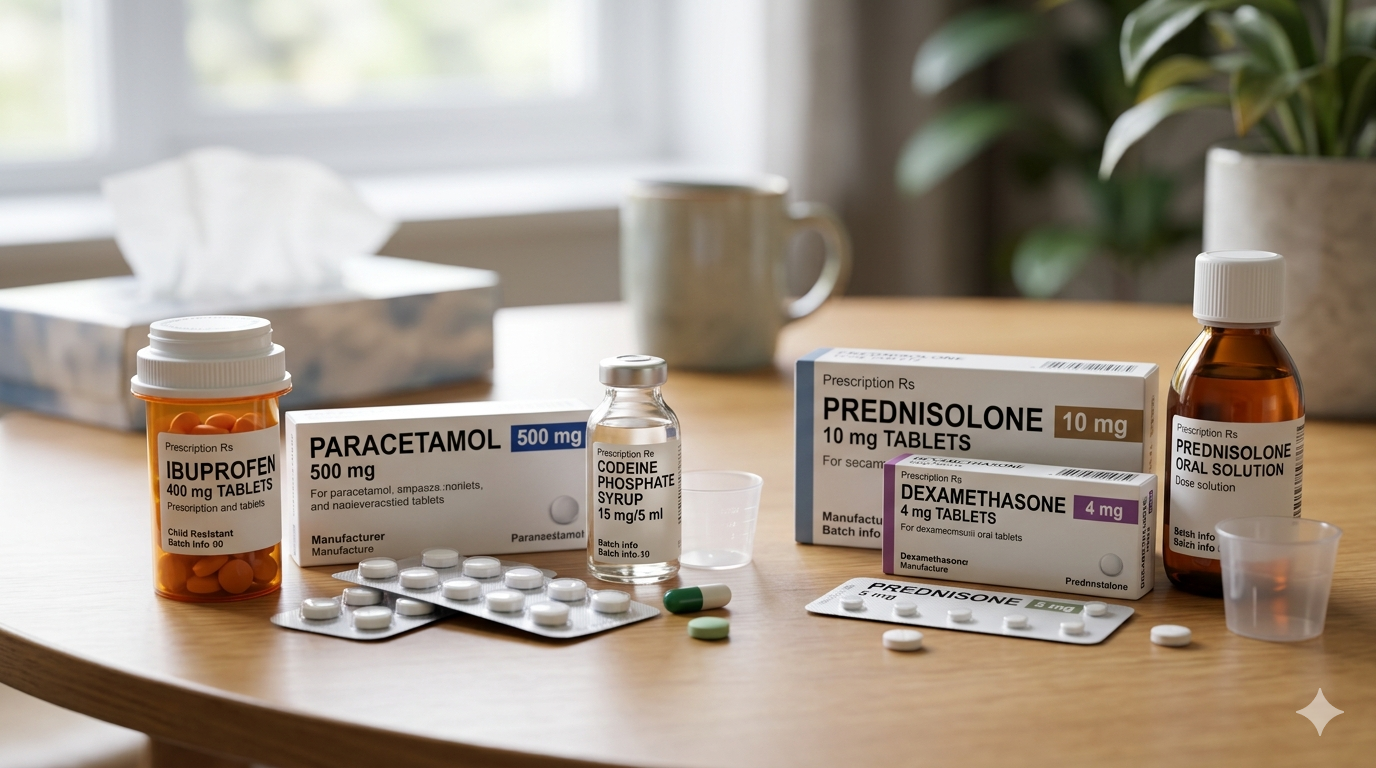
Medications used for pain and inflammation are often misunderstood, especially when it comes to oral steroids and commonly used painkillers. While both are widely prescribed, and frequently self-used in India, their mechanisms, indications, and risk profiles are fundamentally different. This confusion can lead to inappropriate use, delayed treatment, or serious long-term health complications.
Oral steroids, such as Prednisone and Dexamethasone, are potent anti-inflammatory drugs that also suppress the immune system. They are typically reserved for conditions where inflammation is severe, persistent, or driven by immune dysfunction, such as asthma exacerbations or autoimmune diseases.
Painkillers, on the other hand, including Paracetamol, Ibuprofen, and Diclofenac, primarily target symptoms like pain and fever. Some, particularly non-steroidal anti-inflammatory drugs (NSAIDs), also reduce inflammation, but their effect is significantly milder compared to steroids.
Understanding when each class of drug is appropriate, and when it is not, is essential for both safety and effectiveness.
What Are Oral Steroids And Painkillers?
Oral steroids are synthetic versions of hormones produced by the adrenal glands. They work by blocking inflammatory pathways and dampening immune responses. This makes them highly effective in treating conditions like severe allergies, asthma flare-ups, and autoimmune disorders.
Painkillers (analgesics), meanwhile, work through different mechanisms depending on the class. Paracetamol reduces fever and pain by acting on the brain's temperature-regulating centres, while NSAIDs like ibuprofen and diclofenac block enzymes (COX-1 and COX-2) involved in inflammation and pain signalling.
Key Differences At A Glance
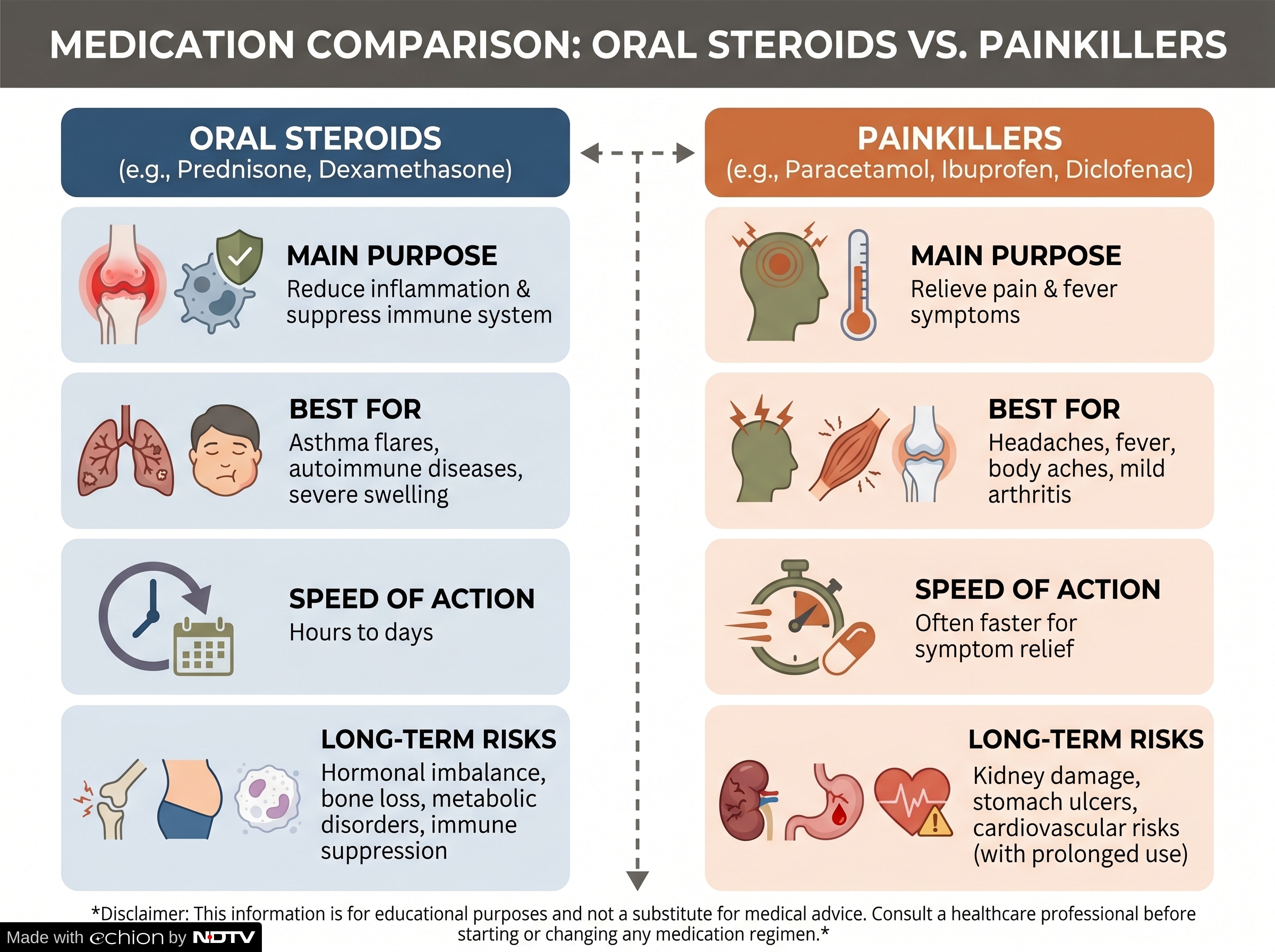
Main Purpose
- Oral Steroids: Reduce inflammation and suppress immune system
- Painkillers: Relieve pain and fever symptoms
Examples
- Oral Steroids: Prednisone, dexamethasone
- Painkillers: Paracetamol, ibuprofen, diclofenac
Best For
- Oral Steroids: Asthma flares, autoimmune diseases, severe swelling
- Painkillers: Headaches, fever, body aches, mild arthritis
Also Read: What Is Nerve Pain? Doctors Share Why Common Painkillers Don't Work On It, But Oral Steroids Do
Speed of Action
- Oral Steroids: Hours to days
- Painkillers: Often faster for symptom relief
Long-Term Risks
- Oral Steroids: Hormonal imbalance, bone loss, metabolic disorders, immune suppression
- Painkillers: Kidney damage, stomach ulcers, cardiovascular risks (with prolonged use)
The Important Distinction
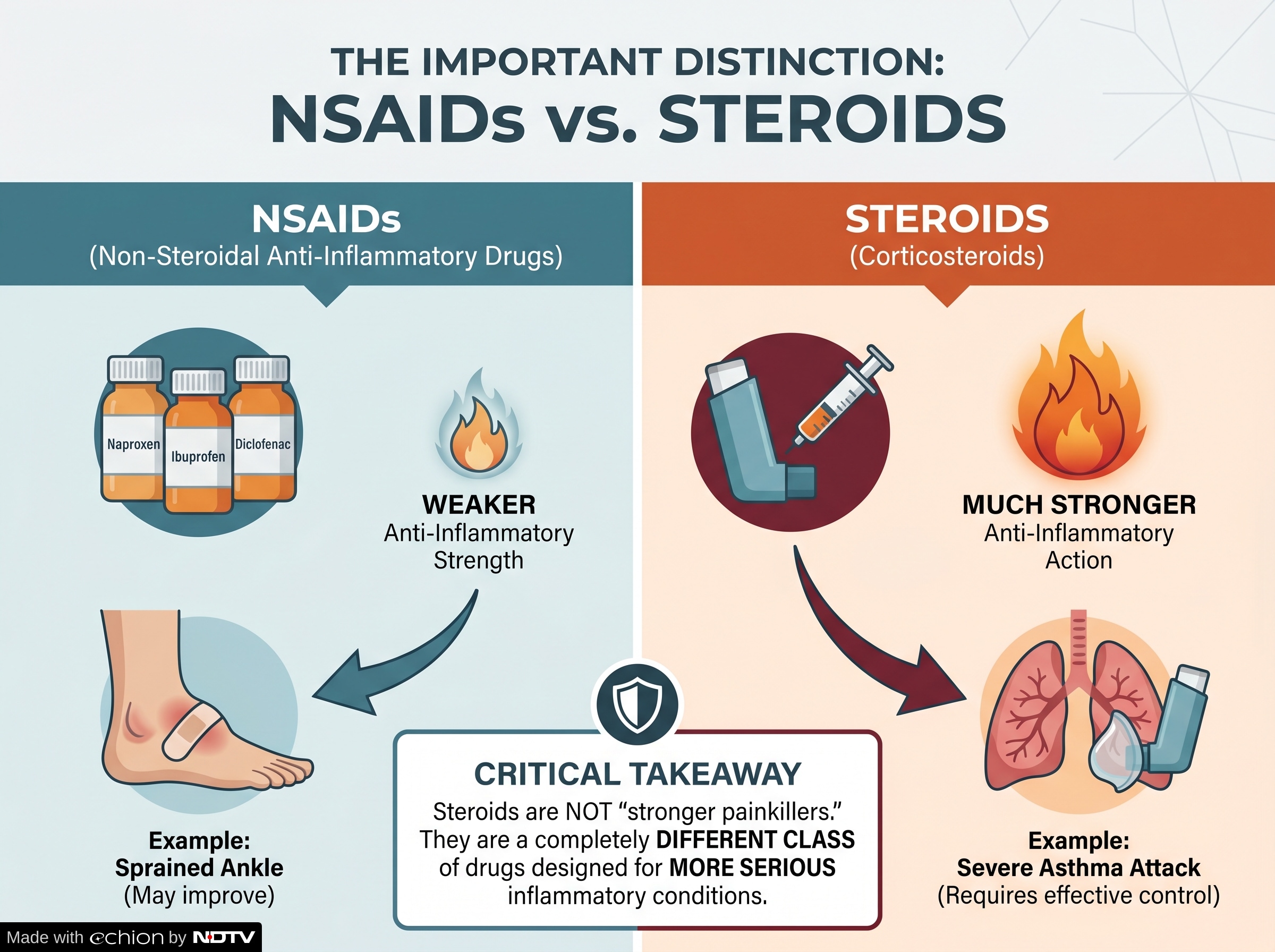
Some painkillers, especially NSAIDs like Naproxen, ibuprofen, and diclofenac, do reduce inflammation. However, their anti-inflammatory strength is much weaker than steroids.
For example:
- A sprained ankle may improve with an NSAID
- A severe asthma attack often requires steroids for effective control
This distinction is critical. Steroids are not "stronger painkillers", they are a completely different class of drugs designed for more serious inflammatory conditions.
Common Misuse In India
A growing concern in India is the misuse of oral steroids without proper medical supervision. They are often taken:
- For quick pain relief
- Repeatedly for allergies
- Hidden in "herbal" or alternative medicines
- For bodybuilding or gym-related purposes
Dr Sanjay Verma, Senior Consultant, Internal Medicine, Fortis Escorts, Okhla, New Delhi, explains: "Steroids are often misused for rapid symptom relief, but their long-term consequences can be severe and often go unnoticed until significant damage has occurred."
Also Read: Are Your Daily Painkillers Putting Your Liver At Risk? Here's What You Need To Know
This misuse can silently lead to:
- Type 2 Diabetes
- Rapid weight gain
- Osteoporosis
- Increased infection risk
According to the World Health Organization, inappropriate use of medications, especially those affecting the immune system, can significantly increase long-term disease burden and healthcare costs.
Special Caution: Diabetes, Blood Pressure And Older Age
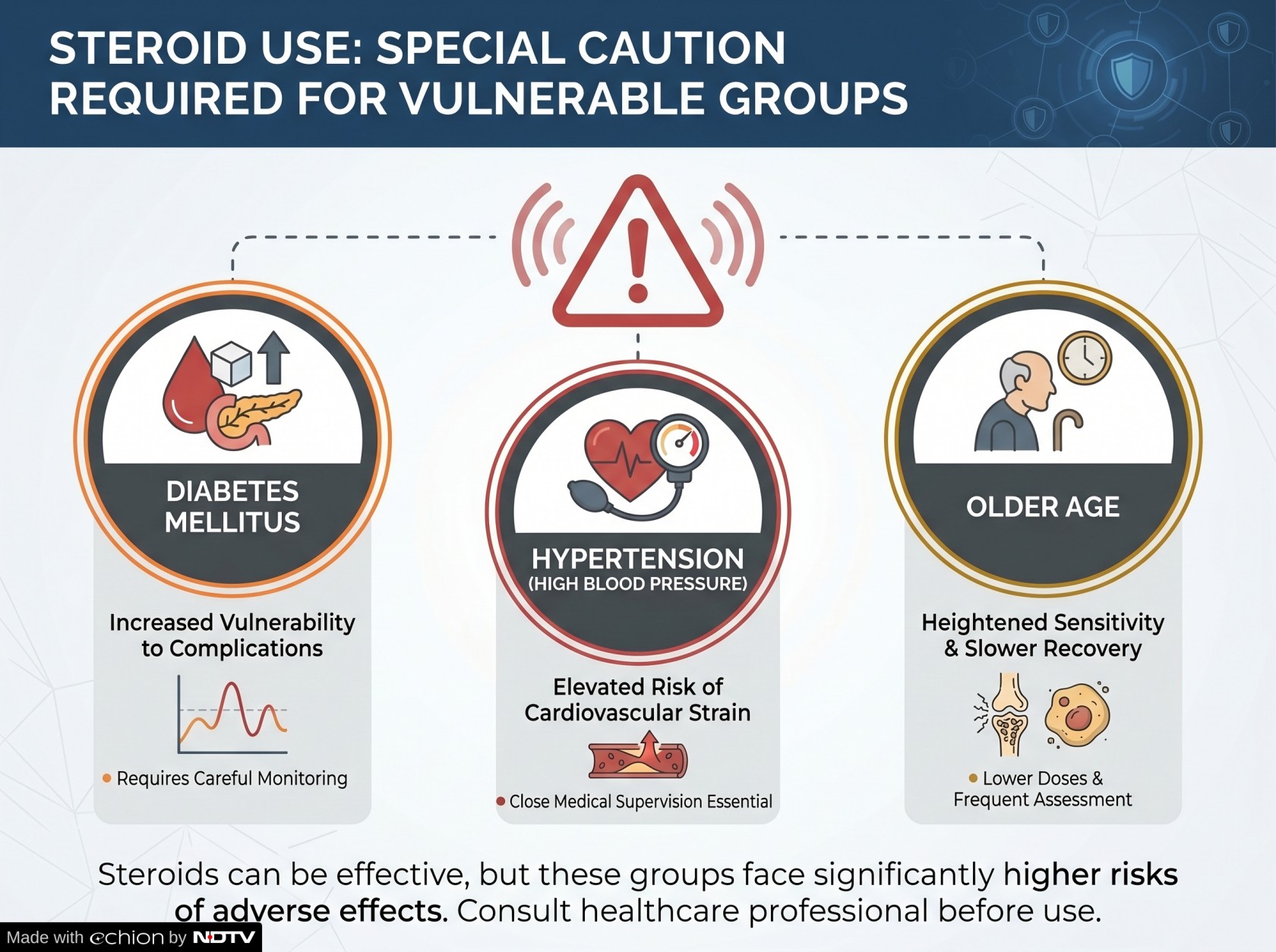
Steroids require extra caution in certain groups. People with:
- Diabetes Mellitus
- Hypertension
- Older age
are particularly vulnerable to steroid-related complications.
Dr Verma adds: "Steroids can sharply elevate blood sugar levels, worsen blood pressure, and accelerate bone loss, especially in elderly patients or those with pre-existing conditions."
A Simple Rule To Remember
- Painkiller for symptom relief
- Steroid for powerful inflammation control (with higher risk)
- Using steroids casually for routine pain is not just unnecessary, it can be harmful.
Oral steroids and painkillers serve very different purposes in medicine, despite often being confused with one another. While painkillers are suitable for everyday aches, fever, and mild inflammation, steroids are reserved for more serious conditions involving significant inflammation or immune dysfunction.
Misusing steroids as "strong painkillers" is a dangerous trend, particularly in India, where over-the-counter access and lack of awareness contribute to widespread misuse. The risks, from diabetes to bone damage, are real and often silent.
The takeaway is clear: never self-medicate with steroids. Always consult a qualified doctor to ensure the right drug, dose, and duration for your condition.
Disclaimer: This content including advice provides generic information only. It is in no way a substitute for a qualified medical opinion. Always consult a specialist or your own doctor for more information. NDTV does not claim responsibility for this information.