





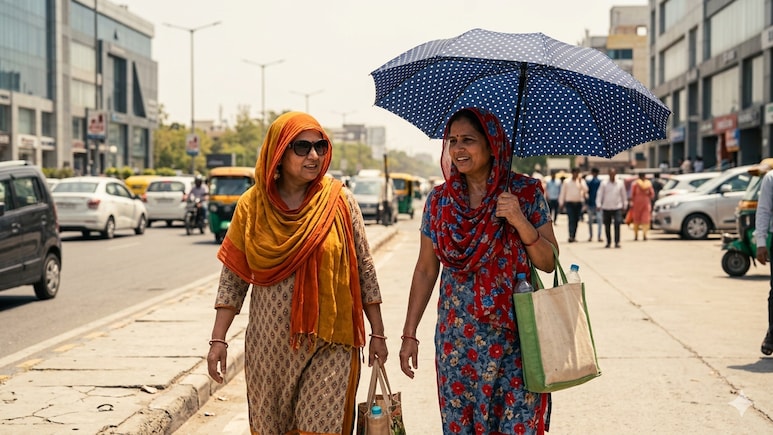
- India faces extreme summer heat and UV radiation, raising public health concerns
- Bengaluru recorded UV Index levels near 13, exceeding safe exposure limits
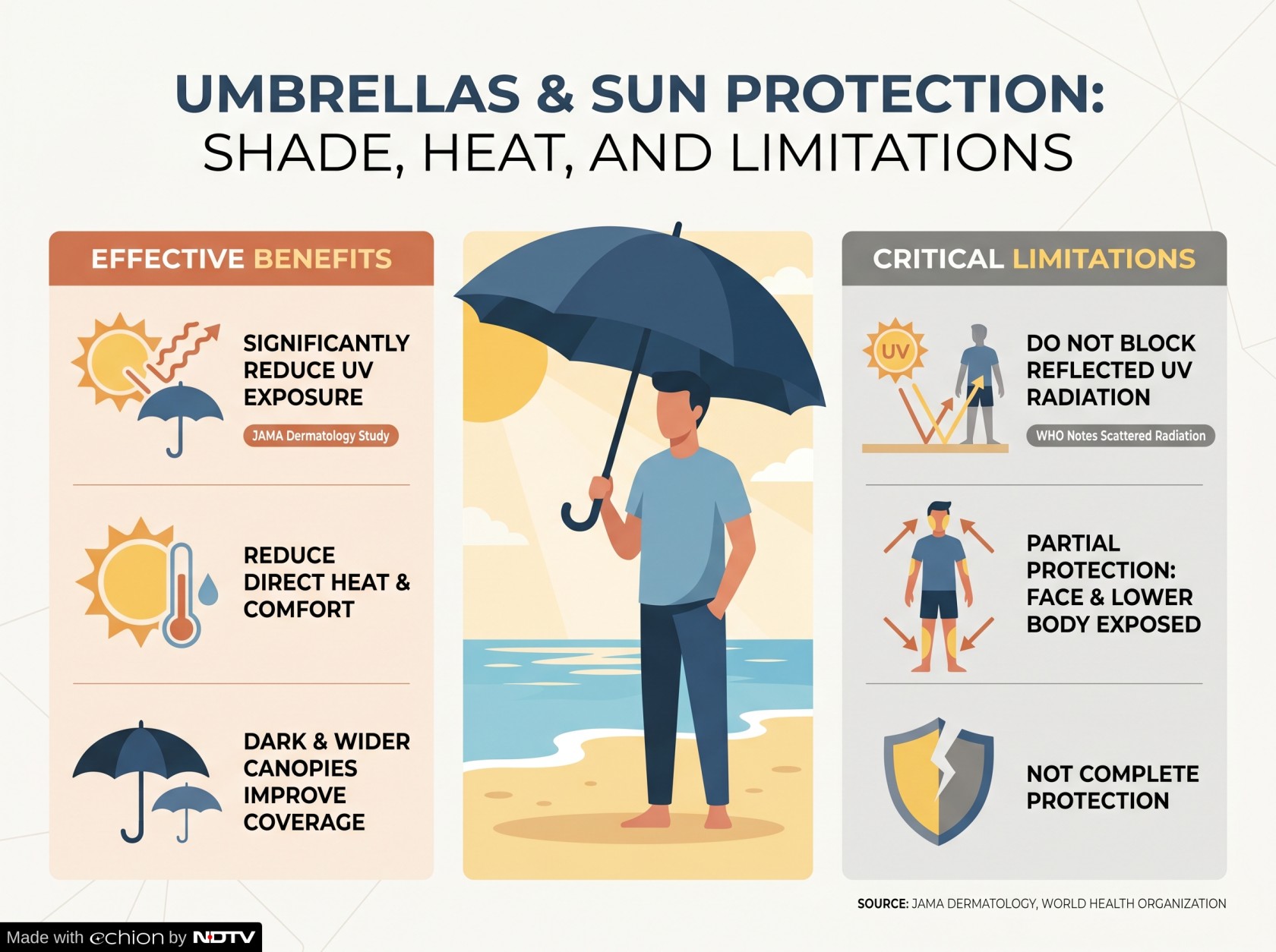
- Umbrellas provide shade and reduce heat but do not fully block UV radiation
India is currently grappling with intense summer heat and dangerously high ultraviolet (UV) radiation levels, raising serious public health concerns. Recent NDTV reports highlight how cities like Bengaluru have recorded extreme UV Index levels nearing 13, far beyond safe exposure limits, with dermatologists warning of increased risks of skin and eye damage. What makes this more concerning is that UV radiation is invisible and often underestimated. Even on days that feel manageable, the UV Index can remain high enough to cause long-term harm. According to global health experts, UV exposure is a leading cause of skin damage, premature ageing, and even skin cancers if protection is inadequate.
In such conditions, people often rely on everyday protective tools like umbrellas and sunglasses. But which one actually offers better relief during harsh summer days? The answer is not straightforward. While umbrellas provide physical shade and reduce heat exposure, sunglasses protect the eyes from harmful UV rays, both addressing different aspects of sun damage.
Understanding how each works, and their limitations, is essential to staying safe in India's increasingly extreme summers.
Why Summer Protection Matters More Than Ever
The UV Index is a key indicator of how intense solar radiation is. A value above 11 is considered "extreme," meaning unprotected skin and eyes can be damaged within minutes. With climate change driving more frequent heatwaves and longer summers in India, experts stress the need for layered sun protection, rather than relying on a single solution.
Umbrellas: Effective For Shade And Heat Relief
Umbrellas are one of the simplest and most accessible forms of sun protection, and they do more than just block sunlight.
- A study published in JAMA Dermatology found that handheld umbrellas can significantly reduce UV exposure, with measurable drops in radiation levels under the canopy.
- Dark-coloured umbrellas can block a large proportion of UV rays
- They also reduce direct heat exposure, making them effective for comfort
- Wider umbrellas provide better coverage
Also Read: Bengaluru UV Index Levels Hit Extreme: Skin Doctors Share What This Means, With Protective Tips
However, umbrellas are not foolproof:
- They do not block reflected UV radiation from the ground or surroundings
- Protection is partial, not complete
- Areas like the face sides and lower body may still be exposed
The World Health Organization (WHO) notes that shade alone, whether from trees or umbrellas, does not provide complete UV protection due to scattered radiation.
Sunglasses: Critical For Eye Protection
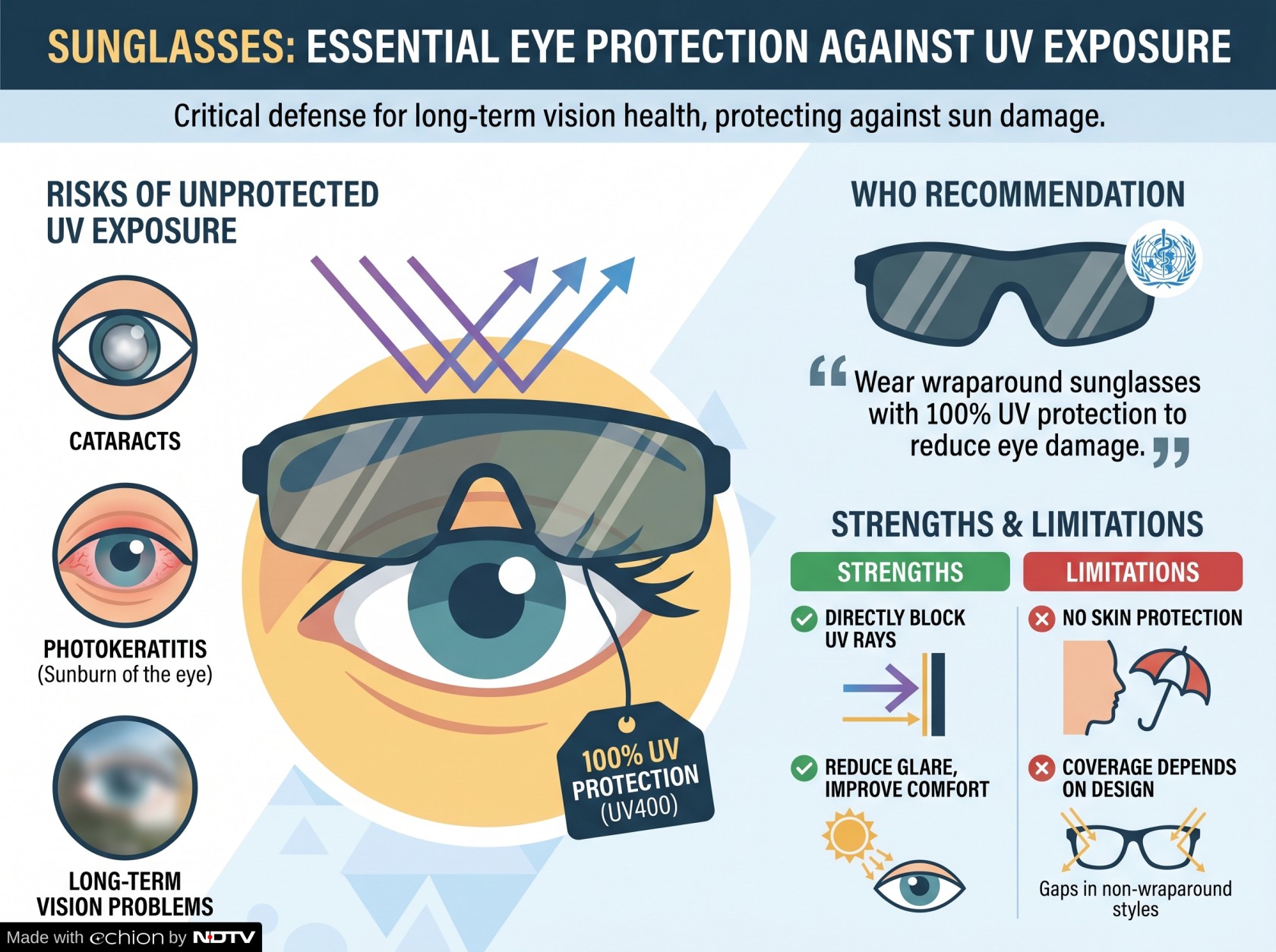
While umbrellas protect the skin and reduce heat, sunglasses serve a very specific and essential role, protecting the eyes. UV exposure can damage delicate eye structures, increasing the risk of:
- Cataracts
- Photokeratitis (sunburn of the eye)
- Long-term vision problems
WHO recommends wearing wraparound sunglasses with 100% UV protection (UV400) to reduce eye damage from sun exposure.
Strengths of Sunglasses
- Directly block UV rays entering the eyes
- Reduce glare and improve visual comfort
- Essential during peak sunlight hours
- Limitations
- Do not protect the skin
- Coverage depends on design (non-wraparound styles leave gaps)
Also Read: 6 Indoor Exercises And Asanas To Stay Fit During A Heatwave
Which One Is Better?
This isn't an either-or debate, because they solve different problems.
- Umbrellas are better for heat relief and overall comfort
- Sunglasses are essential for eye safety
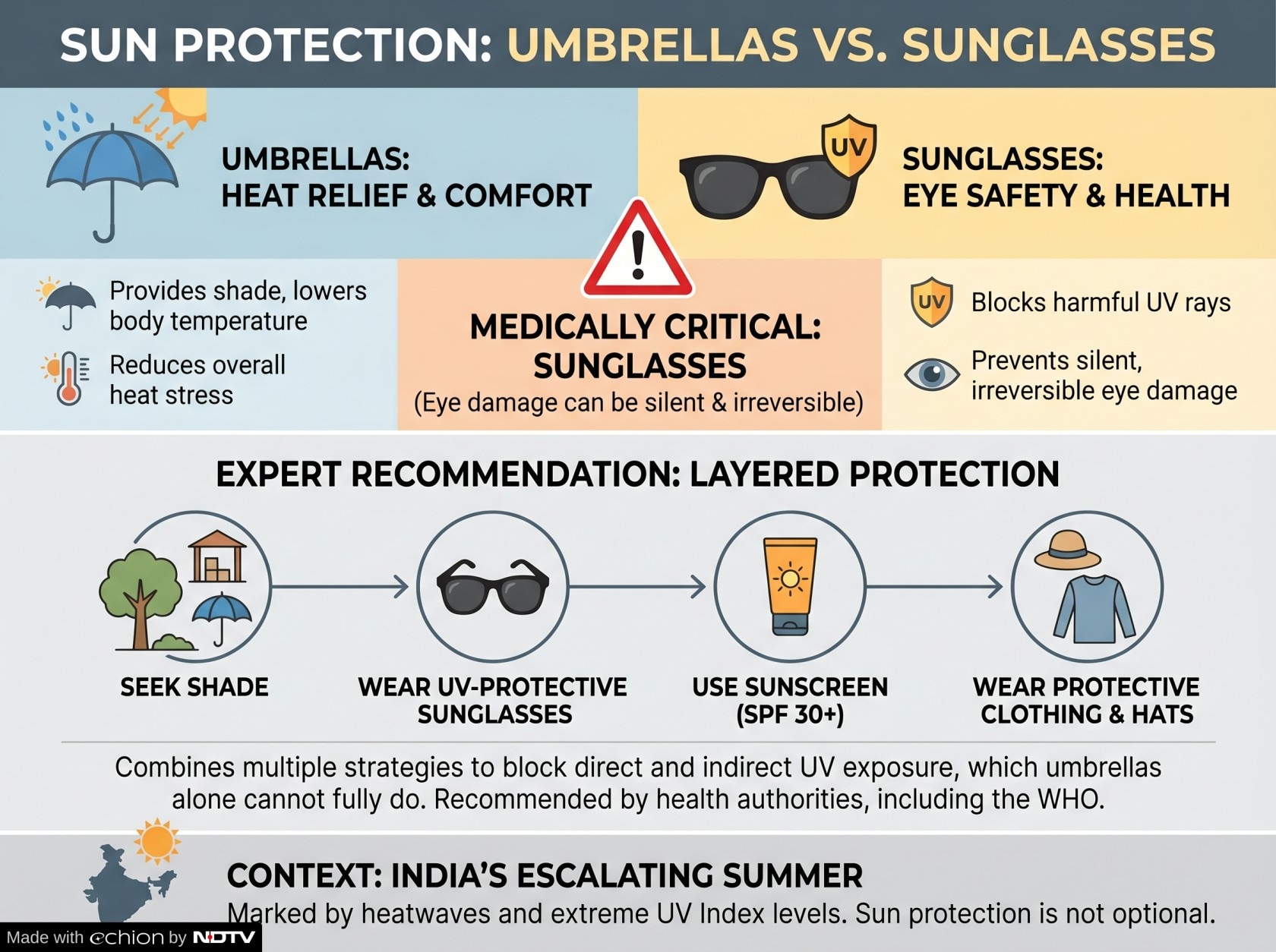
If forced to choose, sunglasses are medically more critical because eye damage can be silent and irreversible. However, relying only on sunglasses ignores the risks to skin and overall heat stress.
What Experts Recommend: Layered Protection
Health authorities, including the World Health Organization, recommend combining multiple strategies:
- Seek shade (umbrella, trees, structures)
- Wear UV-protective sunglasses
- Use sunscreen (SPF 30+)
- Wear protective clothing and hats
This layered approach ensures protection from both direct and indirect UV exposure, which umbrellas alone cannot fully block. In India's escalating summer conditions, marked by heatwaves and extreme UV Index levels, sun protection is no longer optional. Umbrellas and sunglasses each play important but distinct roles.
Umbrellas help you stay cooler and reduce direct sun exposure, making them ideal for daytime commutes and outdoor activities. Sunglasses, meanwhile, are essential for protecting your eyes from long-term UV damage. The real takeaway? You shouldn't choose between them. The safest strategy is to use both, along with sunscreen and protective clothing, to build a complete defence against the harsh Indian sun.
Disclaimer: This content including advice provides generic information only. It is in no way a substitute for a qualified medical opinion. Always consult a specialist or your own doctor for more information. NDTV does not claim responsibility for this information.
Track Latest News Live on NDTV.com and get news updates from India and around the world

