)
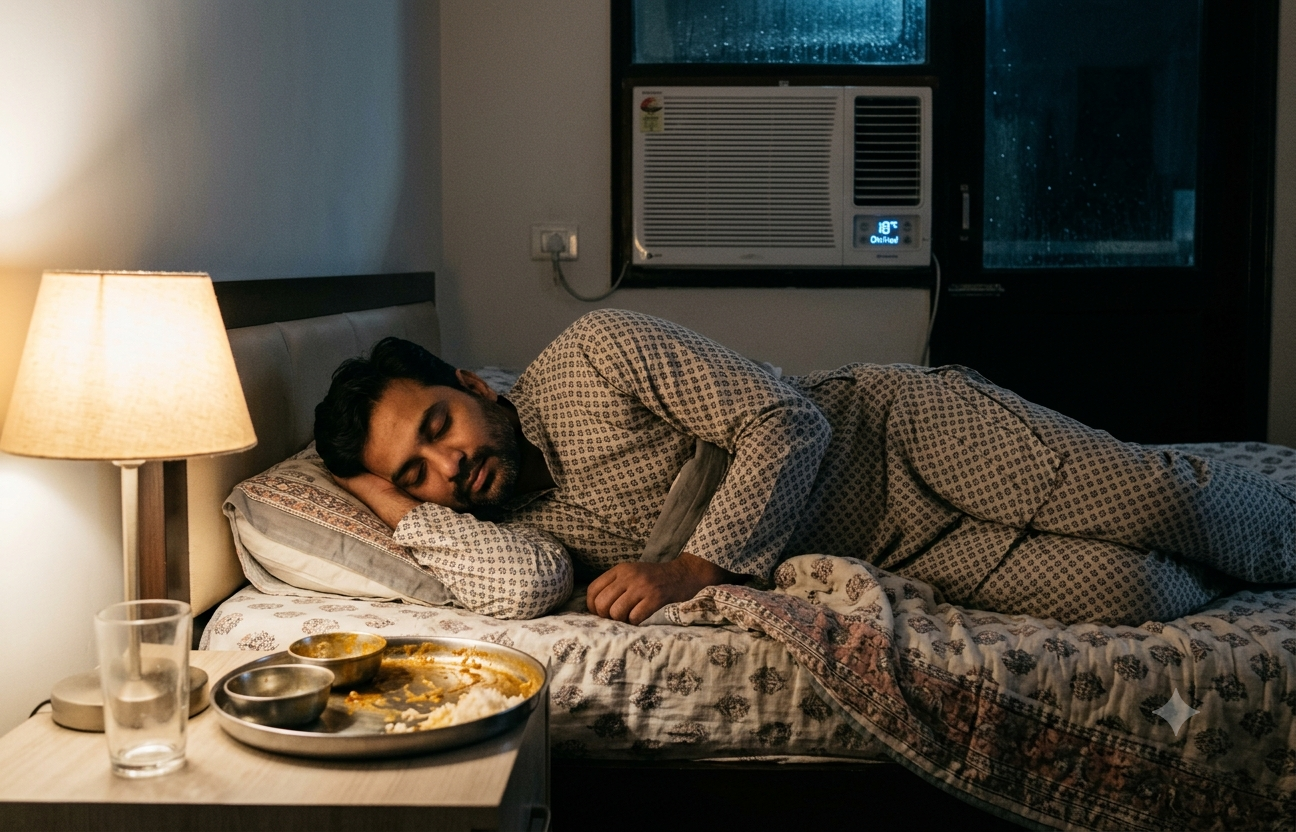
Many people set the temperature of their air conditioning unit to very low when the nighttime summer temperatures increase. Some people immediately do so after dinner, which can pose certain health risks due to the immense temperature difference. The combination of sleeping in a chilled room right after eating can trigger digestive comfort, especially in people who have sensitive stomachs and are prone to developing acid reflux, bloating, or other gut health issues. Research published in the Public Health journal confirms that sleeping in a highly chilled room can expose you to health risks, as, after eating, the internal body temperature rises. The temperature difference internally and externally makes the body undergo excess stress as it works on establishing a baseline temperature.
Does Room Temperature Affect Digestion?
After eating dinner, the digestive system works on digesting the meal while also getting ready for sleep. The time between eating a meal at night and your actual sleep time should be at least two to three hours, as the meal needs to settle into the stomach before sleep sets in. The blood flow and digestive processes that continue several hours after eating and suddenly introducing cold temperatures can initiate a temperature shock.
Blasting your air conditioning after having dinner can directly slow down digestion, as per the research published in the American Society of Microbiology; changes in body temperature can alter the gut microbiome. This can lead to issues with how the food turns into energy and affects digestive health on a long-term basis.
Why Lying Down Soon After Eating Is the Bigger Problem
Alongside the temperature shock due to air conditioning after dinner, if you happen to practise lying down soon after eating, it is a bigger problem. The food that you have eaten can move upwards, and the chances of acid reflux can increase. The possibility of heartburn and chest discomfort can disturb your sleep quality and even delay how fast you fall asleep after eating.
Health Risks Of Sleeping In A Highly Chilled Room After Eating
1. Acid Reflux And Heartburn
The chilled room influences body temperature, which affects the body's internal clock, whose effect varies with age as well. The temperature of the environment and your air conditioning should be balanced to establish a comfortable baseline. The ideal temperature is between 24 and 26 degrees Celsius, as the temperature outside and internally can vary by a small margin. Drastic temperature differences can expose you to developing acid reflux or heartburn as the food struggles to move through the digestive system.
2. Bloating and Stomach Discomfort
Gut health issues such as bloating and discomfort can occur if your body temperature is lower or higher, and it can also impact the gut microbiota. The temperature difference can indirectly affect the digestive system through changes in appetite, metabolism, and immune function.
3. Poor Quality Sleep
Sleep is directly influenced by how your digestive system is metabolising food. When the nutritional intake or timing of food that is eaten at night is off, it can lead to affecting sleep.
4. Increased Nighttime Digestive Symptoms
The quality of sleep could be harmed if the temperature is too low for the body to handle, and digestive abnormalities can also occur. Nighttime digestive symptoms can disrupt sleep quality, as you may be forced to wake up and address the discomfort instead of getting much-needed rest.
5. Discomfort for People With GERD
Research published in the Clinical Explanation of Gastroenterology suggests that people with GERD, or gastro-oesophageal reflux disease, should be especially careful of their exposure to a chilled room at night. The possibilities of heartburn, chest discomfort, and sleep disturbances are common, as people with GERD have a weakened system.
Also Read: Persistent Post-Meal Pain? Expert Warn It Could Be More Than Just Acidity
Who Should Be Extra Careful?
People should be extra careful of their exposure to excess chilled temperatures, which are as follows:
- People with GERD, as their system is weak and too many side effects can happen.
- Chronic acidity sufferers may experience discomfort while falling asleep or staying asleep.
- Individuals with IBS, or Irritable Bowel Syndrome, should be especially careful, as their bowels can react violently to cold temperatures.
- Older adults, as the body slows down as people age and their digestion also slows down.
- People who eat heavy or late-night meals should delay their sleep marginally and take stock of their internal digestive processes.
How Long Should You Wait Before Sleeping After Dinner?
Dr Saurabh Sethi, Gastroenterologist (Harvard and Stanford-trained), suggests that eating close to bedtime increases the risk of acid reflux because lying down allows stomach contents to move upward more easily. He also says, "A shorter dinner-to-bed interval is associated with a higher risk of GERD."
Best Bedroom Temperature For Sleep And Digestive Comfort
The ideal bedroom temperature for sleep and to avoid digestive discomfort is to keep it between 24 degrees Celsius and 26 degrees. This is important, as your bedroom should not be excessively cold, and the sleep environment should be comfortable. Another factor to consider is hydration, as the body needs to be able to easily slip into rest mode.
This, along with proper airflow and humidity, is also necessary to make sure the sleep environment in your bedroom is optimal for rest.
Also Read: Why Women Actually Need An Hour More Sleep Than Men (And What Happens If You Skip It)
Gastroenterologist-Approved Tips To Prevent Nighttime Digestive Problems
Dr Saurabh Sethi explains that you can follow certain tips to ensure what you do at night doesn't negatively affect your digestive system. Here is what you need to know:
- Eat dinner earlier, about two to three hours before bedtime, to ensure deep sleep.
- Avoid oversized meals, as you may end up overeating.
- Limit spicy and fatty foods, as they can trigger acidity and bloating.
- Stay upright after eating, as the contents of the stomach can come upward.
- Keep the room comfortably cool instead of extremely cold, as the temperature shock can disrupt digestion.
- Sleeping with slight head elevation is prone to reflux, as the stomach needs to secrete a balanced amount of acid to break down the food into energy.
When Should You See A Doctor?
You should seek medical advice if you experience certain serious side effects after sleeping in a chilled room. Here is what you need to know:
- Frequent heartburn that doesn't seem to go away with antacids.
- Persistent bloating that can be seen and is causing discomfort.
- Difficulty swallowing as the oesophagus works hard to keep the food in the system.
- Nighttime reflux is possible, which can disrupt sleep quality.
- Unexplained weight loss is a possible sign that the food you are eating is not translating into energy.
If you are someone who sleeps in a chilled room right after eating dinner, then you need to make sure to keep the temperature under control. To safeguard your digestive health, you need to keep a gap between your dinner and when you fall asleep, along with the temperature of your sleeping environment.
Disclaimer: This content including advice provides generic information only. It is in no way a substitute for a qualified medical opinion. Always consult a specialist or your own doctor for more information. NDTV does not claim responsibility for this information.