

)
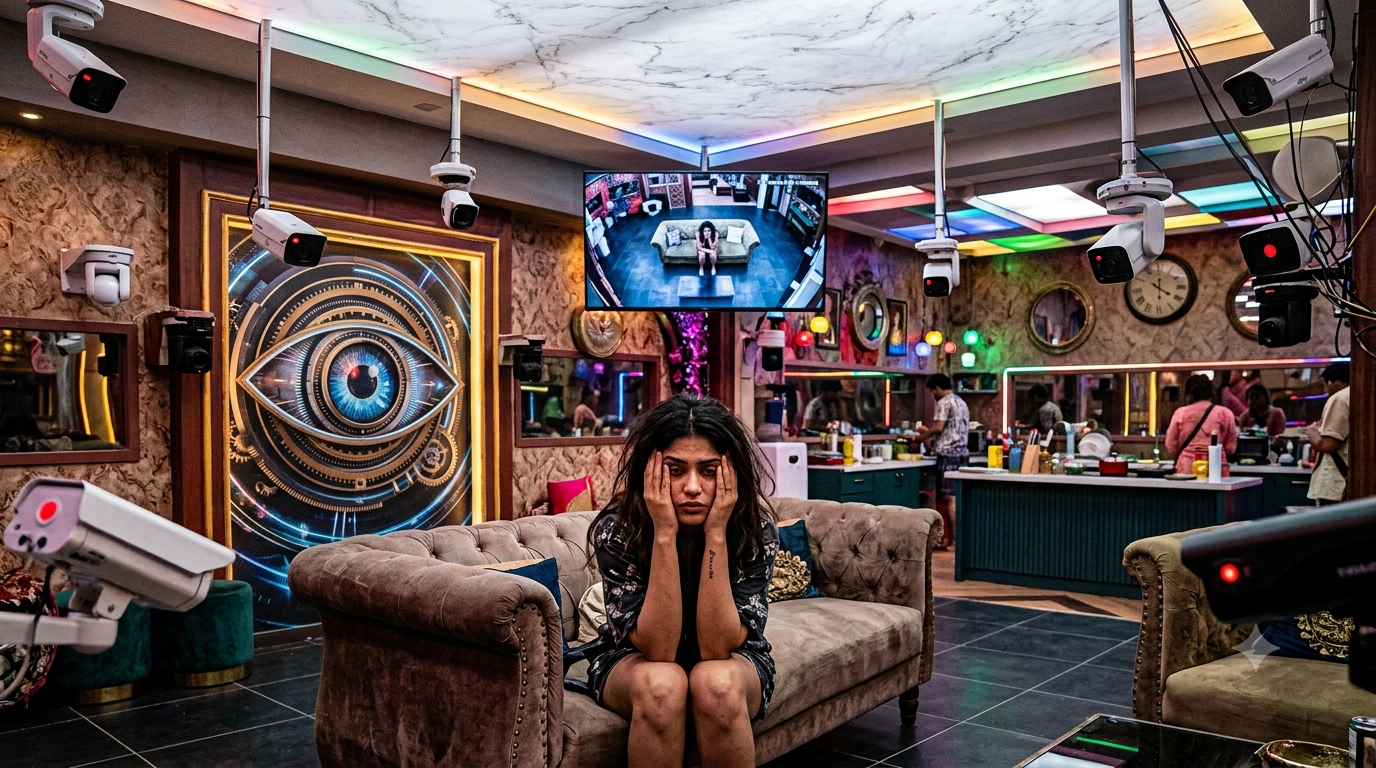
For viewers, the Bigg Boss house can look like an experiment in human behaviour. Contestants live together with strangers, have limited privacy, face constant cameras and microphones, and know that their conversations, arguments, and emotional reactions may be watched by millions of people. Under these conditions, behaviour that may seem exaggerated, unpredictable, or unusually emotional can have a psychological explanation. The combination of constant observation, social pressure, competition, disrupted routines, and limited personal space can affect how people perceive themselves and others. While every contestant responds differently, psychologists often look at factors such as stress, self-awareness, emotional regulation, group dynamics, and the need for social acceptance when understanding behaviour in highly monitored environments.
"The psychological impact of living under 24/7 camera surveillance extends beyond the presence of cameras. Contestants operate within an environment of constant observation, competition, limited privacy and emotional uncertainty. Such conditions may heighten self-consciousness, increase interpersonal sensitivity and influence how individuals regulate their emotions," says Dr. Gayatri Bhatia, Senior Consultant, Psychiatry, Amrita Hospital, Faridabad.
Constant cameras can increase self-consciousness
Knowing that cameras are recording almost every interaction can make a person more conscious of how they look and behave. This can lead to heightened self-monitoring, where individuals repeatedly think about how their words, expressions, and actions might be perceived by others. Over time, this can become mentally exhausting. A contestant may start analysing even ordinary conversations, wondering whether they said the right thing or whether another person misunderstood them. At the same time, some people may eventually become accustomed to cameras and behave more naturally. Others may continue to feel that they are performing in front of an unseen audience.
"The crucial factor is how contestants perceive and respond to the environment. Healthy coping mechanisms, adequate rest, emotional support and access to qualified mental-health professionals are essential. Reality television should recognise that behind every dramatic moment is a human being whose psychological wellbeing deserves as much consideration as the entertainment itself," adds Dr Bhatia.
There is almost no opportunity to switch off
Privacy plays an important role in emotional recovery. In everyday life, people can usually withdraw from a stressful interaction, spend time alone or return to a familiar environment. Inside a reality-show house, that escape may be limited.
After an argument, contestants may still have to share the same living spaces, eat together and interact with the same group of people. This can keep the nervous system in a prolonged state of alertness, particularly when conflicts remain unresolved. A psychiatrist or clinical psychologist would typically distinguish between normal stress reactions and clinically significant mental-health symptoms. Irritability, emotional outbursts or withdrawal alone do not necessarily indicate a mental-health disorder.
Group dynamics can intensify conflict
When a group of strangers is placed together for an extended period, alliances and divisions can develop quickly. People naturally seek familiarity and social support, especially when they are in an unfamiliar or stressful environment. Contestants may therefore gravitate towards individuals who share their opinions, communication style or emotional responses. But once groups form, disagreements can become more intense. A minor disagreement between two individuals may begin to affect the larger group, creating a sense of "us versus them". This is one reason reality-show conflicts can sometimes appear to escalate rapidly.
Emotional reactions may become stronger under stress
Sleep disruption, uncertainty, competition and continuous interpersonal tension can all affect emotional regulation. When people are stressed, their ability to pause before reacting may be reduced. Someone who would normally ignore a provocative comment may respond immediately when already emotionally overwhelmed. This does not mean every emotional reaction is caused by the environment. Personality, previous experiences, coping mechanisms and individual vulnerability also influence how someone responds to stress.
Why contestants may behave differently from their lives outside
A person's behaviour is shaped by their environment. Someone who appears calm and composed outside the house may become more argumentative in an environment where personal boundaries are repeatedly challenged. Similarly, a naturally outspoken person may become quieter if they feel socially isolated or repeatedly criticised.
Psychologists often consider behaviour in context rather than judging an individual based on a single incident. What viewers see is also a highly unusual environment, not necessarily a complete representation of the contestant's personality.
The fear of being judged can influence behaviour
Contestants are aware that their actions may be discussed by viewers, fellow contestants and people outside the house. This can create an additional layer of social evaluation. Humans generally have a strong need for social acceptance. When people believe they are being judged, they may change how openly they communicate, become defensive or attempt to manage their public image. For some contestants, this may mean becoming more careful. For others, the pressure may produce frustration and impulsive reactions.
Why arguments can become emotionally intense
In ordinary life, conflict often has a natural endpoint. People can leave the situation, talk to someone else or simply avoid the person for some time. In a confined environment, those options may be restricted. Repeated exposure to the same disagreement can keep negative emotions active. A person may also begin interpreting later interactions through the lens of the earlier conflict. A neutral comment can then be perceived as criticism because trust between individuals has already deteriorated. This does not mean contestants are necessarily "overreacting". Their perception of the situation may be influenced by accumulated stress and previous interactions.
Constant observation can change social behaviour
Being watched can alter behaviour in subtle ways. People may become more conscious of their facial expressions, tone of voice and body language. Some may become more performative, while others may withdraw. A contestant might also become increasingly aware of which behaviours receive approval or criticism from the people around them. This can create a feedback loop: behaviour attracts a reaction, the reaction influences the contestant's next behaviour, and the cycle continues.
Why viewers should be careful about diagnosing contestants
One important psychological distinction is that observing behaviour is not the same as diagnosing a mental-health condition. A contestant appearing angry, anxious, emotional, withdrawn or unpredictable on television does not automatically mean they have depression, anxiety, a personality disorder or any other psychiatric condition. Diagnosis requires a proper clinical assessment, including a person's history, symptoms, functioning and circumstances. Reality television gives viewers only a limited window into an individual's life.
The bigger psychological picture
The appeal of shows such as Bigg Boss partly comes from watching people navigate situations that are psychologically demanding. Constant observation, limited privacy, interpersonal competition and uncertainty can amplify emotions and expose differences in coping styles. But it is important to remember that contestants are not simply their most dramatic television moments. Their behaviour is shaped by personality, circumstances, relationships and stress. Understanding these factors can help viewers watch reality television with greater psychological awareness rather than immediately labelling someone's behaviour as abnormal. Ultimately, the Bigg Boss house offers an unusual reminder of something that applies outside reality television too: when people are stressed, constantly evaluated and unable to escape conflict, even ordinary emotions and disagreements can feel much bigger.
Disclaimer: This content including advice provides generic information only. It is in no way a substitute for a qualified medical opinion. Always consult a specialist or your own doctor for more information. NDTV does not claim responsibility for this information.