

)
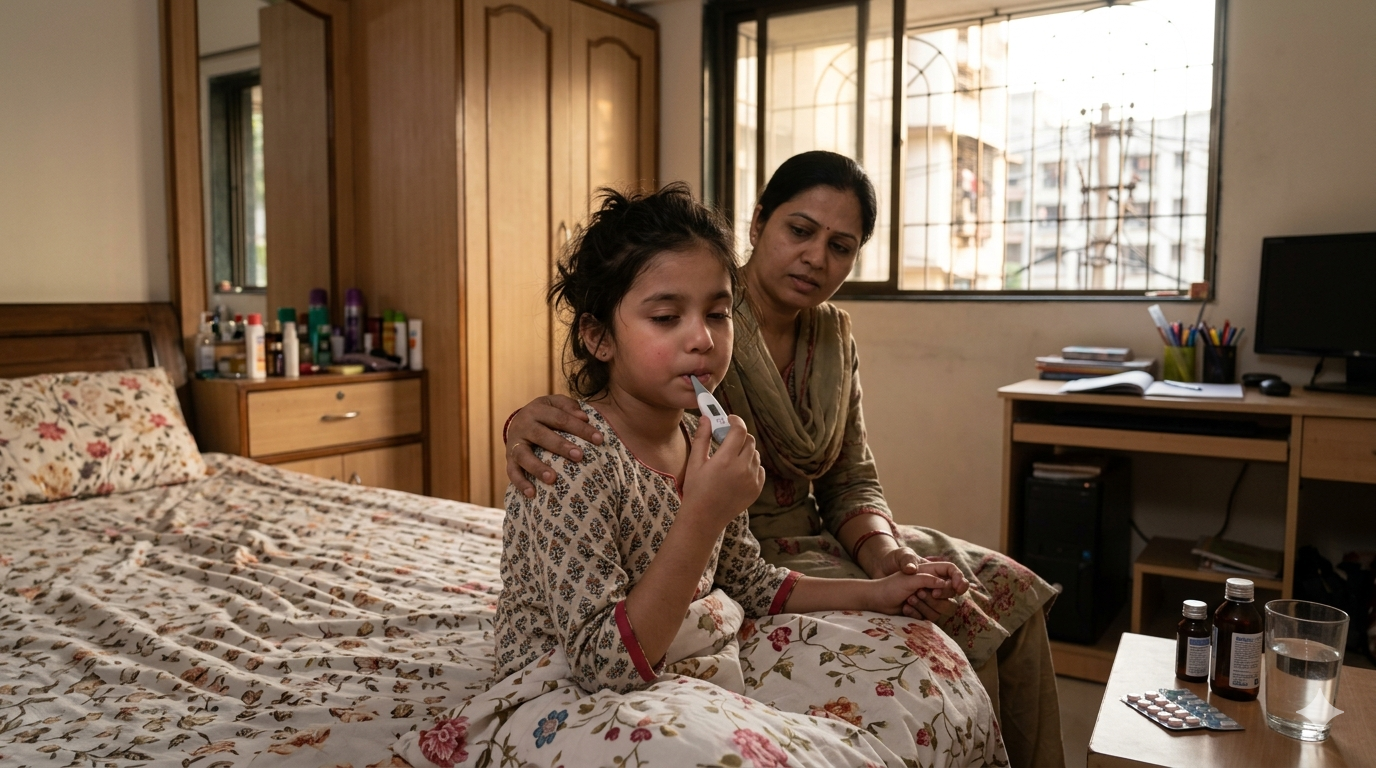
The monsoon in India offers relief from the scorching summer heat, but it also marks the annual arrival of a seasonal health hazard: a sudden wave of fever cases. People often wonder about their platelet counts and consider every sneeze or spike in body temperature as a sign of a serious disease, which makes them panic. The biggest challenge families face during this rainy season is determining whether a sudden fever is just a standard seasonal viral infection or the early warning signs of dengue. Because both conditions look nearly identical on day one, the first 48 hours are critical. Misreading the symptoms can lead to dangerous delays or, conversely, unnecessary hospital panic.
This is where the 48-Hour fever rule becomes your most vital tool for preventive care. There are medical insights and clinical trends to understand to figure out exactly how your body responds to these distinct infections.
Why The First 48 Hours Are A Medical Blind Spot
When a pathogen, be it a standard respiratory virus or the vector-borne dengue virus that enters your system, your immune system launches a generic, front-line defence. It releases pyrogens (fever-inducing substances) that reset your brain's internal thermostat to burn out the invader.
Because this initial immune response is identical for multiple infections, diagnosing the exact cause through basic physical examination alone in the first two days is notoriously difficult.
According to a clinical review published in the Journal of Clinical Virology, early clinical symptoms of dengue frequently mimic non-specific viral syndromes during the initial 48 hours of fever onset, making early laboratory confirmation or close clinical tracking necessary for endemic regions.
However, as you cross that 48-hour threshold, the two conditions begin to take completely different paths.
Differentiating The Symptoms: Viral vs Dengue
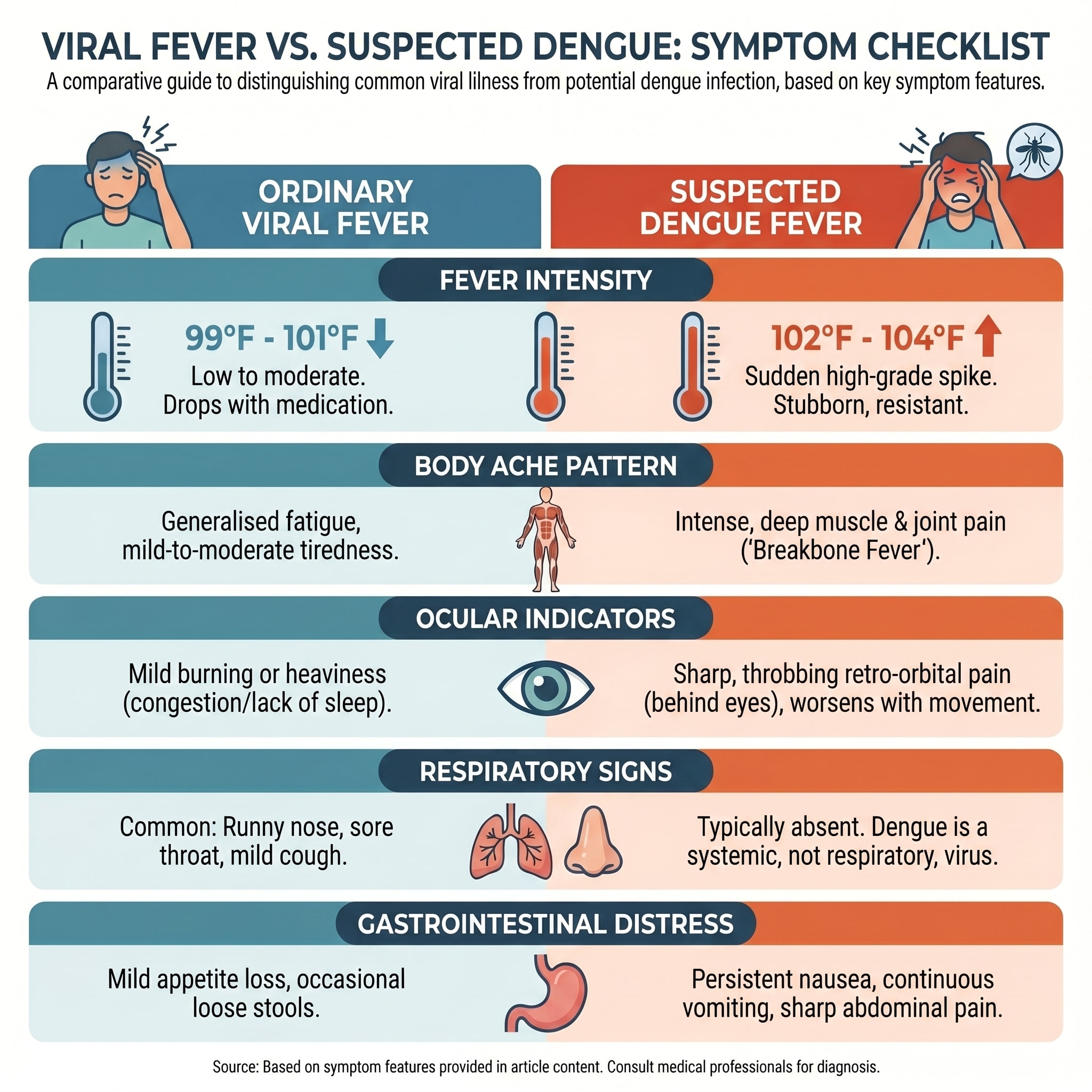
While a standard viral fever is self-limiting and manageable with simple rest, dengue requires close, methodical monitoring. Here is what you need to look out for as the fever progresses past the second day:
Also Read: Dengue Fever: More Than 45,000 Cases Reported In India; How To Stay Safe
What Happens When You Cross the 48-Hour Mark?
If your fever stays consistently high past 48 hours and doesn't budge despite timely doses of paracetamol, it is time to skip the internet theories and get a direct blood test.
1. The Critical Testing Window
Within the first 1 to 4 days of symptom onset, the Dengue NS1 Antigen test is highly sensitive and can confirm the presence of the virus before your body even produces antibodies. A simultaneous Complete Blood Count (CBC) is essential to establish your baseline haematocrit and platelet levels.
2. The Platelet Fallacy and the "Critical Phase"
Many people panic the moment a fever breaks, assuming they are out of the woods. In dengue, the period right after the fever subsides (usually between day 3 and day 5) is actually the critical phase. This is when plasma leakage can occur, causing the blood to thicken and platelet counts to drop sharply. A study highlighted in PLoS Neglected Tropical Diseases notes that severe dengue complications, such as fluid accumulation and internal bleeding, characteristically manifest during the defervescence phase (the transition from a high fever to normal temperature).
Also Read: India Set To Get Dengue Vaccine Qdenga Soon: Doctors Explain What To Expect
The Golden Rules Of Home Management
While you wait for your lab reports, your home-care strategy should prioritise safety and systemic stabilisation:
1. Stick Strictly To Paracetamol For Fever Management
Use only paracetamol for fever control as advised by your physician. Avoid all anti-inflammatory painkillers like ibuprofen, aspirin, or diclofenac, as they thin the blood and can trigger severe internal bleeding if the infection turns out to be dengue.
2. Prioritise Cellular Hydration
Do not just drink plain water. Combat cellular dehydration by consuming electrolyte-rich fluids such as Oral Rehydration Salts (ORS), fresh coconut water, and clear vegetable soups.
3. Track The Red Flags And Ensure Emergency Monitoring
Monitor for severe warning signs: continuous vomiting, bleeding from the gums or nose, severe abdominal pain, or sudden extreme lethargy. If any of these appear, seek immediate hospital admission.
By tracking the exact duration of your symptoms and applying the 48-hour rule, you can safely navigate the monsoon season without letting panic override clinical facts. Stay safe, stay hydrated, and keep those mosquito repellents handy!
Disclaimer: This content including advice provides generic information only. It is in no way a substitute for a qualified medical opinion. Always consult a specialist or your own doctor for more information. NDTV does not claim responsibility for this information.