)
Scoliosis is a condition in which the spine curves sideways instead of staying straight. It can develop in children, teenagers, or adults, and its severity can vary from person to person. Some people may have only a mild curve with little discomfort, while others may experience back pain, muscle tightness, uneven shoulders or hips, and reduced flexibility. In severe cases, scoliosis can affect posture, balance, and even make certain physical activities more challenging. Even though the condition cannot always be prevented or completely corrected, proper care and regular exercise can help manage the symptoms.
One of the ways to manage scoliosis is through yoga. Certain yoga asanas can help improve posture, strengthen the muscles that support the spine, increase flexibility, and reduce muscle tension. However, yoga is not a cure for scoliosis. Instead, it works to manage the symptoms. Here are some yoga asanas that can help manage the condition.
Yoga Asanas To Manage Scoliosis
1. Mountain Pose (Tadasana)
This is one of the simplest yoga asanas, but it is very useful for people with scoliosis. In this pose, you stand straight with your feet together or slightly apart, keeping your shoulders relaxed and your spine elongated. It helps improve posture and creates awareness of how the body is aligned. Many people with scoliosis unknowingly lean more on one side, and this pose helps in even distribution of weight on both feet.
2. Cat-Cow Pose (Marjaryasana-Bitilasana)
The Cat-Cow Pose gently moves the spine through a full range of motion. While on your hands and knees, you alternate between arching your back (Cow Pose) and rounding it (Cat Pose). This improves flexibility and helps reduce stiffness in the spine. It also strengthens the muscles that support the back while encouraging better coordination between breathing and movement.
3. Child's Pose (Balasana)
Child's Pose is a stretch that gently lengthens the back and allows the body to rest. By sitting back on the heels and stretching the arms forward, the spine is extended without placing too much pressure on it. This pose helps release tension in the lower back, shoulders, and hips, which are often tight in people with scoliosis.
4. Side Plank (Vasisthasana)
A strong core is important for supporting the spine. Side plank strengthens the muscles on the sides of the body, including the obliques and shoulder muscles. For people with scoliosis, this pose may help improve spinal stability and muscle balance when practiced under proper guidance. Beginners can modify the pose by keeping the lower knee on the floor for extra support. Over time, stronger core muscles can improve posture and reduce strain on the spine during daily activities.
5. Cobra Pose (Bhujangasana)
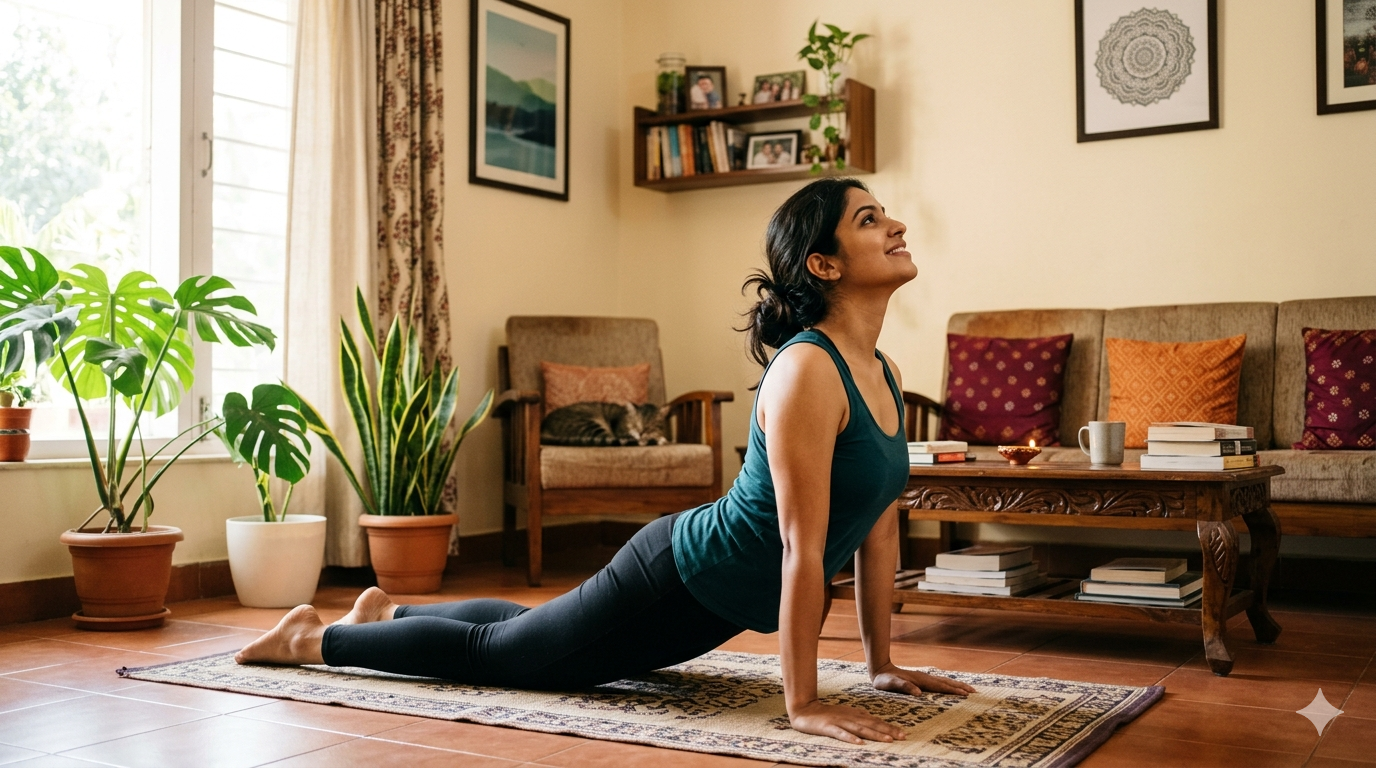
Cobra Pose requires you to lie on the stomach and gently lift the chest while keeping the hips on the floor. This pose strengthens the muscles of the upper and middle back, helping improve posture and spinal support. It also stretches the chest and shoulders, which may become tight due to poor posture. The movement should be gentle, avoiding any discomfort or excessive bending.
6. Triangle Pose (Trikonasana)
Triangle Pose stretches the sides of the body, legs, and hips while improving overall balance. It encourages awareness of body position and helps lengthen muscles that may feel tight due to spinal curvature. Since scoliosis affects each person differently, the pose may need to be adjusted to suit individual needs.
7. Bridge Pose (Setu Bandhasana)
Bridge Pose strengthens the glutes, lower back, and core muscles while opening the chest and hips. In this pose, you lie on your back with your knees bent and lift your hips upward. Strong muscles around the pelvis and lower back provide better support for the spine and may reduce discomfort during movement. This pose also encourages proper breathing by opening the chest, which can be beneficial if scoliosis affects posture and lung expansion.
Disclaimer: This content including advice provides generic information only. It is in no way a substitute for a qualified medical opinion. Always consult a specialist or your own doctor for more information. NDTV does not claim responsibility for this information.