

)
A recent meningitis outbreak in Canterbury, UK, has put the spotlight back on one of public health's most critical tools, contact tracing. The cluster, linked to a university setting and social venues, has led to two deaths and multiple hospitalisations, prompting urgent intervention by health authorities. Officials from the UK Health Security Agency (UKHSA) quickly moved to identify individuals who had close contact with infected patients, including those who attended a popular nightclub and shared social spaces. These contacts were advised to take precautionary antibiotics to prevent further spread.
This response highlights a key reality: Infectious diseases like meningococcal meningitis can spread rapidly in close-contact settings such as universities, dormitories and social gatherings. Early identification of exposed individuals can mean the difference between a contained outbreak and a wider public health emergency.
Experts say contact tracing, systematically identifying, informing and managing people who may have been exposed, is a cornerstone of outbreak control. As seen in the UK response, it allows authorities to act quickly, break transmission chains and protect vulnerable populations from life-threatening infections.
What Is Contact Tracing And How Does It Work?
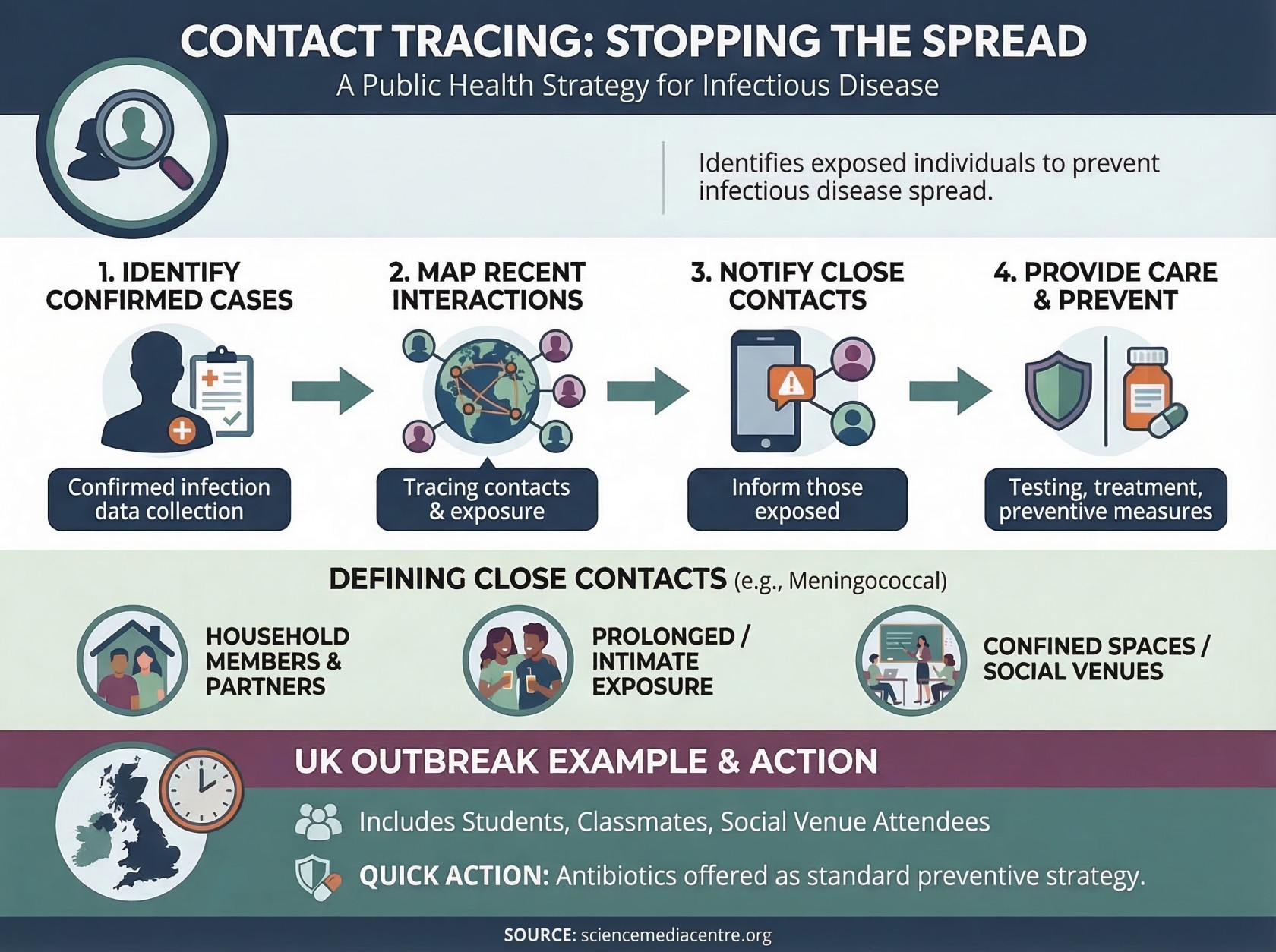
Contact tracing is a public health strategy used to identify people who may have been exposed to an infectious disease and take steps to prevent further spread.
The process typically involves:
- Identifying confirmed cases
- Mapping their recent interactions
- Notifying close contacts
- Providing testing, treatment or preventive care
For diseases like meningococcal infection, close contacts include individuals who have had prolonged or intimate exposure, such as household members, close friends or people sharing confined spaces. In the UK outbreak, this included students, classmates and individuals who attended shared social venues. Authorities moved quickly to offer antibiotics to these groups, a standard preventive strategy for meningococcal disease.
Why Contact Tracing Is Critical In Meningitis Outbreaks
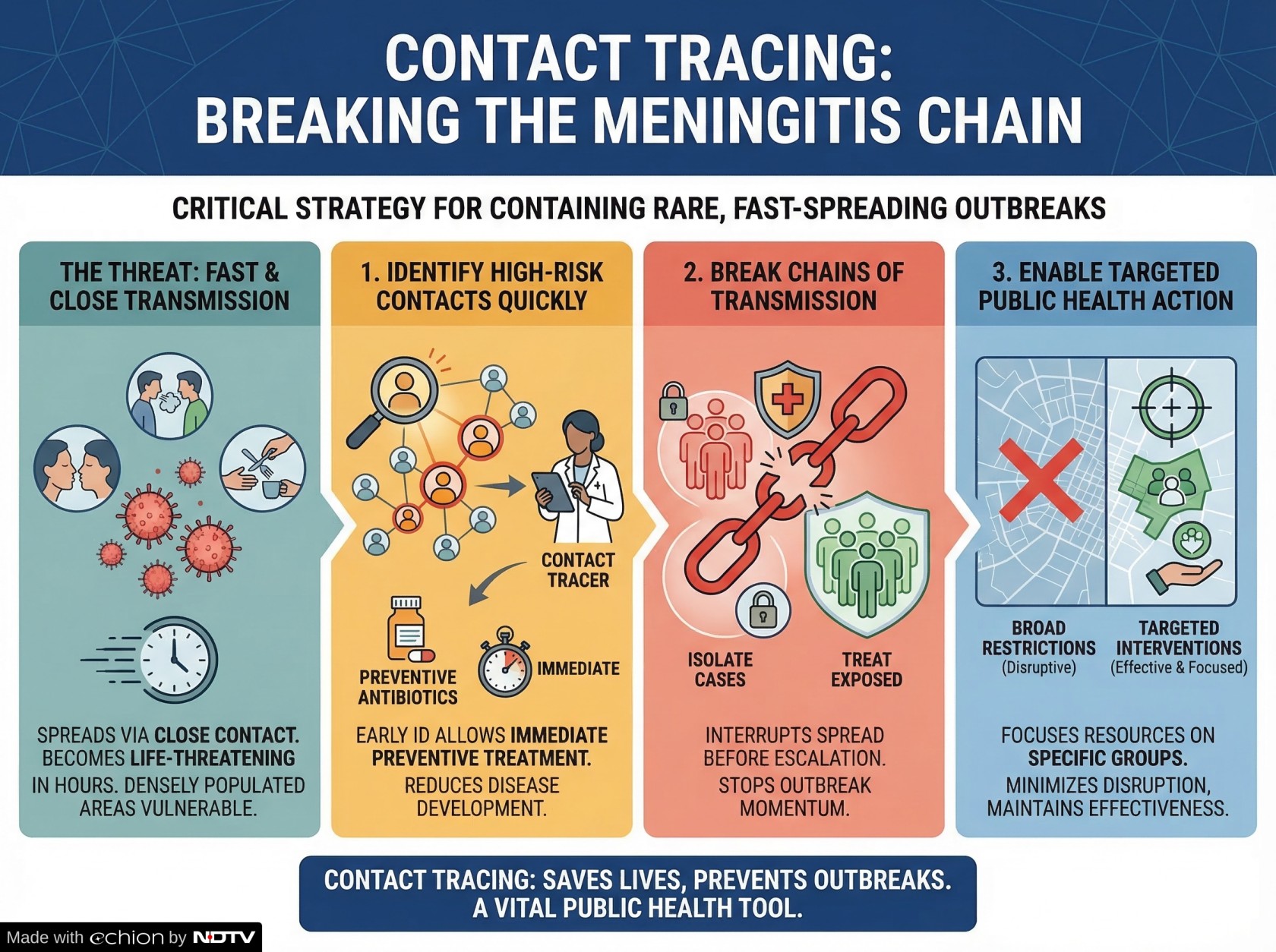
Meningococcal disease, caused by Neisseria meningitidis, is rare but can become life-threatening within hours if not treated promptly. It spreads through close contact, such as coughing, sneezing, kissing or sharing utensils, making densely populated environments particularly vulnerable.
Contact tracing is especially important in such outbreaks because:
- It Identifies High-Risk Individuals Quickly: Close contacts are at the highest risk of developing the disease. Early identification allows for immediate preventive treatment, such as antibiotics.
- It Breaks Chains Of Transmission: By isolating cases and treating exposed individuals, contact tracing interrupts the spread of infection before it escalates.
- It Enables Targeted Public Health Action: Instead of broad restrictions, authorities can focus interventions on specific groups, reducing disruption while maintaining effectiveness.
Lessons From The UK Outbreak
The response to the UK meningitis cluster demonstrates how contact tracing works in real-world scenarios.
Health authorities:
- Identified clusters linked to educational institutions and social venues
- Traced individuals who had close contact with infected cases
- Provided preventive antibiotics to exposed individuals
- Issued public health guidance to tens of thousands of students and staff
Such measures are crucial because meningococcal disease often affects young people in shared living environments, where transmission risk is higher. Importantly, experts emphasise that the risk to the general population remains low, with close contacts being the most vulnerable group.
Contact Tracing As A Core Public Health Tool
Contact tracing is not unique to meningitis, it is a fundamental component of managing many infectious diseases, from tuberculosis to COVID-19. Research shows that surveillance, contact tracing and case management are central to outbreak prevention and control.
During the COVID-19 pandemic, countries that implemented rapid and effective contact tracing were better able to control infection spread and reduce case numbers. For diseases like meningitis, where progression can be rapid and severe, the speed of response is even more critical.
Challenges In Contact Tracing
While effective, contact tracing is not without challenges:
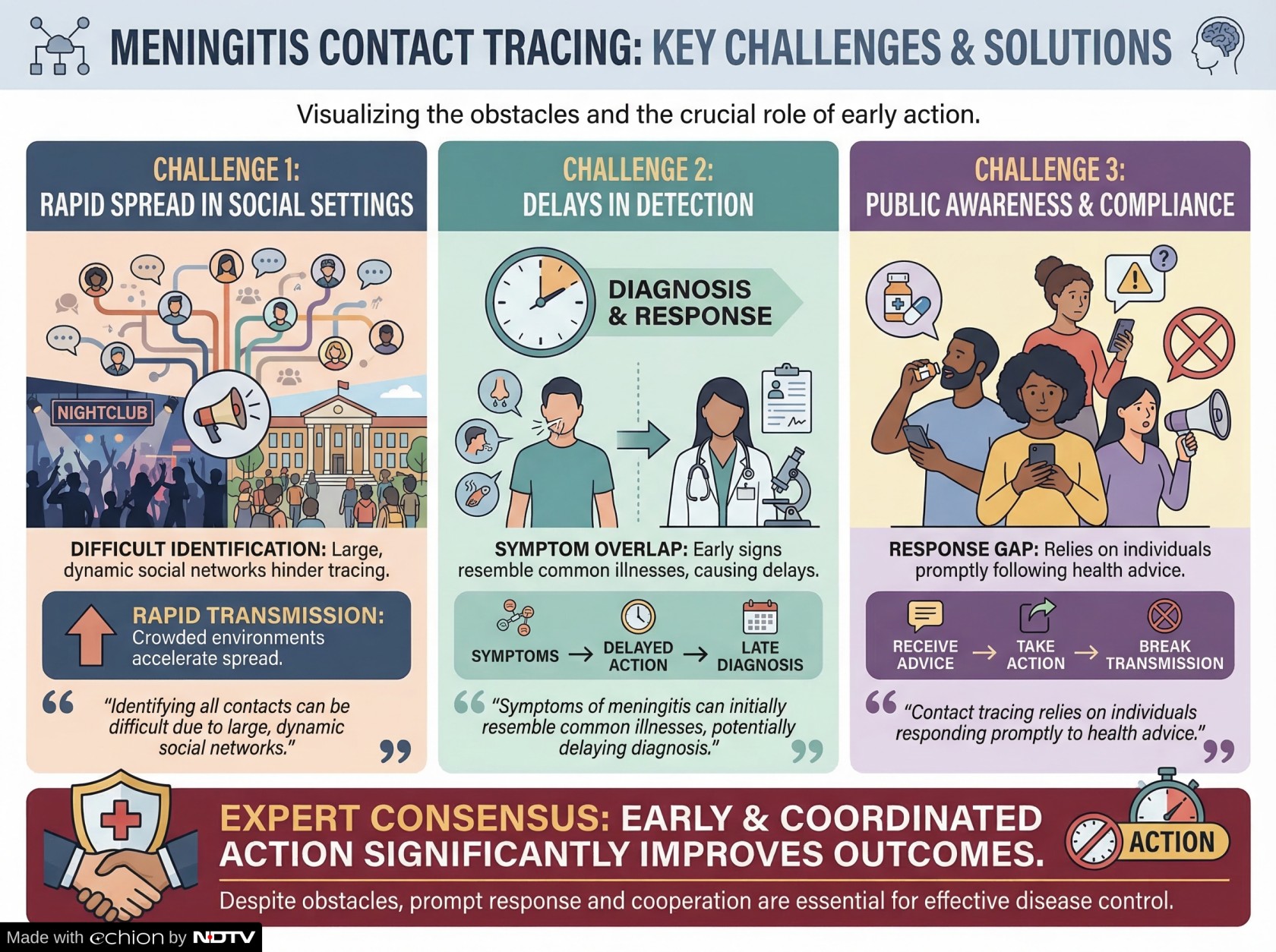
- Rapid Spread In Social Settings: In environments like universities or nightclubs, identifying all contacts can be difficult due to large, dynamic social networks.
- Delays In Detection: Symptoms of meningitis can initially resemble common illnesses, potentially delaying diagnosis and response.
- Public Awareness And Compliance: Contact tracing relies on individuals responding promptly to health advice, including taking antibiotics or seeking medical care.
Despite these challenges, experts agree that early and coordinated action significantly improves outcomes.
Also Read: All About Club Chemistry, The Nightclub At Centre Of The UK Meningitis Outbreak
The Role Of Prevention Beyond Contact Tracing
While contact tracing helps control outbreaks, long-term prevention relies on vaccination and awareness. In the UK, meningococcal vaccines such as MenB and MenACWY have significantly reduced disease incidence over time. However, gaps in vaccine coverage, especially among adolescents and young adults, can leave populations vulnerable during outbreaks.
Public health experts stress the importance of:
- Maintaining high vaccination coverage
- Educating communities about symptoms
- Encouraging early medical consultation
The UK meningitis outbreak is a stark reminder of how quickly infectious diseases can spread, and how vital rapid response measures are in containing them. Contact tracing remains one of the most powerful tools in public health, enabling authorities to identify at-risk individuals, provide timely treatment and prevent wider transmission. As demonstrated in this outbreak, swift action can save lives and stop infections from escalating into larger crises.
Strengthening surveillance systems, improving public awareness and ensuring access to preventive care will be essential in managing future outbreaks, not just of meningitis, but of infectious diseases worldwide.
Disclaimer: This content including advice provides generic information only. It is in no way a substitute for a qualified medical opinion. Always consult a specialist or your own doctor for more information. NDTV does not claim responsibility for this information.