

The word plague can immediately evoke images of the Black Death, one of the deadliest pandemics in human history. But plague is not merely a disease of the past. The infection continues to occur in parts of the world and is caused by a bacterium called Yersinia pestis. The disease has again drawn international attention after a Russian laboratory worker died following severe pneumonia, amid reports that she may have been exposed to plague bacteria at an anti-plague research facility. Russian authorities have since said testing did not identify microorganisms linked to her professional work and have described the cause of death as pneumonia of unknown origin.
That means plague has not been confirmed in the Russian case. But the episode has renewed interest in a disease that can affect the lymph nodes, bloodstream or lungs, producing three major clinical forms: bubonic, septicemic and pneumonic plague. According to the World Health Organization (WHO), human plague remains endemic in several countries. Between 2019 and 2025, most reported cases occurred in the Democratic Republic of the Congo and Madagascar.
So, what exactly is plague, and how are its three forms different?
What is plague?
Plague is a zoonotic bacterial infection caused by Yersinia pestis. The bacterium is usually maintained in populations of small mammals and their fleas. Humans can become infected primarily through the bite of an infected flea. Infection can also occur after direct contact with infected animal tissue or bodily fluids. In the case of pneumonic plague, infection can occur through inhalation of infectious respiratory particles from an infected person or animal.
A peer-reviewed systematic review of bubonic plague published in BMJ Open similarly describes plague as a zoonotic infection caused by Y. pestis, with transmission occurring through infected fleas, contaminated tissues or respiratory droplets.
The infection does not always remain confined to the site where the bacteria enter the body. Depending on how it develops and spreads, plague can produce:
- Bubonic plague, affecting the lymphatic system
- Septicemic plague, affecting the bloodstream
- Pneumonic plague, affecting the lungs
A person can also progress from one form to another. For example, untreated bubonic plague can spread into the bloodstream or lungs.
Also Read: Russian Woman, 28, Dies Of Suspected Pneumonic Plague. All About The Disease
1. Bubonic plague: The most common form
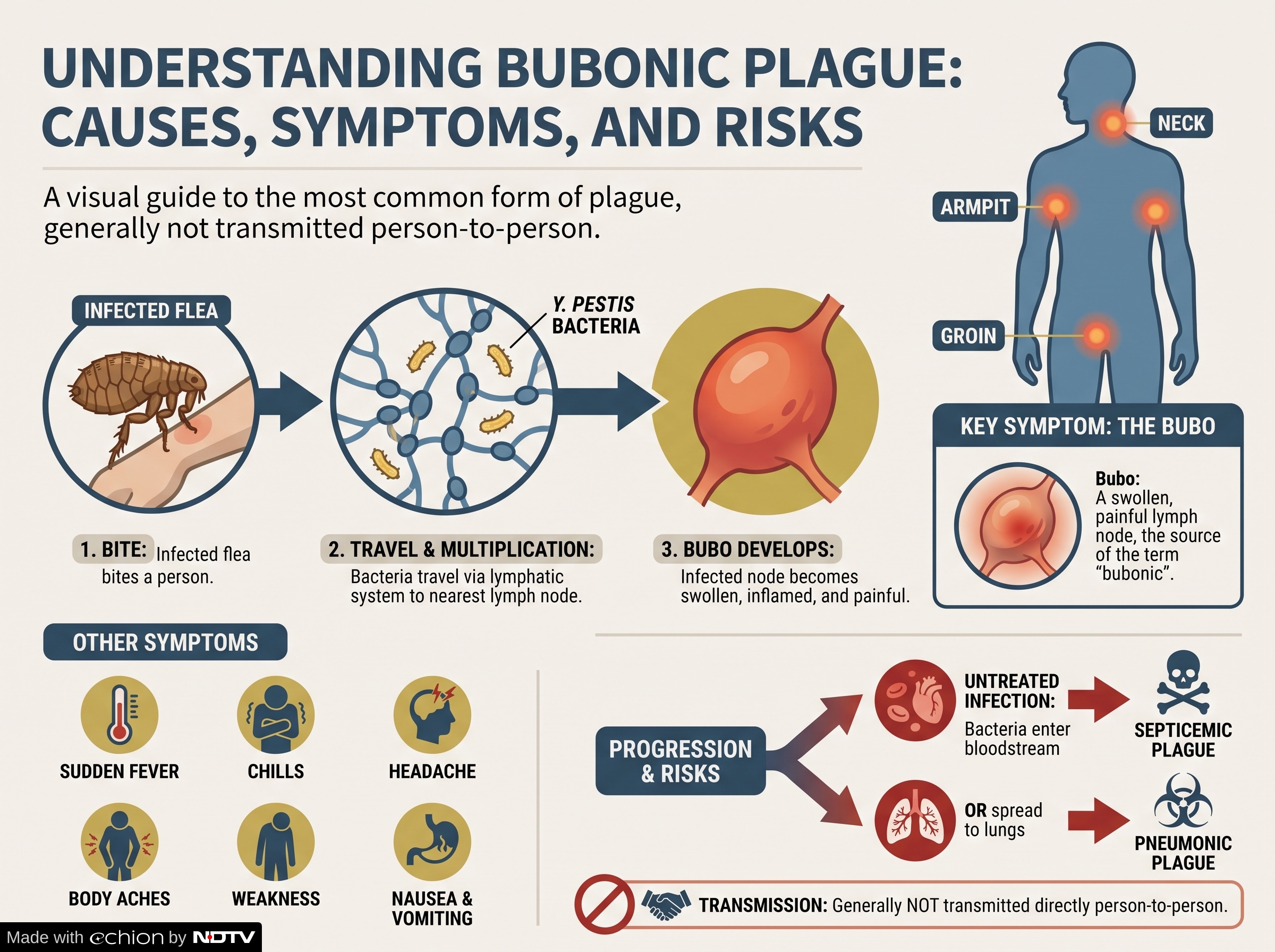
Bubonic plague is the most common form of plague. It usually develops after an infected flea bites a person. The Y. pestis bacteria enter the body and travel through the lymphatic system to the nearest lymph node, where they multiply.
The infected lymph node becomes swollen, inflamed and extremely painful. This characteristic swelling is called a bubo. Buboes commonly develop in the groin, armpit or neck, depending on where the bacteria entered the body.
Other symptoms can include:
- Sudden fever
- Chills
- Headache
- Body aches
- Weakness
- Nausea and vomiting
- Painful, swollen lymph nodes
The swollen lymph node is one of the features that distinguishes bubonic plague from many other infections. Importantly, bubonic plague is generally not transmitted directly from one person to another. However, if the infection is not treated, the bacteria can enter the bloodstream and cause septicemic plague or spread to the lungs and cause pneumonic plague.
Why is it called "bubonic"?
The term comes from bubo, the medical term for a swollen, painful lymph node associated with the infection. Historically, these swollen lymph nodes were one of the most recognisable signs of plague during major outbreaks.
2. Pneumonic plague: The most concerning form
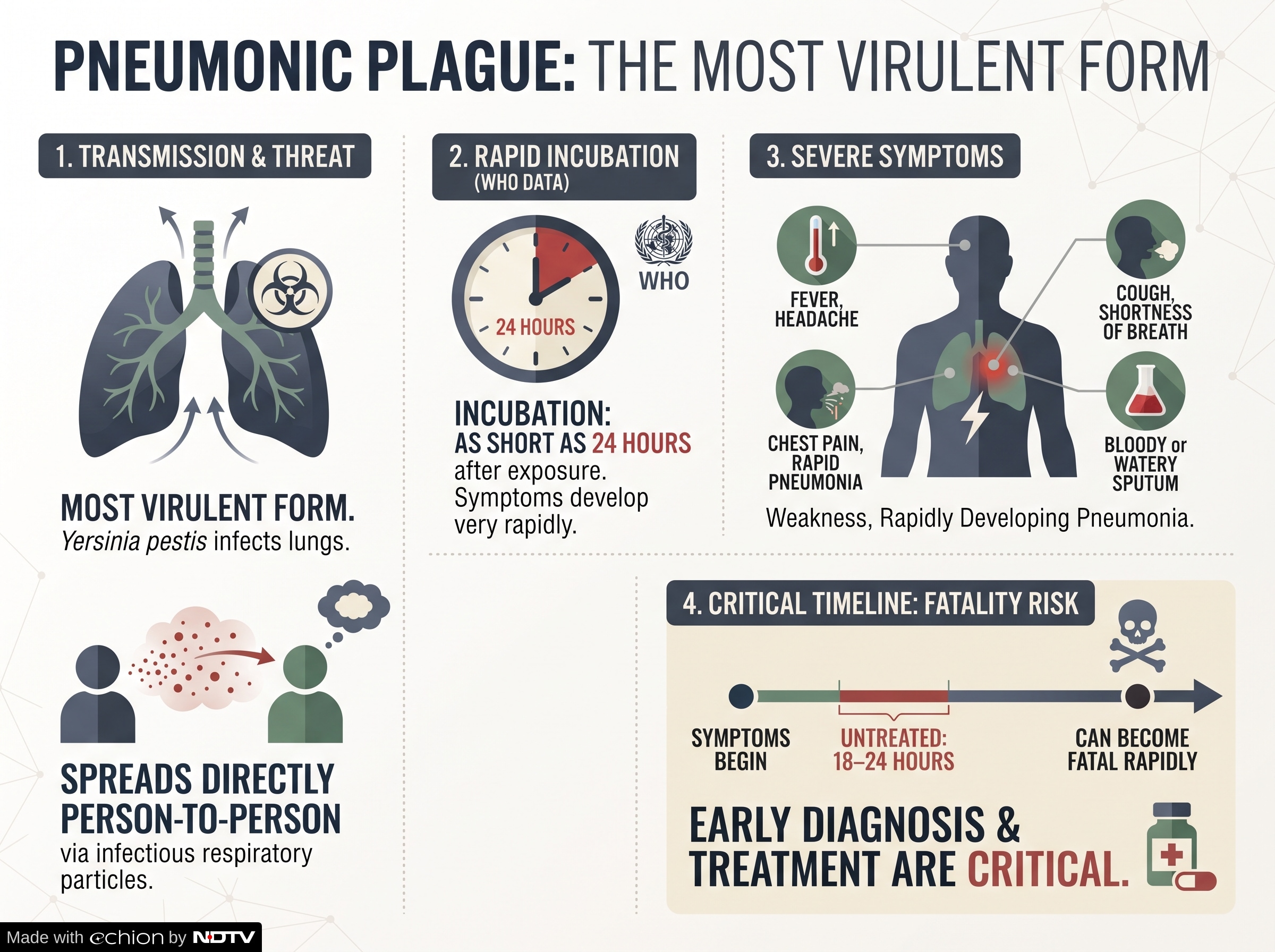
Pneumonic plague occurs when Yersinia pestis infects the lungs. It can develop when plague spreads to the lungs from another form of infection. It can also occur when a person inhales infectious respiratory particles from a person or animal with pneumonic plague. This is the most virulent form of plague and the one that causes the greatest public-health concern because it can spread directly from person to person.
Symptoms can develop very rapidly and may include:
- Fever
- Headache
- Weakness
- Cough
- Shortness of breath
- Chest pain
- Rapidly developing pneumonia
- Bloody or watery sputum
WHO notes that the incubation period can be as short as 24 hours after exposure. Untreated pneumonic plague can become fatal rapidly, sometimes within 18-24 hours after symptoms begin. Early diagnosis and treatment are therefore critical.
Can pneumonic plague spread between people?
Yes. Pneumonic plague is the form of plague capable of direct person-to-person transmission. An infected person can release bacteria-containing respiratory particles, particularly while coughing. Close contacts may become infected if they inhale these particles.
However, this does not mean pneumonic plague spreads in exactly the same way as highly transmissible respiratory viruses such as measles. The CDC's detailed review of plague transmission says Y. pestis is transmitted through large respiratory droplets from patients with pneumonic plague. These particles do not remain suspended in the air for prolonged periods, and transmission generally requires close exposure.
The same review found that person-to-person transmission has most commonly occurred among caregivers or people living with an infected patient. It also notes that asymptomatic person-to-person transmission has not been documented.
This is why a suspected pneumonic-plague case can trigger an immediate public-health response, including isolation and monitoring of close contacts, even before laboratory confirmation is available.
3. Septicemic plague: When plague enters the bloodstream
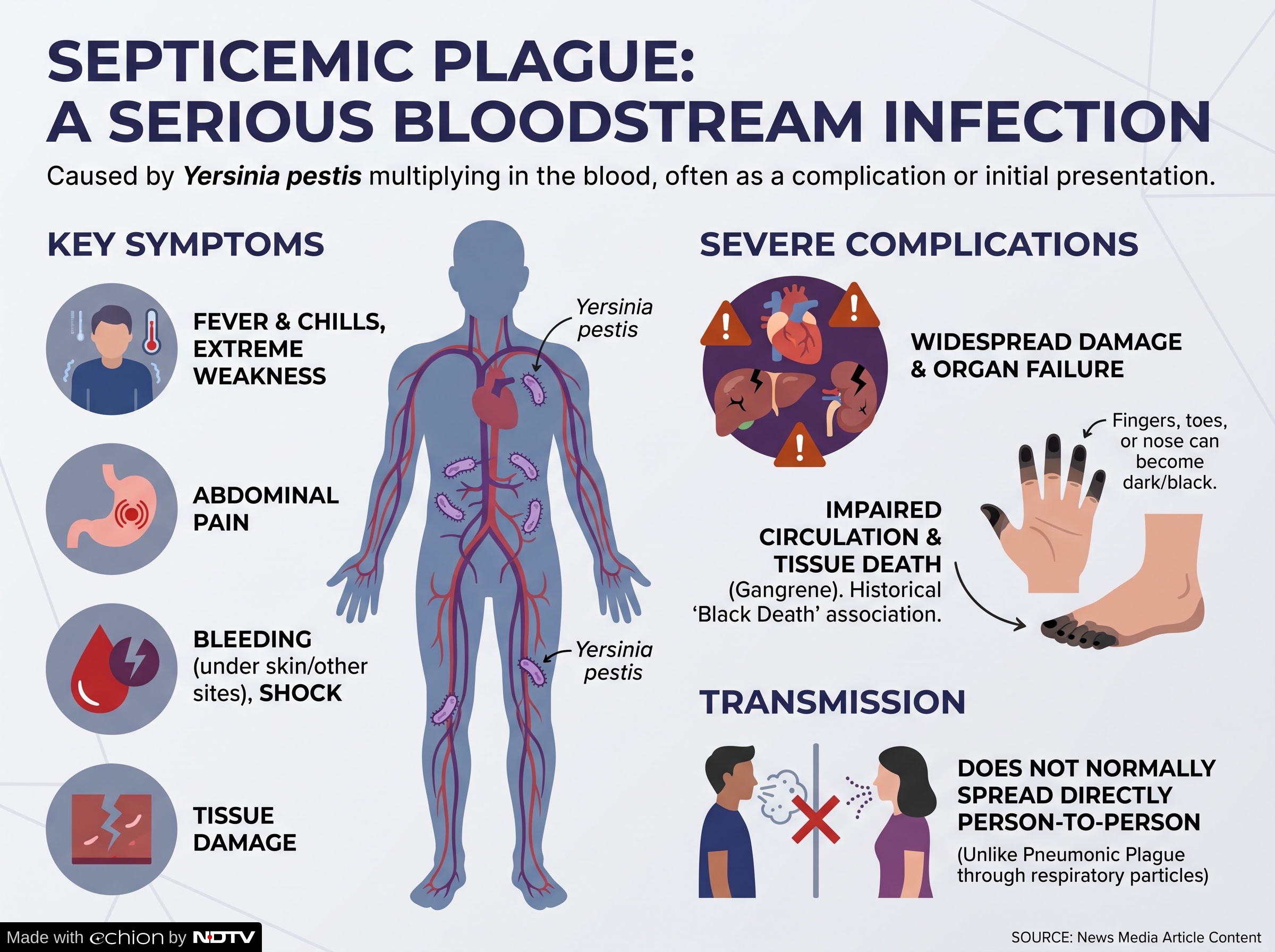
Septicemic plague occurs when Yersinia pestis multiplies in the bloodstream. It can develop as a complication of bubonic plague or another form of infection, but it can also occur as the initial presentation of plague.
Symptoms can include:
- Fever and chills
- Extreme weakness
- Abdominal pain
- Shock
- Bleeding under the skin or from other sites
- Tissue damage
Because the infection affects the bloodstream, septicemic plague can cause widespread damage and serious complications, including organ failure. In severe disease, circulation to parts of the body can become impaired, leading to tissue death. This can cause areas such as the fingers, toes or nose to become dark or black, one reason plague acquired the historical association with the "Black Death".
Unlike pneumonic plague, septicemic plague does not normally spread directly between people through respiratory particles.
Bubonic vs pneumonic vs septicemic plague: What's the difference?
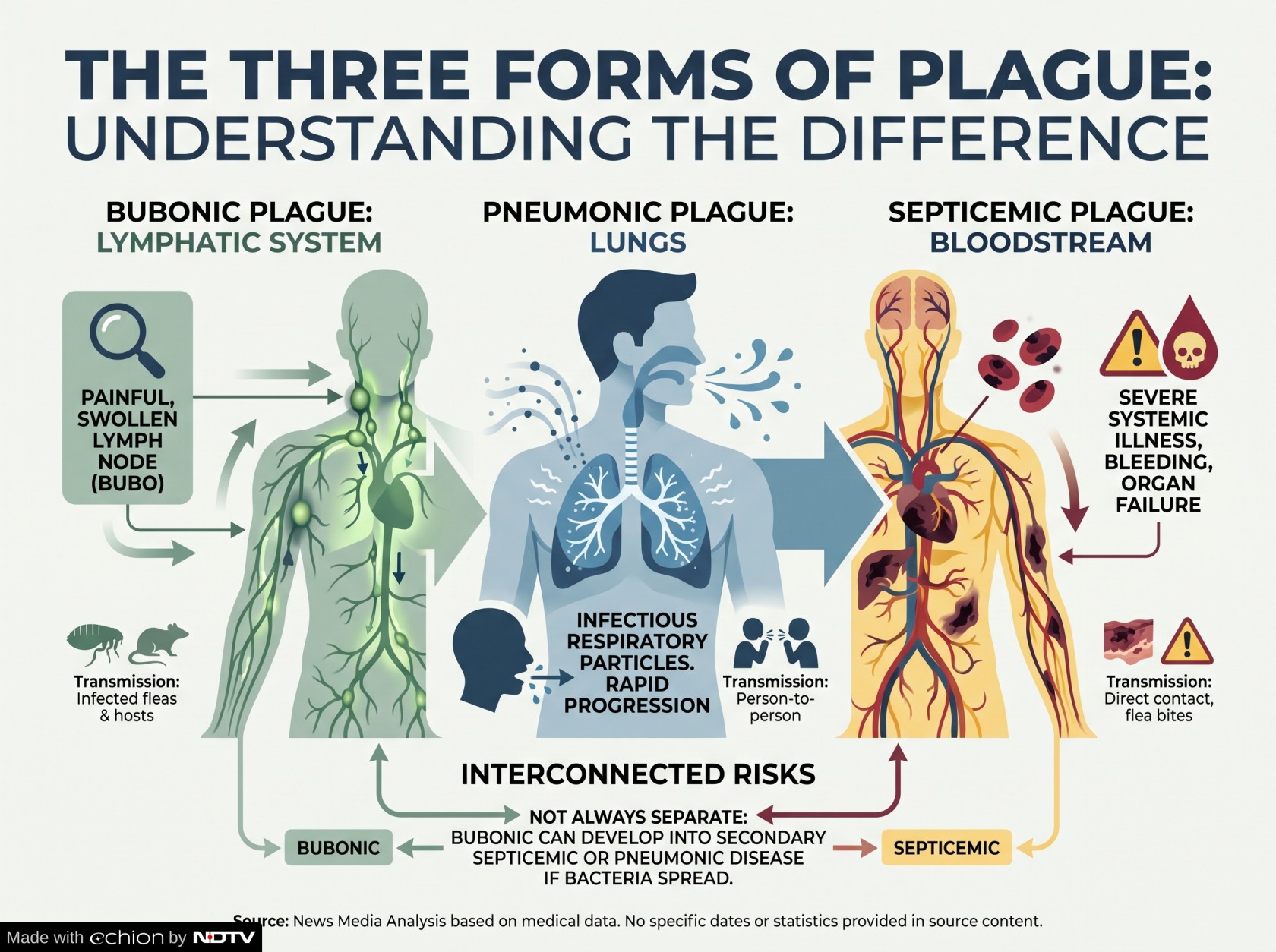
The simplest way to understand the three forms is to look at where the bacteria are causing the main infection.
- Bubonic plague: The lymphatic system is primarily affected. The classic sign is a painful, swollen lymph node or bubo.
- Pneumonic plague: The lungs are affected. It can spread between people through infectious respiratory particles and can progress rapidly.
- Septicemic plague: The bloodstream is affected. It can cause severe systemic illness, bleeding, tissue damage and organ failure.
These categories are not always completely separate. A person with bubonic plague, for example, can develop secondary septicemia or pneumonic disease if the bacteria spread.
How does a person get plague?
The main routes are:
- Infected flea bites: This is the classic route of transmission and is particularly associated with bubonic plague. Fleas can acquire Y. pestis from infected animals and transmit the bacteria when they subsequently bite another host.
- Contact with infected animals: People can become infected by handling the tissues or bodily fluids of infected animals without appropriate protection. This is particularly relevant in areas where plague circulates naturally among rodents and other small mammals.
- Respiratory exposure: People can develop pneumonic plague after inhaling infectious respiratory particles from someone with pneumonic plague. This route is what makes pneumonic plague particularly important from an outbreak-control perspective.
Is plague still found today?
Yes. Plague has not been eradicated and remains a naturally occurring infection in several parts of the world.
A WHO epidemiological report published in September 2026 reviewed human plague surveillance between 2019 and 2025. It found that most reported cases during this period occurred in the Democratic Republic of the Congo and Madagascar. (World Health Organization)
This is important because it puts the Russian episode into perspective. A suspected case in a country with a history of plague surveillance does not automatically mean that an international outbreak is underway.
The disease continues to circulate primarily through animal-flea cycles, and human cases occur when people come into contact with those natural transmission systems.
Also Read: A Plague Is Not The Same As Covid: Why The Suspected Russian Pneumonic Plague Should Not Cause Panic
Is plague fatal?
It can be, particularly when treatment is delayed. WHO says untreated pneumonic and septicemic plague are invariably fatal, while bubonic plague also carries a substantial risk of death when untreated. At the same time, plague is now treatable with antibiotics, and early diagnosis and treatment can dramatically change the outcome.
The CDC recommends starting appropriate treatment as soon as plague is suspected rather than waiting for laboratory confirmation, because delaying treatment can be dangerous. Confirmatory testing can continue while treatment is underway.
Antibiotic treatment depends on the patient's clinical condition and the form and severity of disease. CDC guidance lists aminoglycosides and fluoroquinolones among recommended treatment options for plague.
Plague is a bacterial infection caused by Yersinia pestis, and it is still around. The suspected Russian case has therefore attracted international attention for a legitimate reason. But it is equally important not to confuse suspected plague with confirmed plague.
Modern antibiotics, rapid diagnosis, infection-control measures and contact tracing have fundamentally changed the outlook for plague. A disease that once caused devastating pandemics can now be treated, provided it is recognised and managed quickly.
Disclaimer: This content including advice provides generic information only. It is in no way a substitute for a qualified medical opinion. Always consult a specialist or your own doctor for more information. NDTV does not claim responsibility for this information.