

)
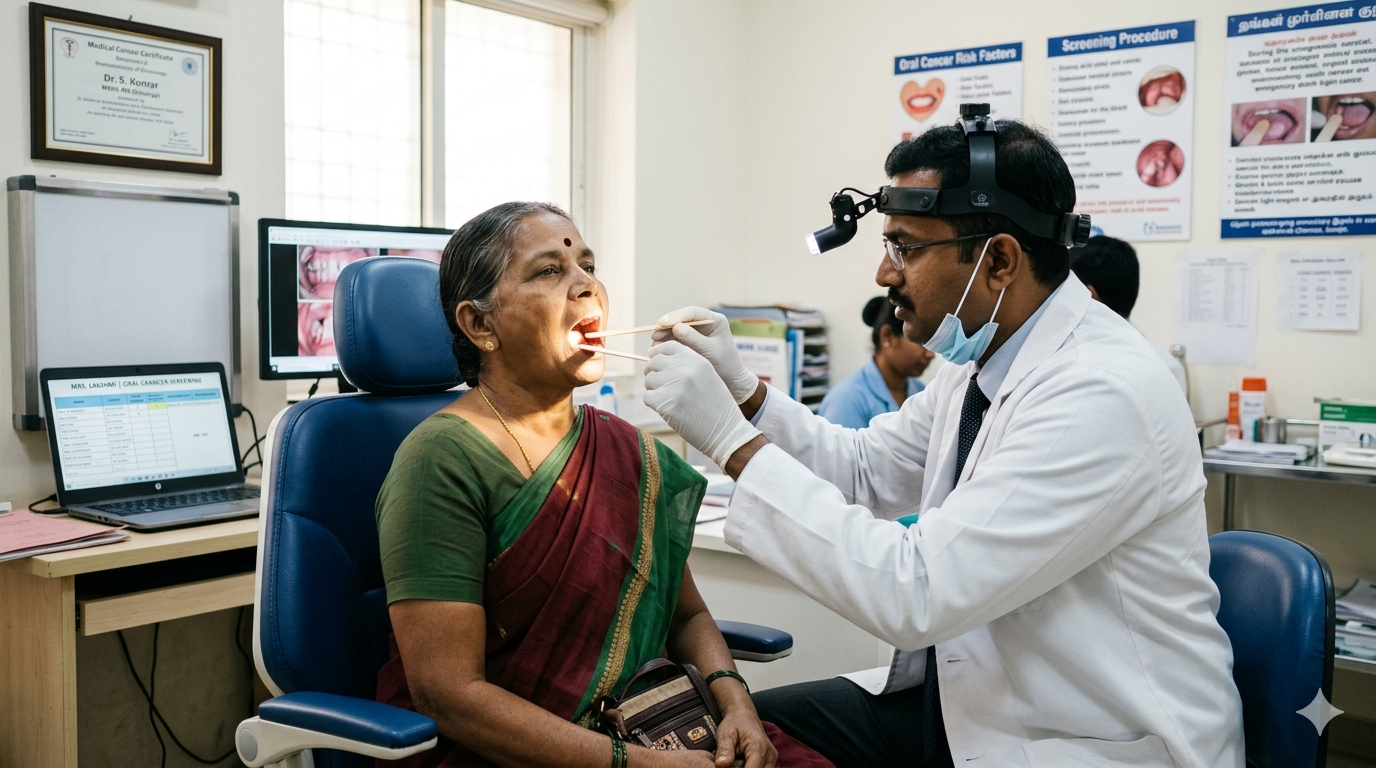
Oral cancer remains a major public health concern in India, particularly among men, where it is the most commonly diagnosed malignancy. Despite advances in treatment, survival outcomes vary drastically depending on how early the disease is detected. This Oral Cancer Awareness Month, experts warn once again that delayed diagnosis continues to be a key reason behind poor outcomes, especially in a country where tobacco use, both smoking and smokeless, remains widespread.
According to the World Health Organization (WHO) and the Indian Council of Medical Research (ICMR), India accounts for a significant proportion of the global oral cancer burden. Lifestyle factors such as tobacco chewing, smoking, and alcohol consumption are the primary drivers. However, a growing subset of cases is now being linked to infections like Human Papillomavirus (HPV), particularly among younger individuals with no traditional risk factors.
What makes oral cancer particularly dangerous is its silent progression. Early lesions are often painless and easily ignored, allowing the disease to advance to later stages before detection. Yet, when caught early, oral cancer is highly treatable, with survival rates as high as 90%.
This stark contrast underscores a crucial message: Early-stage detection can mean the difference between life and death.
Oral Cancer In India: Risk Factors And Rising Concerns
India bears one of the highest burdens of oral cancer globally. The World Health Organization identifies tobacco use as the single largest risk factor, contributing to a majority of cases. Smokeless tobacco products such as gutka and khaini are particularly implicated.
Dr. Siddharth Shanker Sood, Senior Consultant, Oncology at Fortis Escorts Hospital, Faridabad, explains: "Oral cancer is the most common malignancy in men in India, with the majority of cases linked to tobacco or alcohol use." Alcohol consumption further amplifies the risk, especially when combined with tobacco. Together, these factors create a carcinogenic environment in the oral cavity.
However, the risk profile is evolving. "A subset of cases, particularly in younger individuals without traditional risk factors, are associated with Human Papillomavirus (HPV) infection," Dr. Sood adds.
Also Read: All About The HPV Vaccine In India: Age, Doses And Who Should Avoid
Survival Depends On Stage At Diagnosis
One of the most critical aspects of oral cancer is that survival outcomes depend heavily on the stage at which the disease is diagnosed. Dr. Sood emphasises: "Stage at diagnosis is the single most important predictor of survival in oral cancer."
- Stage I and II: Early-stage cancers are highly curable. "Stage I and II cancers are highly curable with surgery alone, yielding 5-year survival rates of 80-90%," he notes.
- Stage IV: Advanced cancers are far more difficult to treat. "Stage IV disease carries a significantly poorer prognosis, with 5-year survival dropping to approximately 40% despite aggressive treatment," Dr. Sood explains.
Why Early Signs Are Often Missed
One of the biggest challenges in tackling oral cancer is that early symptoms are often subtle and painless. This leads many patients to ignore warning signs until the disease has progressed. Dr. Sood highlights: "The progression from early-stage to advanced disease is often insidious, with patients frequently ignoring symptoms due to the painless nature of early lesions."
Common early signs may include:
- Non-healing ulcers in the mouth
- Red or white patches
- Persistent mouth pain or discomfort
- Difficulty swallowing or chewing
Experts suggest that any mouth ulcer lasting more than three weeks should be evaluated by a healthcare professional.
Early Detection: The Game Changer
The most powerful tool against oral cancer is early detection. When diagnosed early, treatment is simpler, less invasive, and significantly more effective. Dr. Sood underscores this point: "Early detection significantly improves outcomes. If detected early, oral cavity cancers carry an excellent prognosis, which worsens substantially with advancing stage." Screening and awareness play a crucial role. The ICMR recommends regular oral examinations, particularly for high-risk individuals such as tobacco users.
Simple measures that can aid early detection include:
- Regular dental check-ups
- Self-examination of the oral cavity
- Seeking medical advice for persistent symptoms
Also Read: Oral Sex, HPV And Throat Cancer: Is Smoking No Longer The Top Risk?
Prevention: Reducing Your Risk
While early detection is vital, prevention remains the best strategy. The WHO and ICMR recommend:
- Avoiding tobacco in all forms
- Limiting alcohol consumption
- Maintaining good oral hygiene
- Considering HPV vaccination where appropriate
Reducing tobacco use alone could significantly lower India's oral cancer burden.
Oral cancer continues to pose a serious health challenge in India, but it is also one of the most preventable and treatable cancers, if detected early. The dramatic difference in survival rates between early and advanced stages highlights the urgent need for awareness, regular screening, and timely medical intervention. As experts emphasise, the message is clear: Do not ignore persistent oral symptoms, however minor they may seem. Early action can save lives.
Disclaimer: This content including advice provides generic information only. It is in no way a substitute for a qualified medical opinion. Always consult a specialist or your own doctor for more information. NDTV does not claim responsibility for this information.