

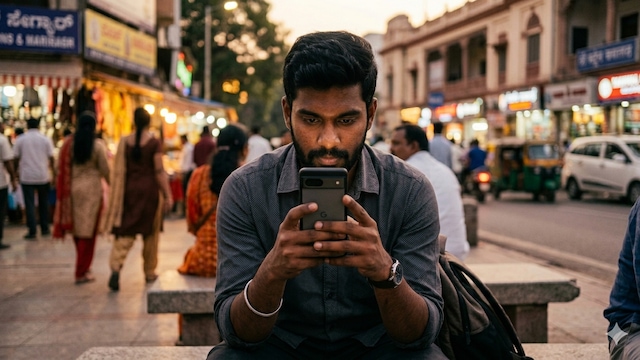
Choosing health insurance in India increasingly begins with a Google search rather than a conversation with an insurance agent. Consumers are comparing premiums, checking hospital networks, watching policy explainers and using artificial intelligence (AI) tools to understand coverage before deciding which insurer to approach. A new study by Google, with McKinsey & Company as its knowledge partner, highlights the scale of this shift: nearly 80% of India's insurance-buying journey now unfolds online, while digital research influences more than 40% of health and life insurance sales.
The findings, published in October 2026, highlight how Indian consumers are changing the way they make decisions about financial protection. Many are no longer relying exclusively on agents to introduce them to insurance products. Instead, they arrive with a shortlist of insurers, specific questions and expectations about what a policy should cover.
For health insurance, this shift matters because the choice can affect how a family manages hospitalisation expenses, planned treatment and unexpected medical emergencies. Online research can help consumers compare options, but it cannot guarantee that they understand a policy's exclusions or claims conditions.
The challenge is to turn greater digital access into better-informed decisions, with transparent information and personalised advice helping consumers choose coverage suited to their needs.
Digital research influences over 40% of insurance sales
The Google-McKinsey study, titled Decoding the DICA Consumer, examines a growing group of buyers described as Digitally Influenced, Closed with Assistance (DICA). These consumers research insurance online before approaching an advisor to validate their choices and complete a purchase.
The study found that this segment represents four times the volume of consumers purchasing insurance entirely through digital channels. This suggests that online platforms are not simply replacing agents; they are changing when and why consumers seek their assistance.
Among consumers surveyed, 78% narrowed their choices to two or three insurance brands online before speaking to an advisor. More than half retained their original shortlist after the conversation.
For health insurance buyers, this makes the quality of online information particularly important. Early research may determine which insurers consumers consider, which policy features they prioritise and which questions they ask before committing to a premium.
AI and YouTube are changing how Indians compare policies
Digital insurance research is also becoming more detailed. According to the study, longer queries account for 18% of insurance searches on Google, while 41% of users reportedly use AI Overviews to compare options and clarify coverage requirements.
Video is another important source of information. Around 60% of online insurance researchers use video during their decision-making journey, and insurance-related content on YouTube recorded more than 2.5 billion views in India over the preceding year.
These platforms can make unfamiliar insurance terminology easier to understand and help consumers prepare for discussions with advisors. However, AI-generated explanations and online videos should not replace the insurer's actual policy wording. Consumers need to verify details such as waiting periods, exclusions, co-payments and disease-specific sub-limits before purchasing a policy.
READ | What Happens When Your Hospital Is Also Your Insurance Company? We're Starting To See The Effects
Why human advice still matters for health insurance
Despite growing digital adoption, fewer than 30% of buyers are comfortable purchasing high-value insurance policies entirely online, the study found.
Siddharth Shekar, Director, Google India, said the insurance-buying process involves multiple touchpoints rather than a single platform or advisor. He highlighted the need to bridge the gap between consumers' digital evaluations and their offline advisory experiences.
This is particularly relevant to health insurance, where the lowest premium may not translate into the most appropriate coverage.
A family should assess its healthcare needs, the ages of its members, existing medical conditions, local hospital costs and any employer-provided insurance before choosing a policy. It should also check whether preferred hospitals are in the insurer's network and understand the conditions under which claims may be paid.
An advisor can help clarify these details, but consumers should independently verify important representations against the policy document. Purchasing a policy does not automatically guarantee that every future treatment or hospital bill will be covered.
Consumers want personalised advice, not generic sales pitches
The study also identifies friction when consumers move from online research to conversations with insurance advisors. More than 40% of buyers reportedly expressed frustration at having to repeat their requirements, while over a third cited generic sales pitches that did not reflect their needs.
The findings suggest that consumers increasingly expect advisors to build on their existing research instead of restarting the conversation.
For someone comparing health insurance plans, this could mean receiving clear answers about room-rent limits, pre-existing disease waiting periods, restoration benefits and exclusions rather than another broad presentation about the insurer.
Sumit Madan, Managing Director and CEO of Axis Max Life Insurance, said the future of insurance distribution would depend on how effectively digital discovery was connected with trusted advice. Parthanil Ghosh, Managing Director and CEO of HDFC ERGO General Insurance, similarly highlighted the potential of digitally influenced consumers to improve awareness and accessibility.
These are industry perspectives rather than clinical findings, but they underline a consumer issue: better information is useful only when it leads to informed choices and clearer expectations.
READ | 'More Than Healthcare, Human Care Matters': Lilavati Trustee Rajiv Mehta At NDTV World Summit 2026
What Indian families should check before buying a policy
For Indian households, digital research is best treated as the starting point of a decision, not its final stage.
Before buying health insurance, consumers should compare the sum insured and premium alongside exclusions, waiting periods, co-payments and applicable sub-limits. They should check hospital-network availability in their city, understand how pre-existing diseases are handled and read the policy's claims conditions.
Families should also examine whether employer-provided cover is sufficient and whether additional individual or family-floater coverage is appropriate for their circumstances. Premium affordability matters, but so does the ability to maintain the policy over time.
The study's findings are based on a survey of 1,039 insurance consumers, conversion data from life and health insurers, interviews with advisors and distribution platforms, and insights from Google and McKinsey.
The Google-McKinsey study shows that online research has become a major influence on India's health and life insurance market, even when consumers complete purchases with an advisor. For families, this creates an opportunity to compare options, identify coverage gaps and ask more precise questions. However, search results, videos and AI summaries cannot replace careful scrutiny of policy terms. The real value of digital research lies in helping consumers choose health insurance they understand, can afford and can rely on when they need medical care.
Disclaimer: This content including advice provides generic information only. It is in no way a substitute for a qualified medical opinion. Always consult a specialist or your own doctor for more information. NDTV does not claim responsibility for this information.