

)
For decades, medical science has treated heart disease, type 2 diabetes, and chronic kidney disease as separate, isolated health issues. Patients spent years jumping between different clinics, managing independent prescriptions, and consulting separate specialists. However, a groundbreaking joint scientific statement from major global health bodies, including the American Heart Association (AHA), has officially retired old models of care to introduce a unified diagnosis: Cardiovascular-Kidney-Metabolic (CKM) syndrome. Understanding what CKM syndrome is and that it is quickly becoming the most critical step in modern preventive medicine is essential.
The updated AHA CKM syndrome guidelines formally outline how deeply people's fat tissue, kidneys, and blood vessels are linked. When one system falters, a domino effect triggers across the others, drastically increasing a person's risk of early heart attack or heart failure.
How Fat, Kidneys, And The Heart Are Interlinked
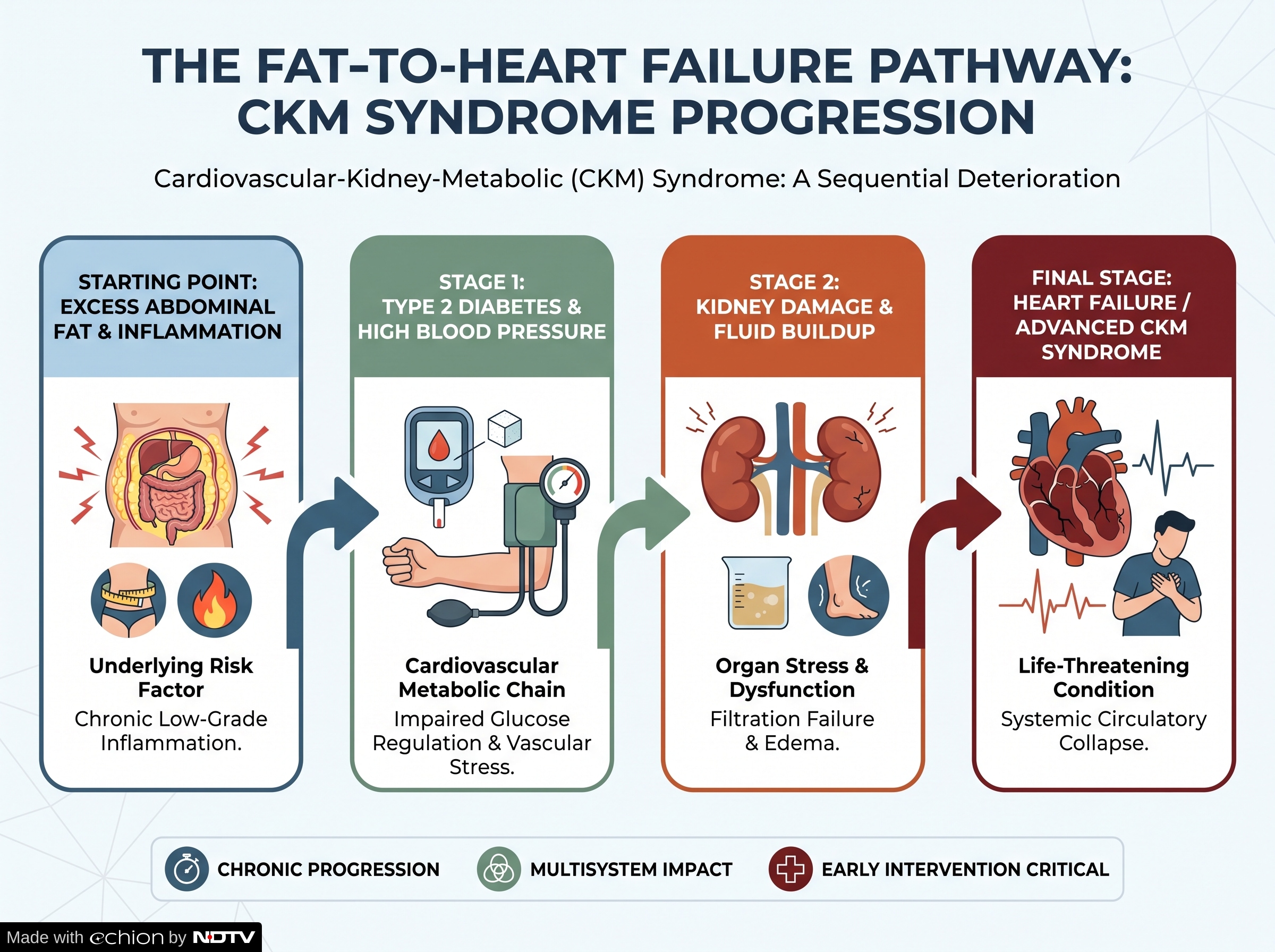
To understand how metabolic health affects the heart, researchers point to a complex web of internal chemistry. Cardiovascular-Kidney-Metabolic syndrome is characterised by the dangerous intersections among metabolic risk factors (like obesity and type 2 diabetes), chronic kidney disease (CKD), and the cardiovascular system. Here is how this happens:
When a person develops excess abdominal fat, the body experiences chronic, low-grade inflammation.
This inflammation alters how insulin works, frequently leading to type 2 diabetes. Over time, high blood sugar and elevated blood pressure damage the delicate filtering units inside the kidneys.
Because the kidneys can no longer filter waste or manage fluids effectively, the heart is forced to pump much harder to circulate blood.
This vicious cycle explains why chronic kidney disease and heart health are inseparable: kidney decline directly accelerates heart damage, and a failing heart limits blood supply to the kidneys.
What Are The Stages Of CKM Syndrome?
Rather than waiting for a heart attack to occur, the new AHA CKM syndrome guidelines establish a proactive 5-stage framework (Stages 0 to 4) designed to track risk early and help patients reverse the progression of the disease.
- Stage 0 (No Risk Factors): A completely healthy baseline. The individual has normal blood pressure, optimal blood sugar, a healthy weight, and fully functional kidneys.
- Stage 1 (Excess Adiposity): The individual has developed excess body fat (especially abdominal weight) or impaired fasting glucose but has not yet developed full diabetes or organ damage.
- Stage 2 (Metabolic Risks and Kidney Decline): This stage includes people with fully developed type 2 diabetes, high blood pressure, or early-stage chronic kidney disease, but no active heart disease.
- Stage 3 (Subclinical Heart Disease): The damage is hiding just below the surface. There are no obvious CKM syndrome symptoms, but medical scans or blood tests reveal early heart strain, plaque build-up in the arteries, or pre-heart failure.
- Stage 4 (Active Cardiovascular Disease): The final stage, where CKM overlaps with obvious heart disease. The patient has survived a heart attack or stroke, or is actively living with heart failure or advanced kidney failure.
Silent Symptoms Of The CKM Syndrome
One of the most dangerous aspects of cardiovascular-kidney-metabolic syndrome is that its early stages are completely silent. Millions of people living with type 2 diabetes, cardiovascular risk, or early kidney damage feel completely fine. True CKM syndrome symptoms typically surface only when the condition reaches advanced stages (Stages 3 and 4). Individuals should look out for these crucial warning signs:
- Unusual, unexplained shortness of breath during daily walks
- Persistent swelling (oedema) in the ankles, feet, or legs due to fluid retention
- Chronic fatigue and low energy, even after a full night's sleep
- Frequent urination, particularly during the night
- Difficulty managing high blood pressure despite taking multiple medications
Predicting Your Future
A core highlight of the updated guidelines is the deployment of a new medical tool called the PREVENT equations risk calculator. Doctors now use this tool to estimate a patient's 10-year and 30-year risk of developing total cardiovascular disease, stroke, or heart failure.
Crucially, the PREVENT tool strips out race-based formulas, replacing them with precise, individualised metrics like a patient's estimated glomerular filtration rate (eGFR) and urine albumin-to-creatinine ratio (UACR) to evaluate kidney health alongside blood sugar and cholesterol levels. If the calculator reveals a 10-year risk score greater than or equal to 20%, the patient is automatically classified into Stage 3 CKM syndrome, prompting immediate medical intervention.
Also Read: Diabetes And Prediabetes Linked To Susceptibility Of Severe Infection, Study Finds
Preventing Heart Disease With Diabetes And Kidney Issues
The ultimate goal of CKM care is regression through using lifestyle shifts and modern medicine to push a patient backward from a dangerous stage to a safer, healthier one. Doctors outline a clear roadmap for managing this multi-system condition:
1.Track Both Weight And Waist Circumference
Do not rely on body mass index (BMI) alone. Measuring waist circumference helps doctors evaluate dangerous visceral fat around vital organs, which serves as the primary engine for CKM progression.
2. Adopt a Kidney-Heart-Friendly Diet
Transition to a lifestyle focused on whole grains, lean proteins, and fibrous vegetables while strictly limiting processed sodium. This dual approach protects delicate kidney filters while reducing pressure on the arterial walls.
3. Deploy Cardioprotective Medications Early
For those with type 2 diabetes and high cardiovascular risk, guidelines strongly push for the use of smart medications like SGLT2 inhibitors and GLP-1 receptor agonists. These therapies do not just lower blood sugar; they directly protect the heart tissue and shield the kidneys from long-term damage.
4. Run Regular Blood and Urine Screening
Request annual or bi-annual checks for eGFR (blood filtration rate) and UACR (urine protein tracking). Catching protein leaks in the urine early allows doctors to initiate therapy decades before heart failure or kidney failure can take hold.
Ultimately, CKM syndrome shifts the focus of medicine from treating late-stage emergencies to preserving early organ function. By viewing the heart, kidneys, and metabolism as a single, connected ecosystem, patients and doctors can work together to prevent chronic illness long before the first symptom ever appears.
Disclaimer: This content including advice provides generic information only. It is in no way a substitute for a qualified medical opinion. Always consult a specialist or your own doctor for more information. NDTV does not claim responsibility for this information.