

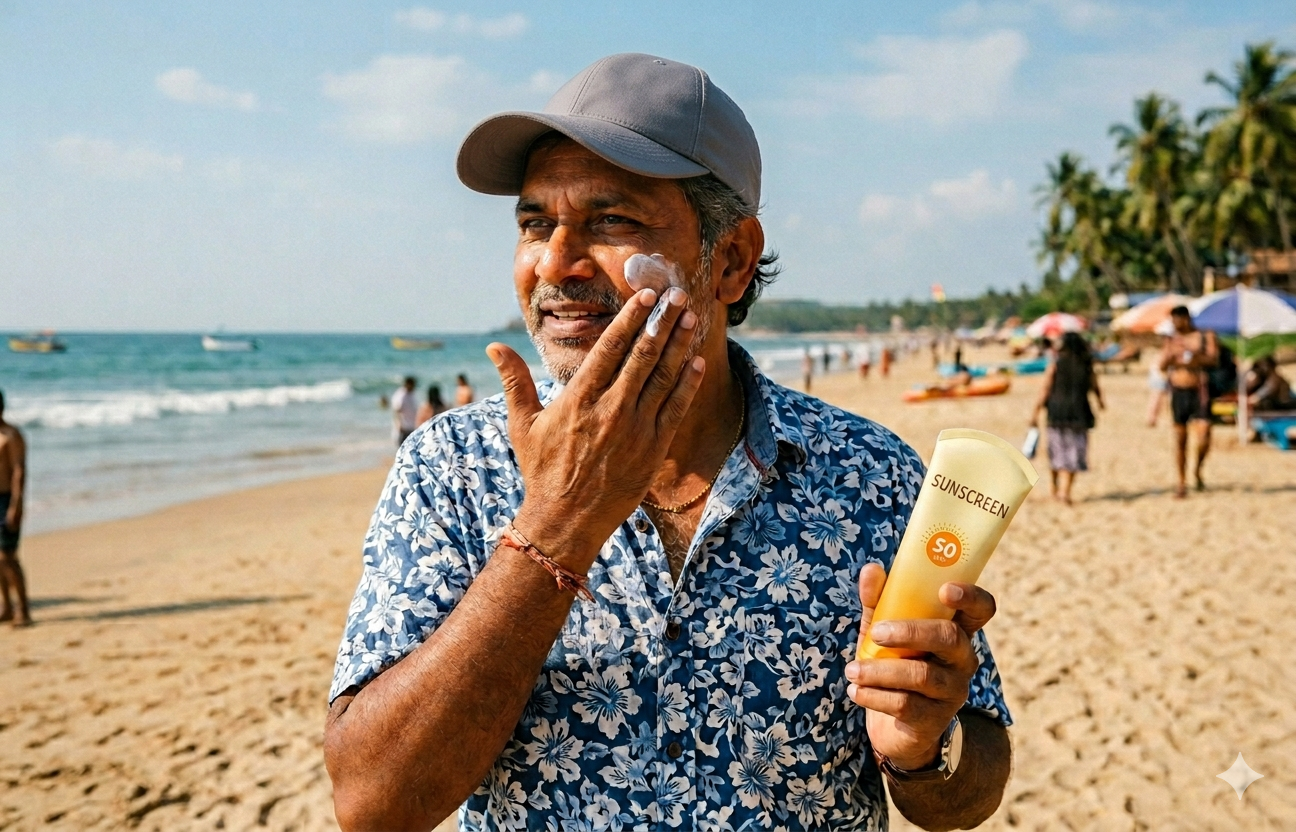
)
In what is being hailed as the most significant regulatory shakeup to hit the beauty and wellness industry in a generation, the U.S. Food and Drug Administration (FDA) has officially greenlit a revolutionary new sunscreen ingredient: Bemotrizinol. This landmark decision marks the first time in over 25 years that the regulatory body has permitted a new over-the-counter UV filter into the market. For decades, dermatologists and cosmetic chemists have criticised the stark disparity between global sun care innovation and stagnant local regulations. While European, Japanese, and South Korean consumers have long enjoyed ultra-lightweight, high-performance sunscreens, older regulatory frameworks left many regions reliant on a limited, decades-old portfolio of filters.
With this approval, the global skincare market is poised for a massive shift in how people will be able to protect their skin from premature ageing and disease.
Why The Current Sunscreen Market Needed A Disruptor
To understand why health experts are celebrating, one must look at the technical limitations of traditional sunscreens. Currently, the market is divided into two distinct categories, both harbouring significant consumer drawbacks:
Chemical Filters (e.g., Avobenzone): While effective at absorbing UVA rays, these older chemicals are notoriously photounstable. Upon exposure to sunlight, they degrade rapidly, requiring heavy chemical stabilisers that frequently cause skin irritation and eye stinging.
Mineral Blockers (Zinc Oxide and Titanium Dioxide): While physically safe and stable, these minerals sit on top of the skin, notoriously leaving a thick, chalky white cast. For individuals with deeper skin tones, finding an elegant mineral formulation has remained an ongoing challenge.
Bemotrizinol is commercially recognised as Parsol Shield or Tinosorb S, which effectively bridges this gap. It operates as an organic, next-generation filter that delivers the invisible finish of a chemical sunscreen alongside the robust, non-irritating stability of a mineral blocker.
Also Read: K-Beauty Glass Skin Trend: Why It May Be Harmful For Indian Skin
Clinical Evidence: Safety And Photostability Confirmed
The regulatory breakthrough follows years of intense scientific scrutiny regarding how chemical filters interact with human biology.
According to data evaluated in the official FDA Proposed Monograph, bemotrizinol has been classified as Generally Recognised as Safe and Effective (GRASE) for concentrations up to 6%. Crucially, the data demonstrated that Bemotrizinol features a high molecular weight, meaning it sits on the surface layers of the skin rather than absorbing deep into the bloodstream by averting the endocrine-disruption concerns that have plagued older chemical filters.
Furthermore, its ability to mitigate long-term cellular damage is backed by extensive oncology research. A public health review published via the Health Central Skin Cancer Framework confirmed that photostable filters like bemotrizinol provide uniform, uninterrupted defence against both UVA and UVB rays, drastically reducing the cumulative DNA mutations that lead to squamous cell carcinoma and melanoma.
The operational mechanism behind this approval was accelerated by modern legislative tools. As detailed in the U.S. FDA Sunscreen Update, the final order leveraged data from decades of safe, real-world usage across Europe and Asia, establishing a precedent for faster, safety-first ingredient reviews moving forward.
Also Read: Once-Restricted Peptides May Make A Return: What This Means For Skin Care
The Next Generation Of Skincare
Industry analysts project that this approval will trigger an immediate wave of product reformulations. Consumers can expect a new class of "hybrid" sunscreens to hit shelves in the coming quarters that will be featuring broad-spectrum SPF 50+ and PA++++ metrics packaged in weightless, invisible gels and fluids. But you will need to perform a skin test to ensure you don't have an allergic reaction to the new ingredient before starting to use the sunscreen on a daily basis.
White-cast from sunscreen usage is a common concern that makes people skip using the essential skincare step in their daily routine, which can certainly benefit from this innovation.
For the everyday consumer, the days of choosing between a greasy complexion, an ash-toned white cast, or degrading sun protection are coming to a close. Science has finally modernised sun care, and the future of daily skin defence looks entirely invisible. The green light also means that future sunscreen formulations will have to be tested on different skin types, as their actual benefits are still to be analysed. The innovation also calls for paying better attention to sunscreen usage, as the lack thereof can increase chances of skin cancer and premature ageing.
Disclaimer: This content including advice provides generic information only. It is in no way a substitute for a qualified medical opinion. Always consult a specialist or your own doctor for more information. NDTV does not claim responsibility for this information.