

)
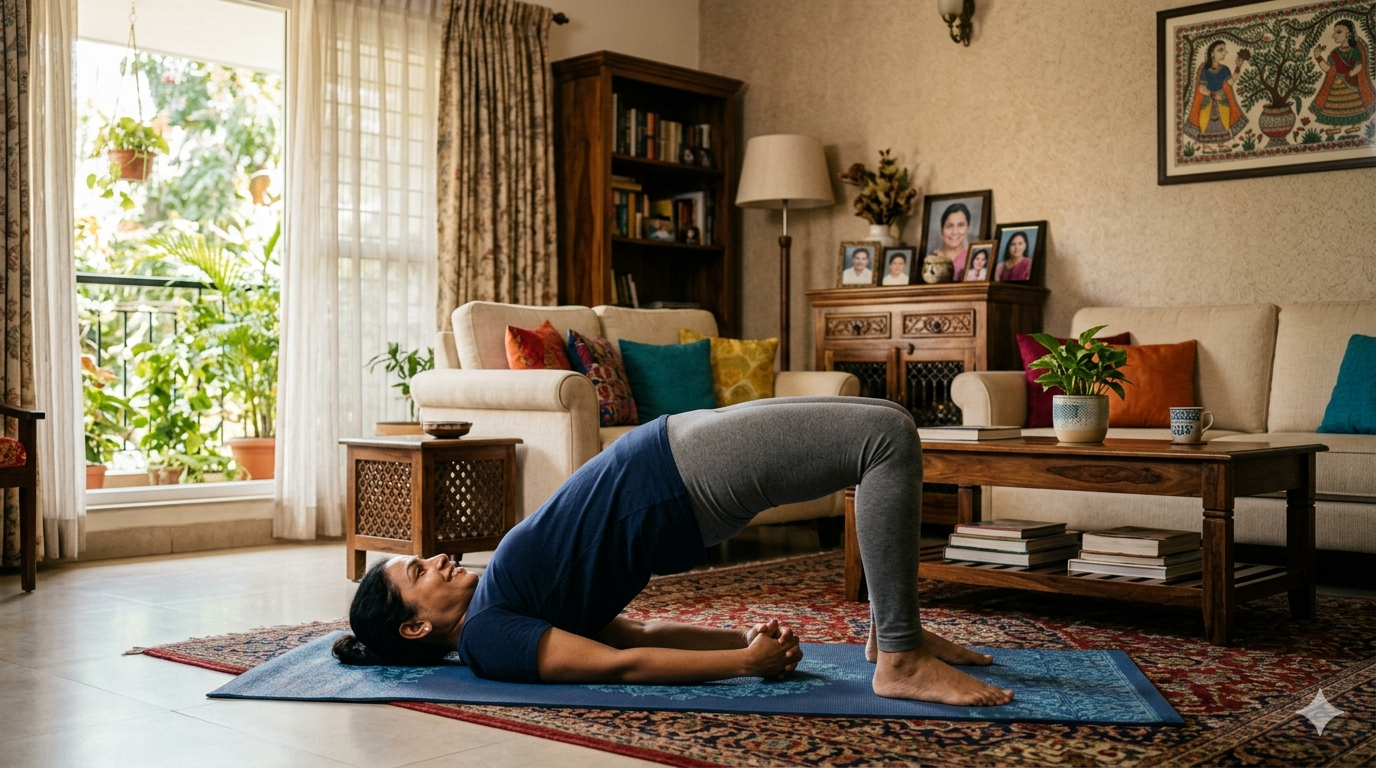
Setu Bandhasana, also known as Bridge Pose, is a beginner-friendly yoga pose that helps improve flexibility, strength, and balance. The name comes from the Sanskrit words Setu (bridge), Bandha (lock), and Asana (pose). In this pose, the body forms a bridge-like shape by lifting the hips while the feet and shoulders stay firmly on the ground. The pose stretches the front of the body while strengthening the back and legs. Regular practice of Setu Bandhasana can support overall physical well-being.
Setu bandhasana improves posture, reducing stiffness, and increasing body awareness. It may also help relax the mind by encouraging deep breathing and reducing stress. While the pose offers several health benefits, it is important to perform it correctly to avoid unnecessary strain. Like every yoga posture, it also has certain limitations and may not be suitable for everyone. Read on to know more about Setu Bandhasana.
What Are The Benefits Of Setu Bandhasana?
1. Strengthens The Back And Spine
Setu Bandhasana helps strengthen the muscles of the lower back, upper back, and spine. Strong back muscles support better posture and may reduce the risk of back discomfort caused by prolonged sitting or poor posture. Regular practice also improves spinal flexibility, helping you move more comfortably in your daily life.
2. Improves Hip And Chest Flexibility
The pose opens the chest, shoulders, and hip flexors, which often become tight. Stretching these areas can improve flexibility, make breathing feel easier, and increase the range of motion in the upper and lower body. This can also help relieve stiffness after a long day.
3. Builds Strength In The Legs And Glutes
While lifting the hips, the thighs, gluteal muscles, and hamstrings work together to support the body. Practising the pose regularly can strengthen these muscles, improving stability and balance. Strong leg muscles also support healthy knees and reduce the risk of injuries during everyday activities.
4. May Help Reduce Stress
Setu Bandhasana encourages slow, deep breathing, which can calm the nervous system. Holding the pose while focusing on your breath may help reduce stress, anxiety, and mental fatigue.
5. Supports Better Posture
The pose strengthens the muscles that support the spine while stretching the chest and shoulders. This helps counter the effects of slouching and rounded shoulders. Over time, it may give you a more upright posture and reduce muscle tension.
6. Improves Blood Circulation
Lifting the hips above the heart level slightly encourages healthy blood circulation throughout the body. Better circulation helps deliver oxygen and nutrients to muscles and tissues, which may support overall health and recovery.
How To Do Setu Bandhasana
- Lie flat on your back on a yoga mat
- Bend your knees and place your feet hip-width apart on the floor
- Keep your arms beside your body with your palms facing down
- Press your feet firmly into the mat
- Inhale and slowly lift your hips toward the ceiling
- Keep your thighs parallel and avoid letting the knees move outward
- Roll your shoulders slightly underneath your body if comfortable and keep your neck relaxed
- Hold the pose for 15 to 30 seconds while breathing normally
- Exhale slowly and gently lower your hips back to the floor
- Repeat the pose 3 to 5 times if comfortable
Limitations Of Setu Bandhasana
Although Setu Bandhasana is generally safe for most healthy people, it has certain limitations. It may not provide enough intensity for those looking for strength training. The pose also requires proper alignment, and incorrect technique can place unnecessary pressure on the lower back or neck.
Who Should Do Setu Bandhasana?
This pose may be suitable for:
- Beginners learning basic yoga postures
- People with mild stiffness in the back, hips, or shoulders
- People looking to improve posture and flexibility
- Those who spend long hours sitting at a desk
- People who want a gentle yoga pose for relaxation and stress management
- People aiming to strengthen the legs, glutes, and back muscles
Who Shouldn't Do Setu Bandhasana?
Avoid or seek medical advice before practising this pose if you:
- Have a recent neck, shoulder, back, or spinal injury
- Have recently undergone abdominal or hip surgery
- Experience severe lower back pain that worsens with movement
- Have uncontrolled high blood pressure unless advised by a healthcare professional or yoga instructor
- Are suffering from severe knee injuries that make bending the knees painful
- Feel dizziness, pain, or numbness while performing the pose.
Disclaimer: This content including advice provides generic information only. It is in no way a substitute for a qualified medical opinion. Always consult a specialist or your own doctor for more information. NDTV does not claim responsibility for this information.