

)
Vitamin D insufficiency is a common health issue that impacts a significant population of India. Be it school-going children, pregnant women, lactating mothers, or adults, everyone is dealing with an insufficient amount of vitamin D. Despite living in an environment with plenty of sunlight, vitamin D insufficiency is prevalent. Vitamin D is essential for maintaining bone health, immunity, and muscle function. A critical review published in the BMJ Journal suggests that a lack of vitamin D can cause symptoms such as musculoskeletal pain, muscle weakness, bone pain, softening of bones in adults and rickets in children. Low vitamin D levels can also cause frequent falls, reduce muscle function, and even present as back pain.
What Is Vitamin D Insufficiency?
Vitamin D insufficiency refers to how much vitamin D is lacking in your body based on an assessment of your blood. Specifically, a lack of 25-hydroxyvitamin D [25(OH)D] in your blood could point to an insufficient amount of vitamin D.
Hence, getting your vitamin D levels checked periodically is necessary to actually know if low levels of vitamin D are actually the reason behind your symptoms.
Vitamin D also plays a role in how much calcium is absorbed in the body, as it is responsible for the absorption of calcium through transport proteins.
In a body that is vitamin D insufficient, only a small amount of the calcium is absorbed even if the calcium-rich food sources are a part of your diet.
Common Signs Of Vitamin D Insufficiency
The common signs of vitamin D insufficiency can result in becoming the cause of fatigue, pain, muscle weakness, illnesses, and even mood changes. Each of these signs happens due to a specific mechanism that vitamin D aids in, which doesn't operate the way it is supposed to when a vitamin D insufficiency is present.
Persistent Fatigue And Low Energy
When, despite resting and getting a night of sound sleep, you experience tiredness and low energy levels, then vitamin D insufficiency could be behind it.
Bone And Back Pain
When your bones ache, or you constantly experience back pain, then calcium absorption in your body is not happening properly. A lack of vitamin D could further reduce calcium absorption and make bones weaker over time, as most people have an insufficiency but haven't been tested for it.
Muscle Weakness
The BMJ journal has pointed out that a lack of vitamin D could become the cause of muscle aches and pain. Overall muscle weakness could also affect you, so seeking timely vitamin D checks is necessary.
Frequent Illnesses
The BMJ Journal has mentioned that those who get sick frequently have low immunity. One of the reasons behind low immunity is linked to a higher risk of infections, especially when it comes to respiratory function.
Mood Changes
There is a correlation between low mood and a lack of vitamin D, as it has an impact on the brain. From neurotransmitter functioning to inflammation, the level of vitamin D in your body can directly impact your brain health and affect your mood.
Why Are So Many People Low In Vitamin D?
The possible reasons behind why so many people in India are low in vitamin D are related to limitations posed by daily sun exposure, gaps in your diet, skin tone, and age. Each of these reasons needs to be looked at closely to assess the "why" behind lack of vitamin D.
Limited Sun Exposure
Most people spend their time indoors, lacking access to natural sunlight, and this directly impacts how much vitamin D they get. If you happen to use sunscreen that contains a higher SPF than your actual skin's needs based on its skin tone, then vitamin D can be reduced. For the Indian skin tone, SPF (sun protection factor) of 30 to 45 is necessary based on your exact skin tone.
A high amount of air pollution can reduce the amount of ultraviolet rays that reach the Earth's surface, which could limit the skin's ability to produce vitamin D from natural sunlight exposure.
Dietary Gaps
The dietary gaps in your diet could be behind a lack of vitamin D in your body. Increasing the intake of vitamin D-rich foods such as hard cheeses, fatty fish, egg yolks, cod liver oil and certain mushrooms is essential to fulfil your nutritional requirements.
Darker Skin Tone
The level of melanin in your skin can influence how much vitamin D your body can synthesise from natural sunlight.
Ageing
A review in the Metabolites journal suggests that vitamin D synthesis can reduce as people age. As your skin ages, lower levels of 7-dehydrocholesterol, the compound needed to produce vitamin D when exposed to UVB sunlight, occur.
Medical Conditions
Certain people who are dealing with pre-existing medical conditions such as:
- Malabsorption disorders
- Obesity
- Kidney and liver diseases
These health conditions could naturally reduce the amount of vitamin D that the body needs to function.
Who Is Most At Risk?
The risk of vitamin D insufficiency is greater for people who spend most of their time indoors and those who fall under these categories:
- Older adults
- Office workers
- Pregnant women
- People with obesity
- Individuals with digestive disorders
- Vegans and vegetarians
Quick Remedies To Boost Vitamin D Levels
To boost your daily vitamin D levels, you need to focus on getting safe sun exposure, and Spending enough time in the morning sun and making sure you do so consistently.
Eat More Vitamin D-Rich Foods
The intake of vitamin D-rich foods is important, as vitamin D levels need to be balanced for optimum health. These foods are as follows:
- Fatty fish
- Egg yolks
- Fortified milk
- Fortified cereals
- Mushrooms exposed to UV light
- Increase healthy fat Intake
The amount of healthy fats in your diet could influence how much vitamin D is absorbed in your body. A lack thereof could become the cause of vitamin D insufficiency and lead to serious effects on physical and mental well-being.
Consider Supplements
Vitamin D supplements could be safely used for those who have medically diagnosed vitamin D insufficiency. The exact dose and timing need to be determined by a medical professional.
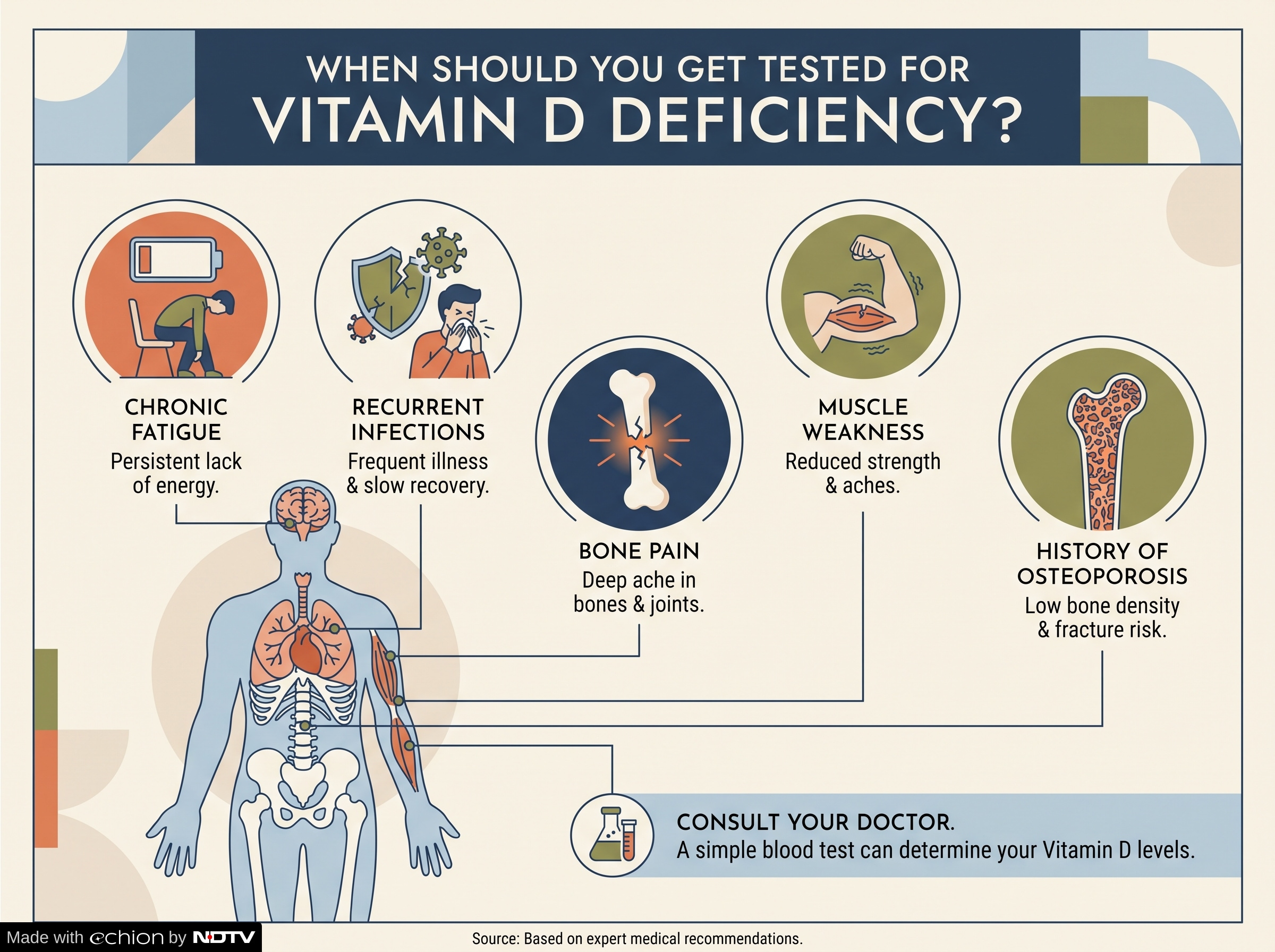
When Should You Get Tested?
You should get your vitamin D levels checked if you experience any of these symptoms:
- Chronic fatigue
- Recurrent infections
- Bone pain
- Muscle weakness
- History of osteoporosis
Note: The exact medical test to assess your vitamin D levels is a serum 25-hydroxyvitamin D test.
What Happens If Vitamin D Insufficiency Is Left Untreated?
If you leave your vitamin D insufficiency unaddressed, then it could result in medical issues such as:
- Weak bones
- Osteoporosis
- Increased fracture risk
- Reduced muscle strength
- Poor immune health
Vitamin D insufficiency is a growing health concern that is often ignored until symptoms start affecting daily life.
Disclaimer: This content including advice provides generic information only. It is in no way a substitute for a qualified medical opinion. Always consult a specialist or your own doctor for more information. NDTV does not claim responsibility for this information.