

)
Typhoid fever can leave a person feeling weak and exhausted even after the infection has been treated. But does crossing the age of 40 automatically mean that recovery will take longer? Not necessarily. While age itself does not always slow recovery, adults over 40 may need closer monitoring, especially if they have diabetes, high blood pressure, kidney or liver disease or other health conditions. Typhoid is a bacterial infection caused by Salmonella Typhi. It can lead to prolonged fever, headache, weakness, abdominal discomfort, diarrhoea or constipation and loss of appetite. If diagnosis or treatment is delayed, the infection can become more difficult to manage. According to Dr Chirag Tandon, Director, Internal Medicine, ShardaCare-Healthcity, recovery after 40 depends less on age alone and more on a person's overall health and how quickly the infection is diagnosed and treated.
Why Can Typhoid Be More Complicated After 40?
"Age does not automatically make the body incapable of fighting typhoid. However, people in their 40s and beyond are more likely to have underlying health conditions that can affect recovery. Diabetes, hypertension, kidney disease, liver disease, reduced immunity and poor nutritional status can all influence how the body responds to an infection. Delayed diagnosis can also make a difference. Typhoid symptoms can overlap with several other infections, and persistent fever in adults may sometimes be attributed to a routine viral illness. This can delay appropriate treatment," says Dr Tandon.
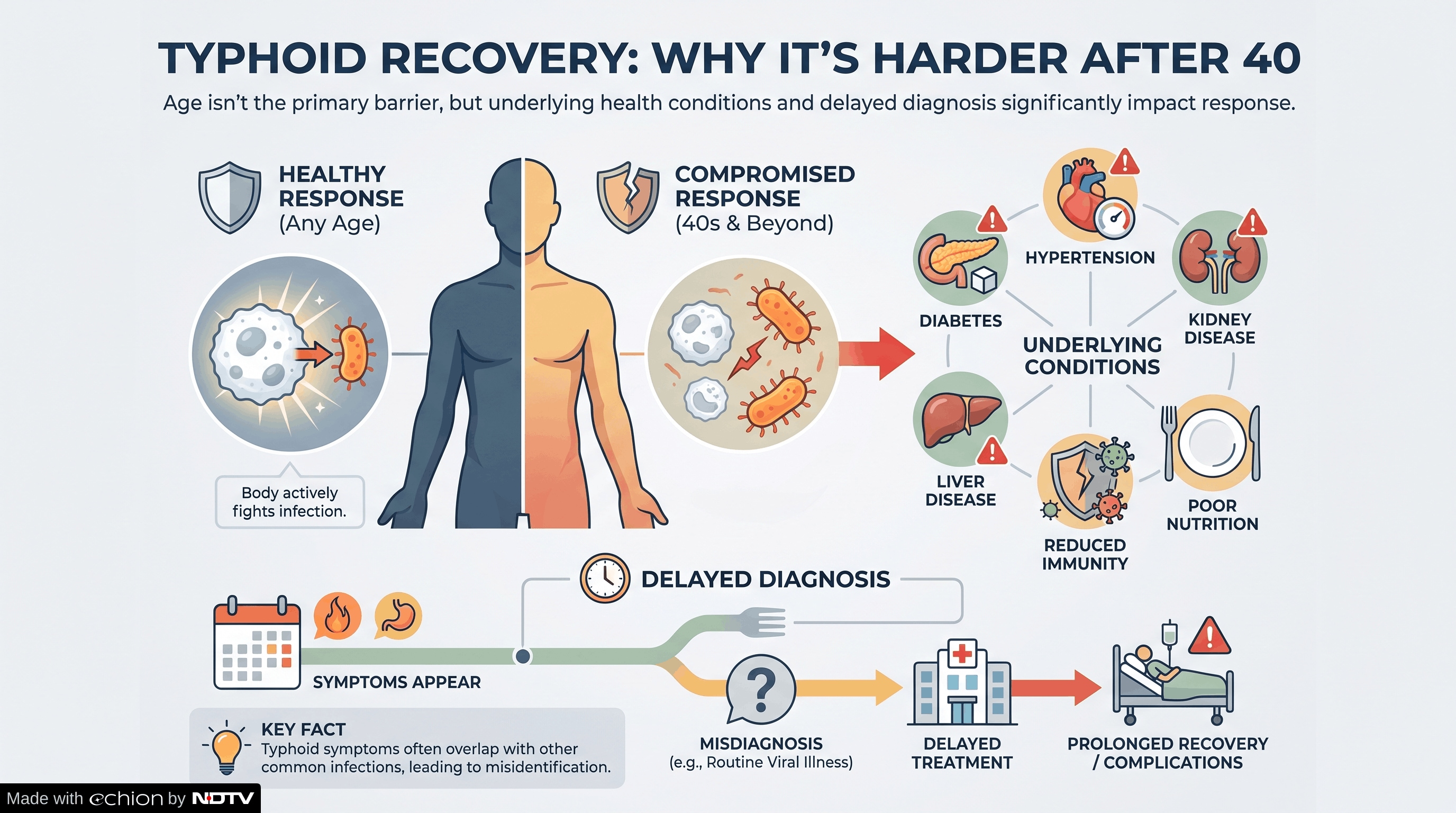
Add image caption here
What Are The Symptoms Of Typhoid?
Typhoid commonly develops with symptoms such as prolonged fever, headache, weakness and loss of appetite. Some people may also experience abdominal discomfort, diarrhoea or constipation. The illness can gradually drain energy, which means that even after the infection begins responding to treatment, a person may continue to feel tired. In adults over 40, persistent or worsening symptoms should therefore not simply be dismissed as age-related weakness.
Does Treatment Need To Start Early?
Appropriate treatment is important because untreated typhoid can lead to complications. Antibiotics are commonly used to treat typhoid, but the choice of medicine should be based on medical evaluation and, where appropriate, local antibiotic-resistance patterns. Dr Tandon emphasises the importance of starting appropriate antibiotics early. Delaying treatment can allow the infection to progress and increase the risk of complications. However, this does not mean that people should start antibiotics on their own. Different infections can cause similar symptoms, and inappropriate antibiotic use can contribute to resistance and may delay the correct diagnosis.
Why Can Weakness Continue After The Fever Goes?
One of the most frustrating parts of typhoid recovery is that feeling better does not always happen immediately after the fever disappears. The body may need additional time to recover from the infection. Reduced appetite, dehydration and prolonged fever can leave a person feeling physically depleted. Fatigue and low energy may therefore continue for some time after treatment has started working. During this phase, trying to immediately return to a demanding workout routine or physically strenuous work may make recovery more difficult.
What Should You Eat During Recovery?
Nutrition becomes particularly important when appetite has been affected. Patients should focus on adequate hydration and nutritious, easily digestible meals. The diet should gradually provide enough energy and protein to support recovery. Smaller meals may be easier to tolerate if appetite remains low. As the person feels better, the diet can gradually return to normal. Hydration is equally important, particularly for people who have experienced diarrhoea, vomiting, prolonged fever or reduced fluid intake.
When Can You Return To Exercise?
"Feeling fever-free does not necessarily mean that the body has completely recovered. People recovering from typhoid may still have weakness and reduced exercise tolerance. Heavy workouts should generally be avoided until energy and strength have returned. A gradual return to normal physical activity is a safer approach. Walking and light everyday movement can be increased progressively as the person feels stronger. Anyone who remains unusually weak or develops symptoms again after treatment should speak with a doctor before resuming strenuous exercise," says Dr Tandon.
Don't Stop Antibiotics On Your Own
Another important part of recovery is taking medicines exactly as prescribed. Even if the fever disappears and the person starts feeling better, the prescribed antibiotic course should be completed unless the treating doctor advises otherwise. Self-medication or changing the dose without medical advice can be risky. It may contribute to treatment failure and antibiotic resistance.
When Should You Seek Medical Help?
Some symptoms during recovery should not be ignored. Prompt medical assessment is important if fever persists or returns, particularly after the person initially seemed to be improving. Severe abdominal pain, confusion, breathing difficulty, significant dehydration, blood in the stool or worsening weakness also require medical attention. These symptoms can indicate complications or another underlying problem that needs evaluation.
So, Does Typhoid Take Longer To Recover From After 40?
"Not necessarily. Being over 40 does not automatically mean that typhoid will take longer to resolve. A healthy adult who receives timely and appropriate treatment may recover well. What can make recovery more complicated is the presence of other health conditions, poor nutritional status, reduced immunity, delayed diagnosis or severe infection," says Dr Tandon. The important thing is therefore not to focus on age alone. Overall health, severity of infection and how quickly appropriate treatment begins are more important factors. Typhoid can take a toll on the body at any age, and recovery may continue even after the fever has settled. For adults over 40, the presence of conditions such as diabetes, hypertension, kidney or liver disease can make closer monitoring particularly important. Timely diagnosis, appropriate antibiotics, adequate fluids, nutritious food, sufficient rest and a gradual return to physical activity can support recovery. The key is not to assume that being over 40 automatically means a slower recovery. Instead, persistent or returning symptoms should be taken seriously, and existing health conditions should be properly managed. With timely treatment and appropriate monitoring, most otherwise healthy adults can recover well from typhoid.
Disclaimer: This content including advice provides generic information only. It is in no way a substitute for a qualified medical opinion. Always consult a specialist or your own doctor for more information. NDTV does not claim responsibility for this information.