

)
At 77, staying hydrated becomes increasingly important, especially during physically demanding activities. Music icon Lionel Richie was reportedly hospitalised in St. Louis following his August 29 concert, with dehydration and fatigue cited as concerns. He was reportedly admitted to the intensive care unit as a precaution and has since been discharged and returned to Los Angeles to recover. According to a report by TMZ, doctors were treating Richie for possible slight dehydration. The singer was reportedly discharged on September 1 and is recovering at home. While dehydration can affect people of any age, older adults may be particularly vulnerable to its complications. The body's ability to conserve water and respond to thirst can change with age, meaning an older person may become dehydrated without feeling extremely thirsty.
Why Are Older Adults More Vulnerable To Dehydration?
"Many families are unaware of how quickly dehydration in older adults can become serious," says Dr Sanjay Raina, Head of Internal Medicine, Amrita Hospital, Faridabad. As people age, the sensation of thirst may become less pronounced. This means an older adult may not automatically drink enough water, even when the body needs more fluids. Certain medications and underlying health conditions can further increase the risk. Hot weather, prolonged physical activity, fever, vomiting and diarrhoea can also cause the body to lose fluids more quickly. This is why simply waiting until an elderly person asks for water may not always be enough.
Signs Of Dehydration In Older Adults
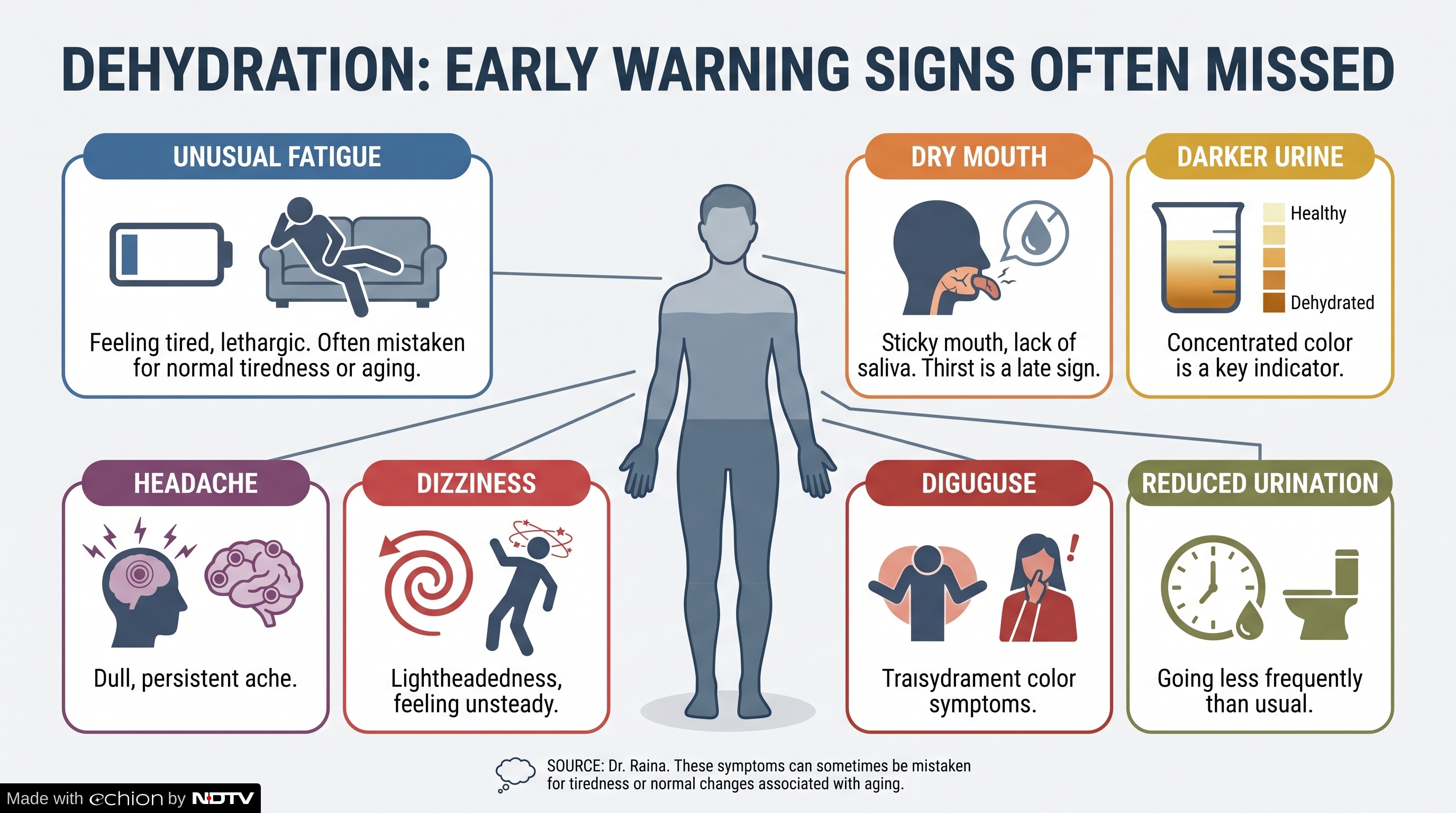
The early symptoms of dehydration can sometimes be mistaken for tiredness or normal changes associated with ageing. According to Dr Raina, some signs to watch for include:
- Unusual fatigue
- Dry mouth
- Darker-coloured urine
- Headache
- Dizziness
- Reduced frequency of urination
In some older adults, the first noticeable change may not be thirst at all. "Sudden disorientation, anger, unsteadiness, or extreme tiredness may be the first obvious changes in some persons," Dr Raina explains. These symptoms should not automatically be dismissed as a normal part of ageing.
dehydration
How Can Dehydration Affect The Body?
Water plays an important role in maintaining blood circulation, kidney function, body temperature and electrolyte balance. When dehydration becomes significant, the amount of fluid circulating in the bloodstream can decrease. This may cause blood pressure to fall and make a person feel weak or dizzy. Severe dehydration can also place additional stress on the kidneys and disturb the body's electrolyte balance. In some cases, these changes can affect the heart's normal rhythm.
Another concern is falls. Dizziness, weakness and unsteadiness associated with dehydration can make older adults more vulnerable to losing their balance.
Don't Wait For Thirst To Drink Water
One of the simplest ways to reduce dehydration risk is to encourage older adults to drink fluids regularly throughout the day rather than waiting until they feel thirsty. "Elderly people should be urged to frequently consume small amounts of water throughout the day, particularly in hot weather, when they have a fever, diarrhoea, or vomiting," says Dr Raina. Keeping water easily accessible can also help. Families and caregivers can remind older adults to drink fluids at regular intervals, particularly during periods of increased fluid loss. Depending on an individual's health and dietary needs, fluids such as water, soups and buttermilk may also contribute to hydration.
When Should Older Adults Be More Careful?
Dehydration becomes an even greater concern during hot weather or when someone is experiencing an illness. Fever can increase fluid loss, while vomiting and diarrhoea can rapidly deplete both fluids and electrolytes. Older adults who are physically active or spending extended periods outdoors may also need to pay closer attention to their fluid intake. However, hydration advice is not the same for everyone.
"Patients with liver, renal, or cardiac conditions, however, may have fluid limits and should heed their physician's advice," Dr Raina cautions. People with certain medical conditions may be advised to restrict their fluid intake. They should therefore follow the guidance provided by their doctor rather than deliberately increasing fluids on their own.
When Is Dehydration An Emergency?
Mild dehydration can often be addressed by increasing fluid intake, but certain symptoms require prompt medical attention. "Instant medical assistance is required if you have confusion, fainting, very little urine, prolonged vomiting, chest pain, or extreme weakness," Dr Raina says. Confusion or fainting in an older adult should particularly not be ignored, as these symptoms can indicate significant dehydration or another potentially serious medical problem.
Lionel Richie's reported hospitalisation serves as a reminder that dehydration should not be taken lightly, particularly in older adults. While he was reportedly treated as a precaution and has since returned home, dehydration can become serious when fluid loss is significant or goes unnoticed. For older adults, regular fluid intake, especially during hot weather or illness, can help reduce the risk. Families and caregivers should also watch for changes such as dizziness, unusual fatigue, reduced urination or confusion rather than relying only on thirst as a warning sign. As Dr Raina points out, dehydration is not an inevitable part of ageing, and unusual changes in an older person's behaviour or physical condition should not simply be written off as getting older.
Disclaimer: This content including advice provides generic information only. It is in no way a substitute for a qualified medical opinion. Always consult a specialist or your own doctor for more information. NDTV does not claim responsibility for this information.