

)
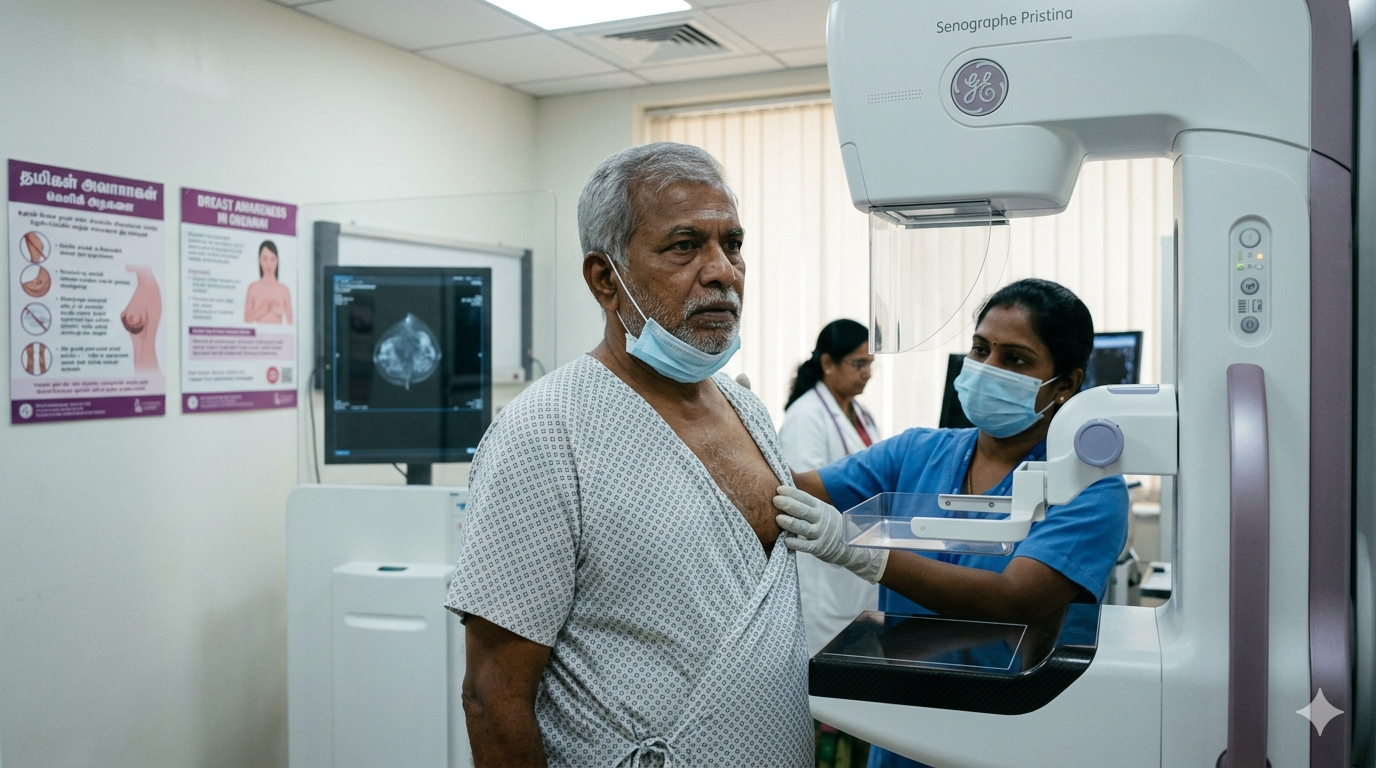
A new study conducted by doctors from ESIC Medical College and Hospital Hyderabad has raised concern over the late detection of male breast cancer, a rare but serious disease that often goes unnoticed due to poor awareness among men.
The research, published in the Journal of the Association of Physicians of India (March 2026), was conducted by doctors from ESIC Medical College and Hospital, Hyderabad, along with specialists from Care Hospitals. The study was led by Sanjana Reddy Potu, Vishesh Gumdal, and colleagues, who analysed patient data to understand how the disease presents in men.
The team reviewed 15 male breast cancer cases treated between 2019 and 2025 in Hyderabad. The findings show that most patients were around 60 years old and had delayed seeking medical care, with an average gap of about six months between first symptoms and diagnosis.
Doctors found that the majority of men reached the hospital only when the cancer had already advanced. Early warning signs-such as a painless lump, nipple changes, or discharge-were often ignored or mistaken for minor issues.
The study highlights that social stigma and lack of awareness play a key role in delayed diagnosis. Many men do not realise that breast cancer can affect them, leading to hesitation in seeking timely medical help.
Researchers also noted that most tumours were hormone receptor-positive, meaning they could respond well to hormone therapy if detected early. However, late-stage diagnosis reduces the chances of effective treatment.
Male breast cancer remains extremely rare, accounting for less than 1% of all breast cancer cases. Yet, experts warn that its impact is significant because of late presentation and lack of screening programs for men.
The Hyderabad study adds to growing evidence that awareness is the biggest gap. Doctors say simple steps-like recognising symptoms and consulting a doctor early-can make a major difference in survival.
The researchers have urged both the public and healthcare providers to take male breast symptoms seriously. They stress that early detection, timely treatment, and better awareness campaigns are crucial to improving outcomes in this often-ignored group.
Disclaimer: This content including advice provides generic information only. It is in no way a substitute for a qualified medical opinion. Always consult a specialist or your own doctor for more information. NDTV does not claim responsibility for this information.