

)
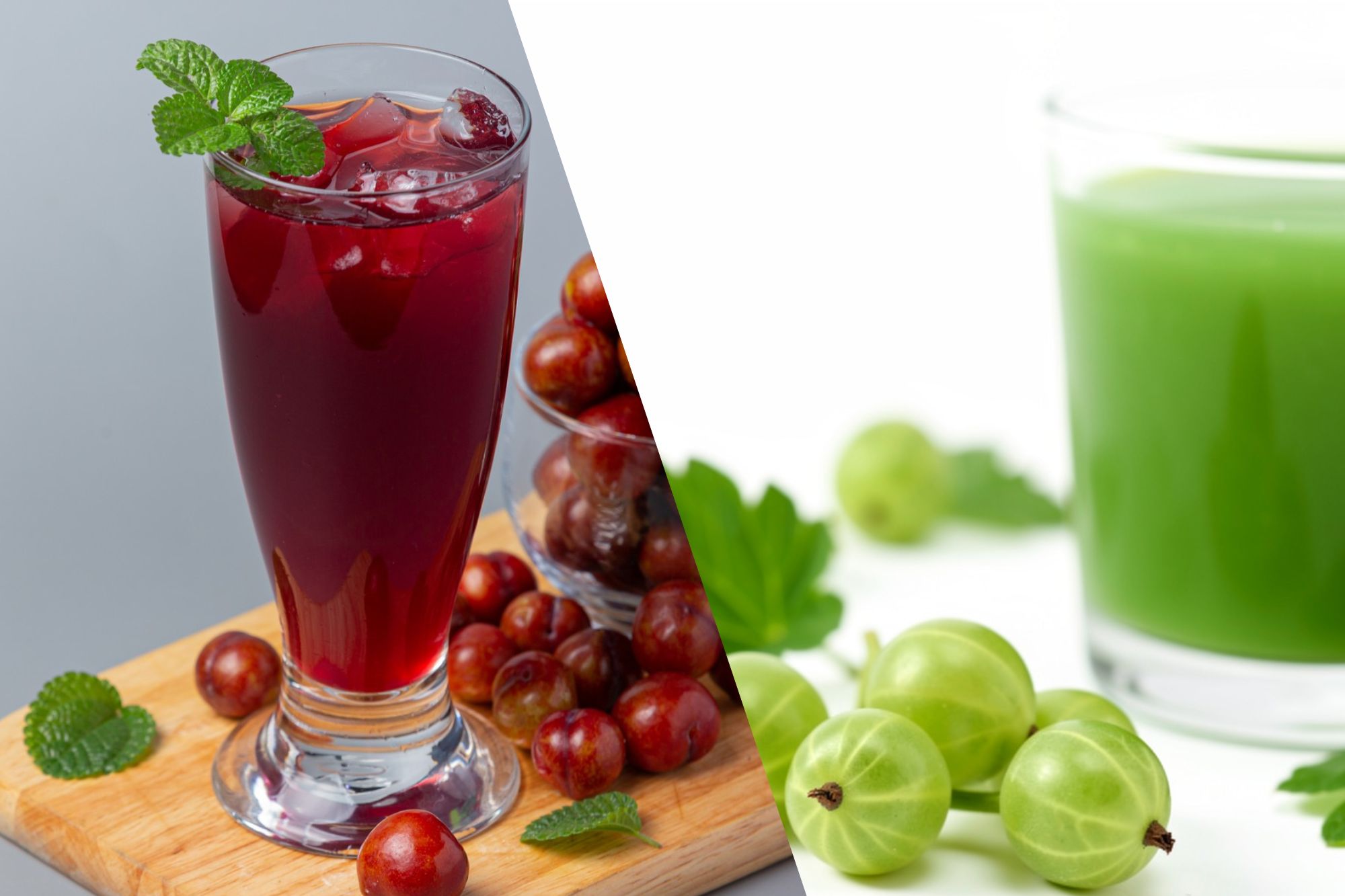
The soaring summer temperatures have sent people to consume cooling drinks like kokum and amla juice. The traditional superfoods that are used to prepare these juices offer a wide variety of health benefits, with internal cooling becoming the primary reason for their intake. While the kokum fruits and whole amla fruit are rich sources of nutrients, their juice is becoming very common to beat the summer heat. There are various forms of kokum and amla juice on the market, from syrups to ready-made powdered versions. But the original cold-pressed version is the most effective when it comes to cooling your body from within. The ready-to-drink versions of both kokum and amla juice contain synthetic dyes, additives, artificial flavours, and many more shelf-life-extending ingredients that can deplete their health benefits.
The summer heat causes the digestive system to slow down, so people tend to eat less. So, drinking nutrient-dense drinks like kokum or amla juice can offer nutrients and hydration in one package. To effectively determine which hydrating drink can provide cooling from within, you need to look at their individual mechanisms through which they nourish your body and their respective nutritional profiles.
Nutritional Profile Of Kokum And Amla Juice
Both of these juices, when consumed in their desired dose as per your body's requirement and environmental temperature, can help with internal cooling. Their suitability for you may depend on factors like your current digestive health, ability to absorb nutrients, age, lifestyle, and any presence of pre-existing medical conditions or medications that may interfere with them.
If you are doubtful about these factors, then consulting a medical professional like a nutritionist or dietician can help you with a safe approach to consuming kokum or amla juice and make it a daily or weekly habit. According to the Indian Council of Medical Research (ICMR) and the National Institute of Nutrition (NIN), kokum juice and amla juice have a specific nutritional make-up.
Also Read: Sattu Sharbat vs Whey Protein: Which Is Healthier And A Better Source Of Protein?
Kokum Juice Nutritional Profile
Kokum juice, or garcinia indica, is a juice that is prepared from the kokum fruit; typically, dried rinds are used and soaked for it. The dried version is widely used, as kokum fruit has limited availability, and the flavour of the hydrating drink, along with the colour, plays a role in its popularity.
The nutritional profile of this vibrant juice is as follows:
- High vitamin C content, which supports immunity and antioxidant defence.
- Anthocyanins are natural pigments with strong antioxidant properties.
- It contains garcinol, which has anti-inflammatory and antioxidant effects.
- Organic acids are present in it, like hydroxycitric acid (HCA), which is a digestive aid and may help regulate appetite, which becomes suppressed during summer.
- It also contains minerals like small amounts of calcium, potassium, and magnesium.
Amla Juice Nutritional Profile
The most popular version of amla juice on the market is the green packaged bottles. But these bottles have a small percentage of amla concentrate, and the rest of it is full of ingredients that are used to enhance its flavour and prolong its shelf life. The healthiest way to approach amla juice consumption is to check the label and analyse whether consuming it with additives can actually benefit your health.
- There is a high presence of vitamin C in amla juice (up to 600 to 700 mg per 100 g of fresh fruit), far exceeding most fruits. This figure is based on the cold-pressed version of amla juice.
- Polyphenols and flavonoids in it provide strong antioxidant activity, protecting against oxidative stress.
- Minerals like calcium, iron, phosphorus, and potassium are present in moderate amounts.
- Amino acids are small but present in significant levels, supporting metabolic functions.
- Fibre content helps with digestion and overall gut health.
Amla juice is low-calorie at 44 kcal per 100 g of fresh fruit; juice is lighter, making it suitable for daily consumption, provided you don't have any pre-existing medical condition that can hinder its absorption.
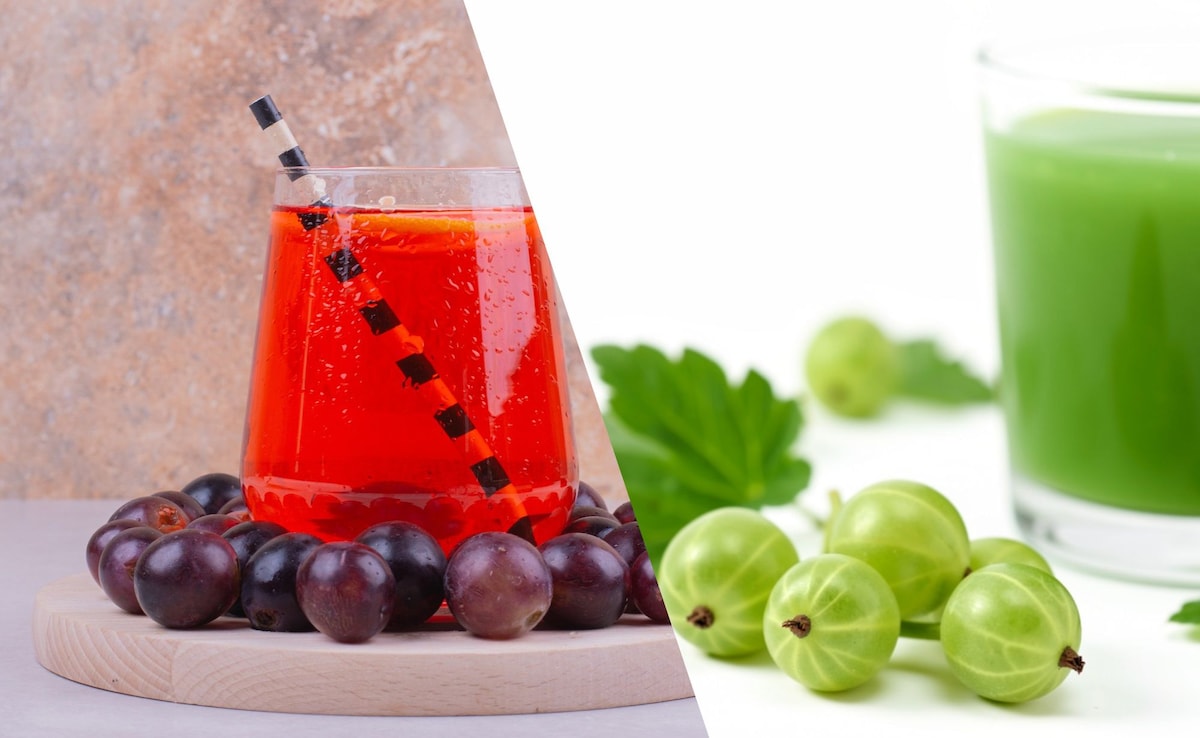
Kokum juice and amla juice
Photo Credit: Freepik and ai generated image
Cooling Effect Of Kokum And Amla Juice
According to the Asian Journal of Dairy and Food Research, kokum fruit is used for relief from sores, dermatitis, diarrhoea, dysentery, and ear infections, and to aid digestion. These wide-ranging health benefits also extend to the cooling factor, where it can better show how much heat you feel after having a heavy meal during hot summer months. Here are some additional ways that kokum juice and amla juice can be cooling:
- There is even clinical evidence in the International Journal of Plant and Soil Science that suggests kokum juice prepared from rinds can be stored for up to three months with proper storage solutions.
- Even carbonated drinks prepared at home with kokum juice by adding jeera powder and salt can provide cooling and various health benefits.
- When it comes to amla juice, the Nepalese Journal of Agricultural Sciences indicates that it helps with growth rate, better weight management, and even lowers cholesterol.
- As mentioned in the Journal of Disease and Medicinal Plants, the whole amla fruit contains over 80% water, protein, carbohydrates, fibre, amino acids, and minerals such as calcium, phosphorus, iron, niacin, carotene, thiamine, and riboflavin.
- In addition, amla juice, when made from fresh amla fruit, can provide high vitamin C content, ranging from 200 to 900 mg/100 g, which is resistant to storage and heat damage.
Also Read: Should You Drink Lauki Juice On An Empty Stomach? Benefits, Timing And Dosage Explained

Which Is A Better Cooling Effect?
The decision rests solely on individual preferences, be it taste, availability, or even the time needed to extract the cold-pressed amla or kokum juice. The efforts to consume the fresh version can offer the most cooling and health-benefiting properties in a glass.
Kokum has a stronger cooling effect if the mechanisms and its origin fruit are concerned, but amla has broader health benefits. So, if you are seeking which juice should be in your glass, then you need to consume both interchangeably for variety and gain the maximum health benefits.
Disclaimer: This content, including advice, provides generic information only. It is in no way a substitute for a qualified medical opinion. Always consult a specialist or your own doctor for more information. NDTV does not claim responsibility for this information.