

)
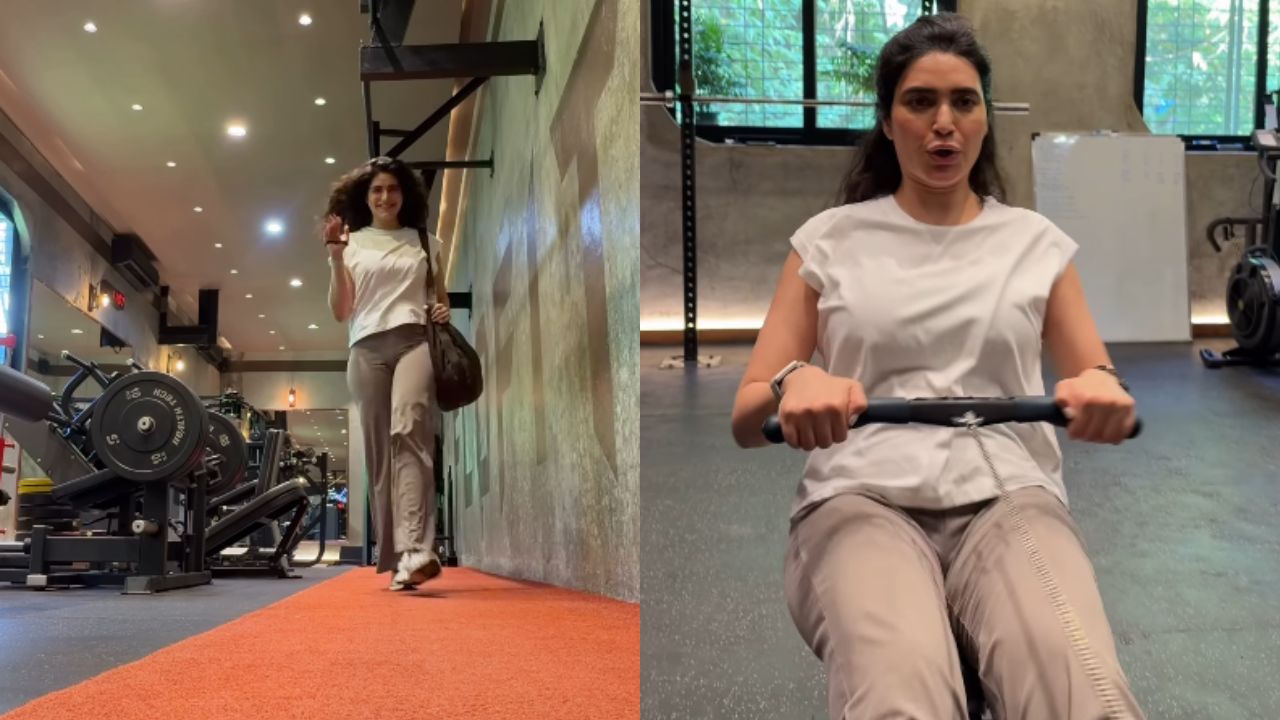
Karishma Tanna has shared a glimpse of how she is returning to fitness after becoming a mother. The actor, who welcomed her son Ved earlier this year, recently posted a video showing her workout session at the gym. Her routine included a spin bike for cardio, followed by ring rows, dumbbell exercises, weighted wall sit and rowing. The session reflects a mix of cardiovascular exercise and strength training rather than focusing only on weight loss.
Tanna shared the video as she adjusts to life with a newborn while making time for herself. She has also been open about the physical and emotional changes that can come after childbirth, including her experience of postpartum depression. Her recent fitness video offers a glimpse of her gradual return to exercise.
How Rowing Tones Your Muscles
1. Works The Legs
Rowing begins with a strong push from the legs, making the lower body an important part. The quadriceps at the front of the thighs, hamstrings at the back of the thighs and glutes help push the body backwards. When you perform the exercise repeatedly against resistance, these muscles have to work continuously. Over time, rowing can help improve lower-body strength and muscular endurance. The legs also give much of the power needed to complete each stroke.
2. Strengthens The Back
The pulling phase of rowing works several muscles in the upper and middle back. As the handle is pulled towards the body, the back muscles help control the movement. Regular rowing can strengthen these muscles and may support better posture. A stronger back can also make everyday movements such as lifting, carrying and bending easier. However, it is important to maintain proper posture during rowing.
3. Engages The Arms And Shoulders
Once the legs have done the main movement, the arms become involved as the handle is pulled towards the body. This works the biceps, forearms and shoulder muscles. The repeated pulling motion gives the upper body a resistance-based workout. At the same time, continuous movement keeps the body active and can increase the heart rate. This makes rowing different from exercises that work only one arm or shoulder muscle.
4. Activates The Core
Rowing is not simply an exercise for the arms and legs. The abdominal muscles and lower back also have to work throughout each stroke to stabilise the body. A stable core helps you to maintain control as the body moves backwards and forwards. Repeatedly engaging these muscles can lead to better core strength. Keeping the core active can also help a person maintain proper rowing form and reduce unnecessary movement through the spine.
5. Combines Cardio With Muscle Work
One of the main benefits of rowing is that it combines cardiovascular exercise with muscle work. The repeated movement increases the heart rate, while the resistance of the rowing machine makes different muscle groups work at the same time. This means rowing can help improve cardiovascular fitness while also strengthening the legs, back, arms and core. You can also adjust the intensity which allows people to make the workout easier or more challenging.
6. Can Improve Muscular Endurance
Rowing requires muscles to perform the same movement repeatedly. During a longer session, the muscles have to continue working without becoming tired too quickly. With consistent training, this can help improve muscular endurance. Better endurance can make it easier to perform other physical activities for longer periods without feeling exhausted.
7. Supports A Low-Impact Workout
Since rowing is performed in a seated position, it creates less impact on the joints than high-impact activities such as running. This makes it a good option for people looking for a lower-impact form of cardio that still works several muscle groups. However, incorrect technique, excessive resistance or pushing too hard can lead to muscle or joint strain, particularly around the back and shoulders.
Disclaimer: This content including advice provides generic information only. It is in no way a substitute for a qualified medical opinion. Always consult a specialist or your own doctor for more information. NDTV does not claim responsibility for this information.