

)
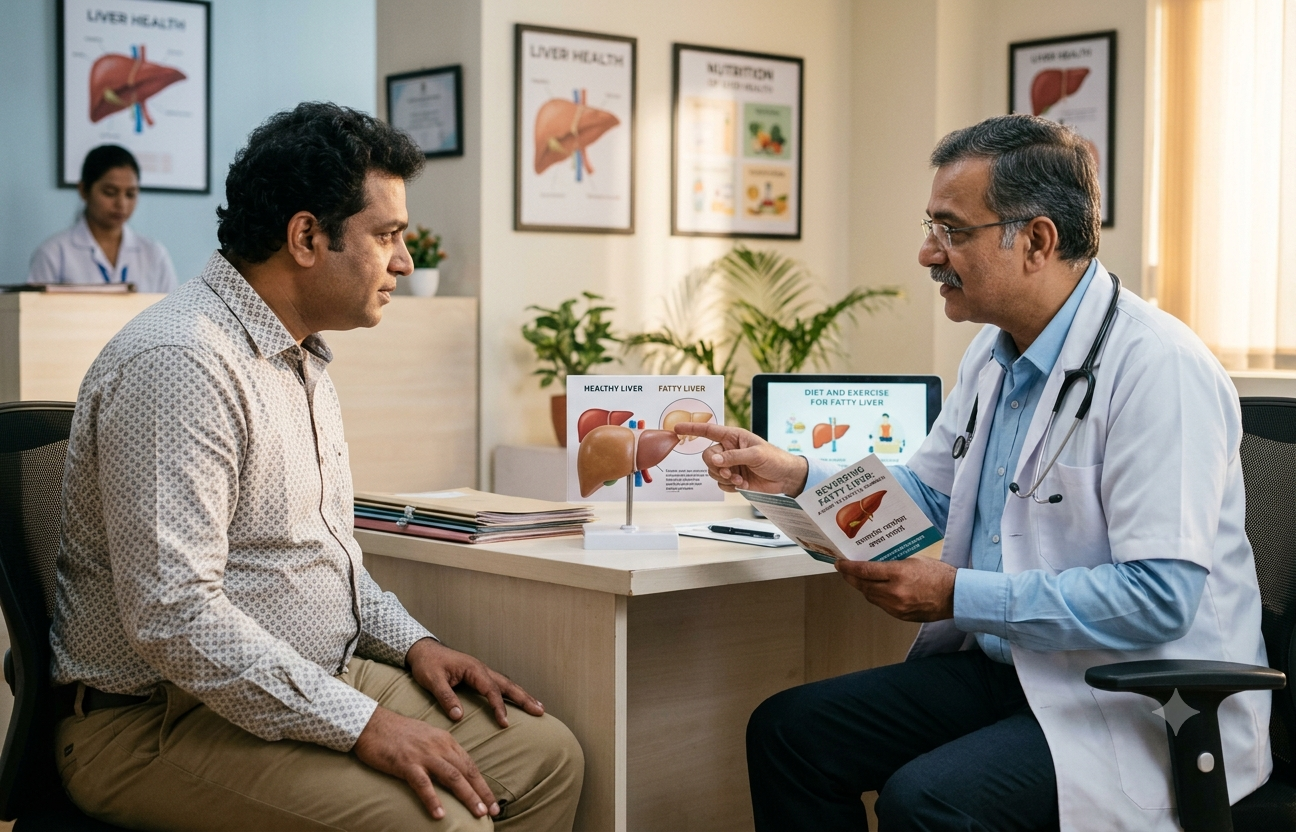
Grade 1 refers to a medical condition wherein excess amounts of fat get accumulated into the healthy liver tissue. The Lancet Journal has flagged the high prevalence of grade-1 fatty liver with a rate of 38.9% in India, and this figure is only rising in different age groups. To manage grade-1 fatty liver, it has become important to manage the progression of this condition, as it can slowly turn into grade-2 and cause liver function issues. Most people are diagnosed with grade-1 fatty liver accidentally when they seek medical help for some other medical issue, as fatty liver disease doesn't normally present with distinct symptoms. It could turn into a serious health issue if it is ignored, as grade-1 fatty liver can start slowly and silently progress if left ignored.
What Is Grade 1 Fatty Liver?
The grade of fatty liver depends on the exact % of fat in liver tissue. The diagnostic tool used to detect grade-1 fatty liver is an ultrasound, and it often causes no symptoms. Research published in the BMC Endocrine Disorders Journal suggests that early-stage fatty liver could be reversed if attention to lifestyle changes is paid. Namely, focusing on weight loss, exercise, and a healthier diet is important, as it influences the fat deposition in healthy liver tissue.
The first stage of fatty liver could be described as follows:
- Grade 1 is also referred to as mild steatosis in medical terms and happens in people where a small amount of fat gets collected in the cells of the liver.
- The structure of the liver remains normal, which doesn't affect other organs as much as other stages.
Is Grade 1 Fatty Liver Dangerous?
The danger is minimal, but the diagnosis of the condition warrants the need to pay attention to your lifestyle. It is reversible, but consistency matters, and sticking to a healthy routine is also necessary to combat the side effects that may occur from time to time.
There is a risk of progression if it is left untreated, as it could progress to stage 2 and cause fatigue, feelings of fullness in the upper part of the stomach, and abnormal readings in liver enzymes upon medical testing.
Symptoms Of Grade 1 Fatty Liver
The symptoms of grade-1 fatty liver, as detailed in BMC Endocrine Disorders, are normally unnoticeable, but it needs attention. The accidental discovery of fatty liver should not discourage you and make you focus on your health instead.
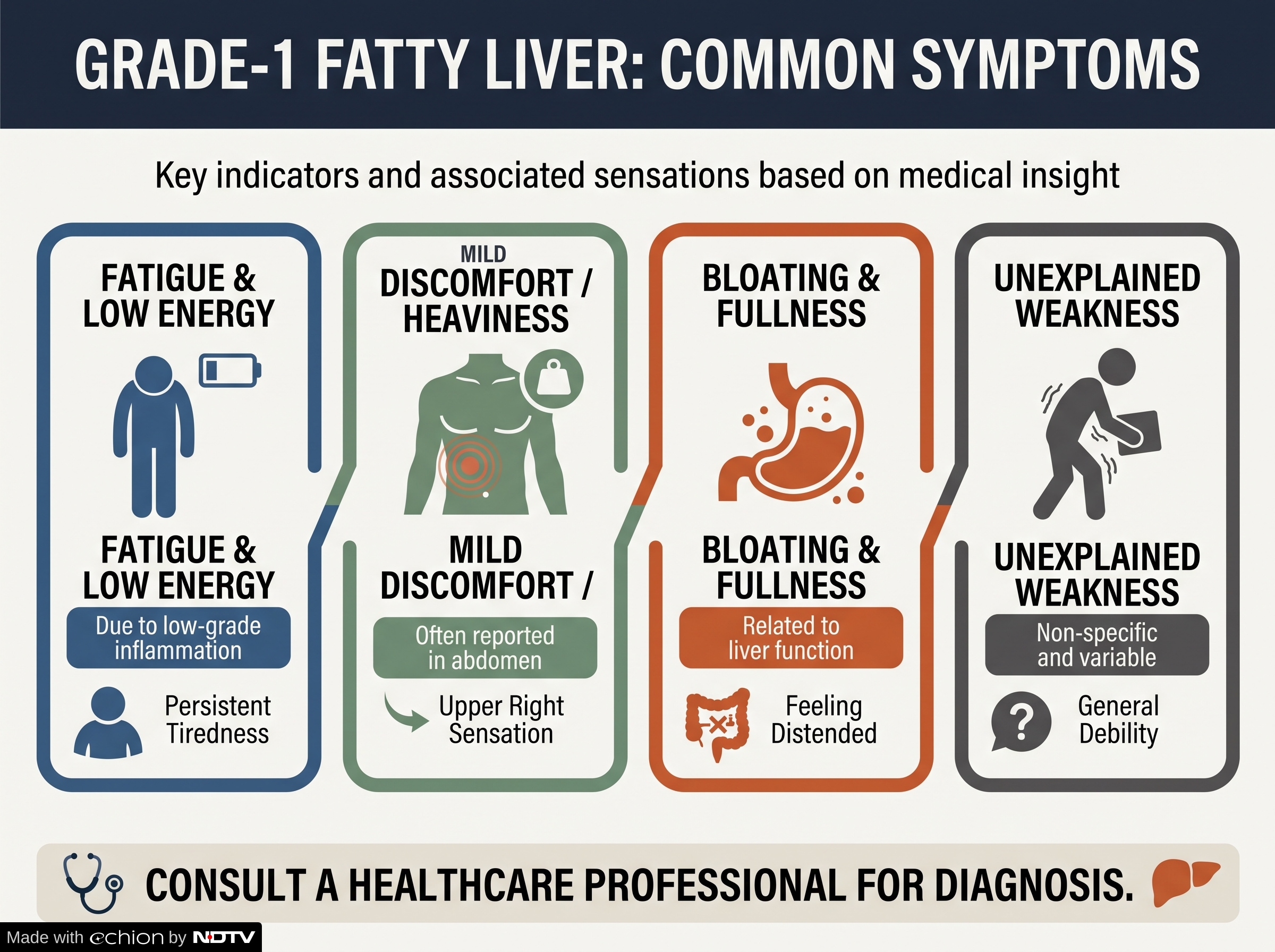
Common Symptoms Of Grade-1 Fatty Liver
- Fatigue due to low-grade inflammation is possible.
- Mild discomfort or heaviness is often reported by people who are dealing with a fatty liver.
- Bloating or fullness is also common, as it could be related to liver function.
- Unexplained weakness is non-specific and can have many causes.
Why Many People Have No Symptoms
Some people present with no symptoms when they have grade-1 fatty liver, as the liver has very few pain-sensing nerves.
The amount of inflammation is minimal for people who have a fatty liver, and the brain doesn't register that anything is wrong.
What Causes Grade 1 Fatty Liver?
Grade 1 fatty liver can have multiple causes, as it is a condition where fat deposits over a period of time. The prolonged nature of the medical condition makes it silently progress until it reaches a stage that it is accidentally discovered. Here are the possible causes behind a grade-1 fatty liver that you need to be aware of:
- When someone is obese or has visible belly fat, the risk of fatty liver increases.
- Diabetes and insulin resistance could become the cause of a fatty liver, as the cells don't respond to insulin.
- High cholesterol and triglyceride counts can become the cause of grade-1 fatty liver.
- Excessive amounts of alcohol consumption can cause a rise in fat accumulation in the liver cells.
- Sitting for too long can also affect your risk of developing fatty liver disease.
Can Grade 1 Fatty Liver Be Reversed?
Yes, it is possible to reverse grade-1 fatty liver, as there is clear clinical evidence that supports this. The early stage of fatty liver can be reversed under medical supervision, as the approach needs to be individualised to be effective. The ways to reverse grade-1 fatty liver could be as follows:
- Weight loss
- Dietary changes
- Physical activity
- Management of metabolic issues such as obesity and diabetes
Foods To Eat For Grade 1 Fatty Liver
The diet for grade-1 fatty liver should include the foods that are proven to help reduce liver fat; these foods can be as follows:
- Whole grains
- Fruits and vegetables
- Nuts and seeds
- Legumes
- Lean protein
- Black coffee
Foods To Avoid
Certain foods also need to be avoided, as they could make your liver fat worse and become the cause of even more health issues. The foods that you need to avoid are as follows:
- Sugary drinks
- Processed foods
- Deep-fried foods
- Excess alcohol
- Refined carbohydrates
Lifestyle Changes That Can Help Reduce Liver Fat
Making liver-friendly choices should involve focusing on making lifestyle changes that are proven to reduce liver fat. These changes can be:
- Making your weight proportional to your height and age
- Making sure that you exercise regularly
- Focusing on your sleep quality
- Effective management of diabetes and cholesterol
When Should You See A Doctor?
A doctor should be consulted when the symptoms of grade-1 fatty liver are persistent and hindering your quality of life. Other reasons that warrant a visit to the doctor are:
- Elevated liver enzymes
- Diabetes or obesity
- Family history of liver disease
The fatty liver diagnosis is not dangerous, but it could become a serious issue if you ignore it.
Also Read: Grade 1 Fatty Liver Ultrasound: What Your Routine Scan Report Actually Means
Disclaimer: This content including advice provides generic information only. It is in no way a substitute for a qualified medical opinion. Always consult a specialist or your own doctor for more information. NDTV does not claim responsibility for this information.